In many accidents, time is a matter of life and death for the victim. Many people in distress survived thanks to proper and timely first aid.
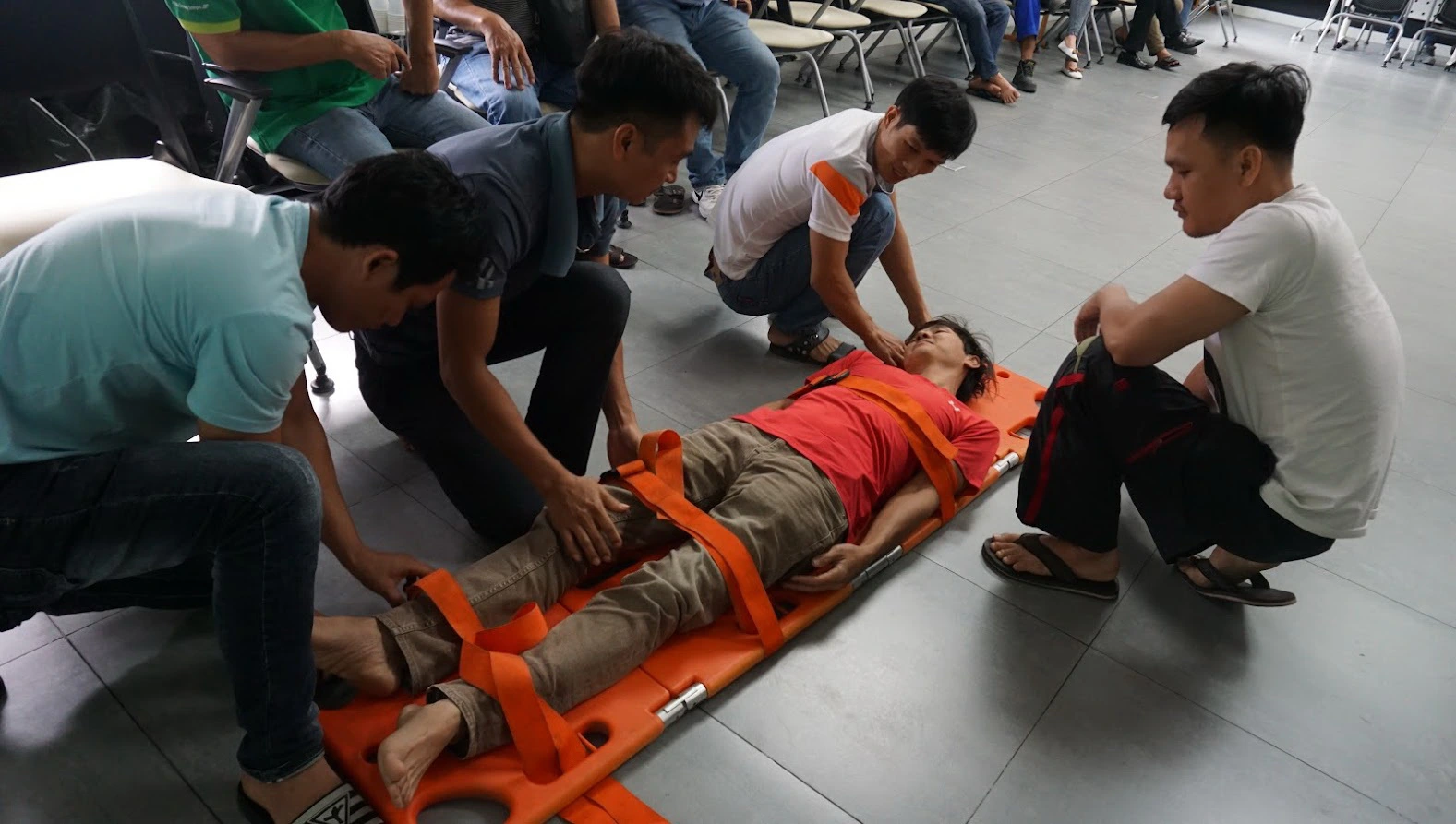
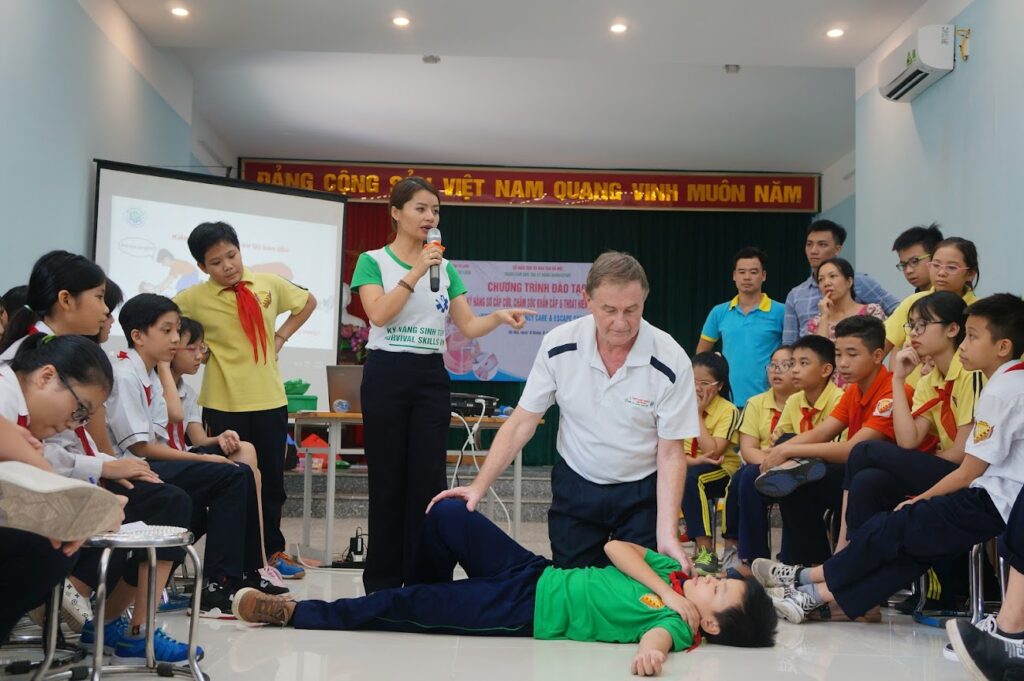
Practice at SSVN first aid class. Photo: CTV
The recent story of Captain Thai Ngo Hieu (Dong Nai province) saving five drowning victims from death is a testament to the importance of first aid skills.
Reduce injuries through proper first aid
At 2:00 a.m. on Halloween night 2019, Ms. Vi Vi (Binh Tan District, Ho Chi Minh City) had just fallen asleep when she heard 2-year-old daughter crying. She frantically looked for her child and saw her mother falling unconscious on the bathroom floor, with the baby lying next to her covered in blood. Perhaps the grandmother was carrying her baby to the bathroom and accidentally slipped.
“Anyone who is not moving needs to be checked first” – immediately remembering this principle, she checked to see that her mother was still breathing, there was not bleeding but there were signs of broken bones. While waiting for relatives to help, she took ice wrapped in a dry towel and applied it to the bleeding area behind her daughter’s neck.
Other family members tried to carry her mother to bed, but she stopped them, afraid that if the bones were broken and her mother was not carried properly, it could make the injury worse.
She waited but the ambulance still hadn’t arrived, she took an ironing board and folded it flat to make a stretcher, gently lifted her mother’s body and placed it on top, used a soft cloth to stabilize, and put her in the family car to take her to the hospital. Her mother suffered a severe fracture on her cervical spine (neck) but recovered very positively.
The doctor commended her for making proper first aid that helped her mother’s recovery progress much better than in similar cases.
Because she works for a film crew, she has to travel constantly, and has many props to set up scenes, etc., Ms. Vi Vi knows that unforeseen accidents can happen. She understood that a fall while setting up a high scene or an exposed electrical wire could bring many risks, so she proactively took a first aid class.
Role play
Mr. Nguyen Duc Thang (39 years old, living in Binh Thuan) has just completed a first aid course in Ho Chi Minh City. Working as a tour guide for adventurous tour in the forests, he knew several methods of handling emergency situations.
But the knowledge he learned long ago now needs to be updated. He took 2 first aid classes, a 4-hour class, and an 8-hour class. Most of the time is practice, because only when you start doing it in practice can you remember the skills for a long time.
The 12 hours of first aid that Mr. Thang learned were no different from role-playing. 15 students, from teenagers to 50s, couldn’t take their eyes off their skill instructor from SSVN (Survival Skills Vietnam – specializes in training first aid knowledge and skills), constantly noting down first aid procedures in each specific situation: how to provide first aid to unconscious people, foreign objects stuck in the airway, stopping bleeding, first aid to burns, broken limbs, heart attack…
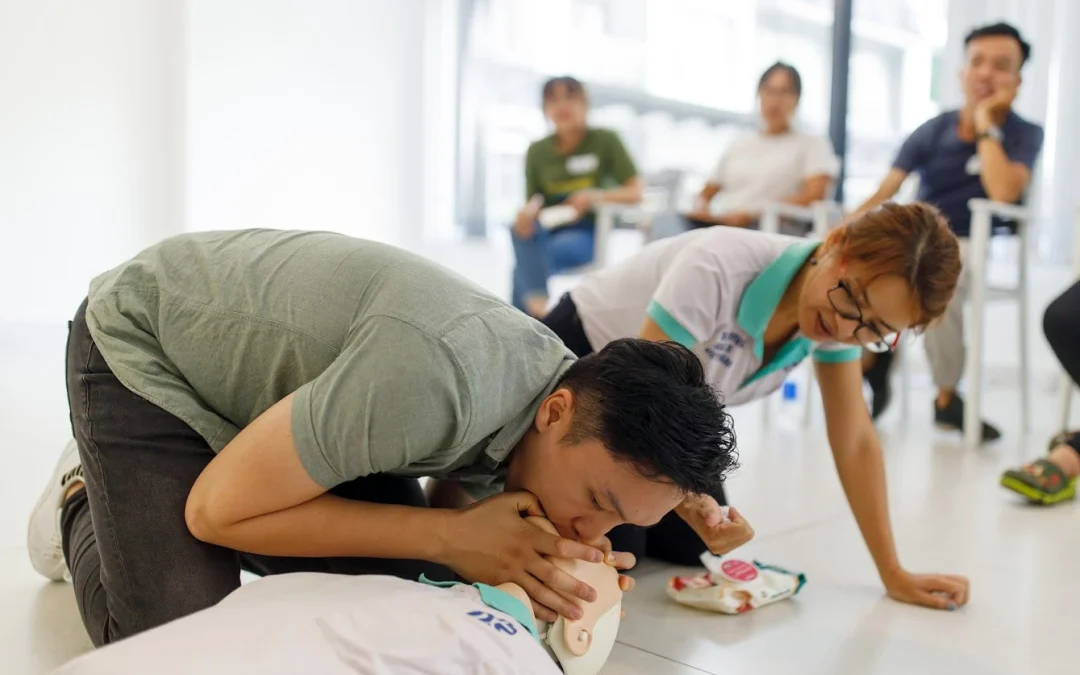
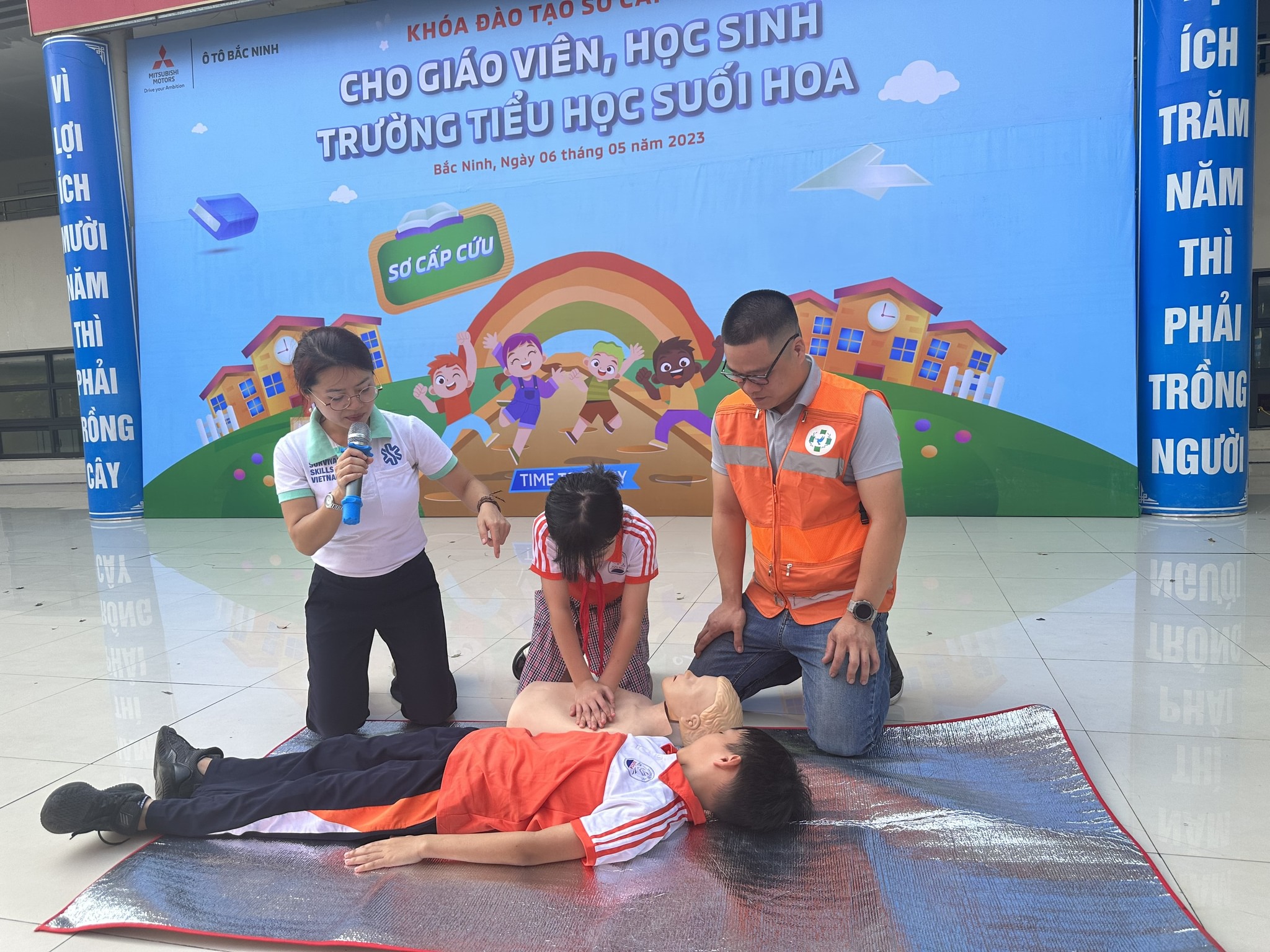
Learners take turns practicing the steps on the manikins or practice together, one pretending to be the victim, the other playing first-aider.
Priority lessons are taught first: how to handle risks that lead to death quickly: cardiac arrest, not breathing, followed by bleeding, burns, broken limbs…
In urgent moments, knowing what to do first and what to do next helps increase the victim’s chance of survival. In many traffic accidents, seeing the victim covered in blood, many people rush to stop the bleeding without checking the airway or heart rate.
“We are taught how to position the victim so that their airway is straight, and check to see if there is a foreign object in their nose or mouth that is making it difficult for them to breathe.
The more I learn, the more I realize previous mistakes due to not understanding correctly, like when doing chest compressions, instead of compressing on the left chest, experts recommend compressing in the middle of the chest for the best results,” Mr. Thang said.
According to him, the first aid procedures in classes these days are streamlined and easy to remember, because when encountering an emergency, it is difficult for rescuers to remember the steps sequentially, they only need to remember the core rules to quickly save people.
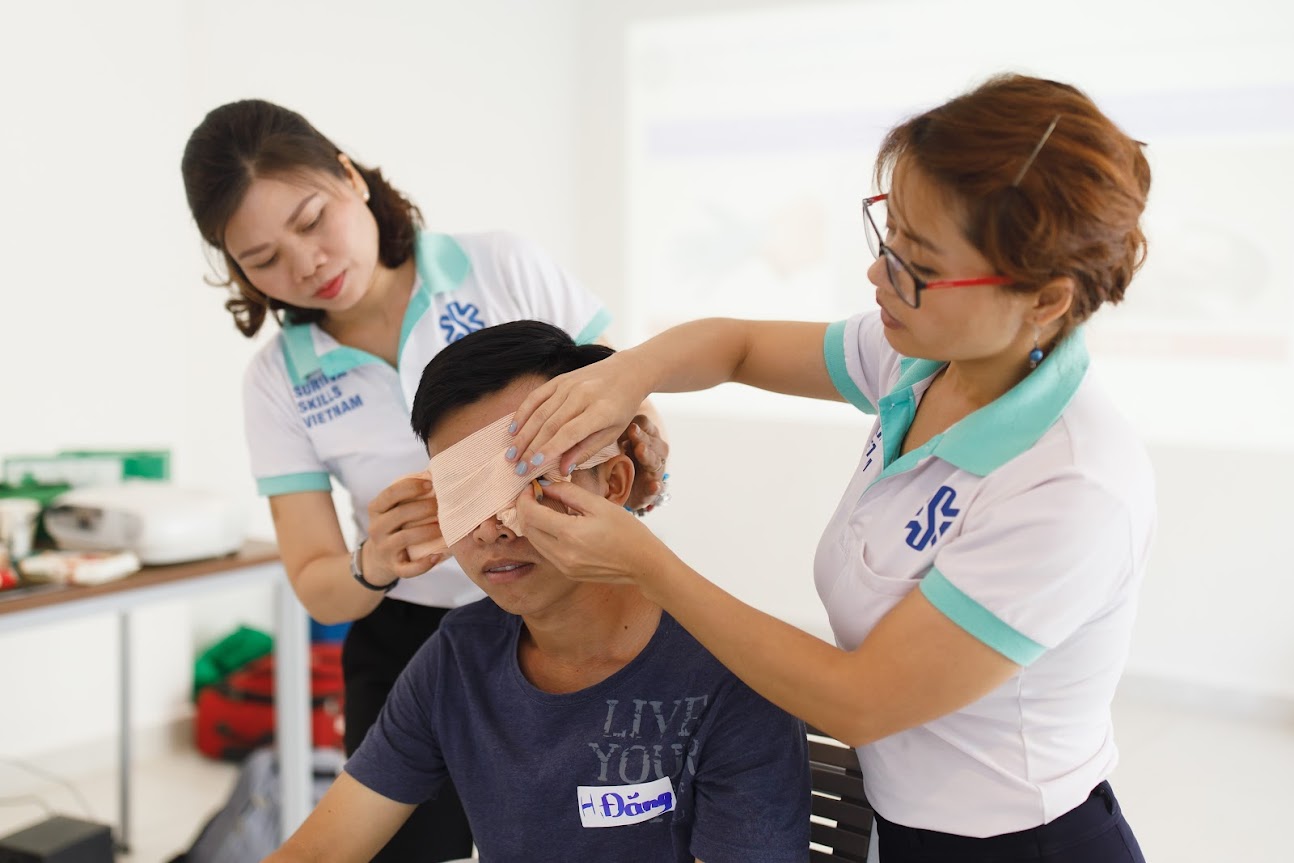
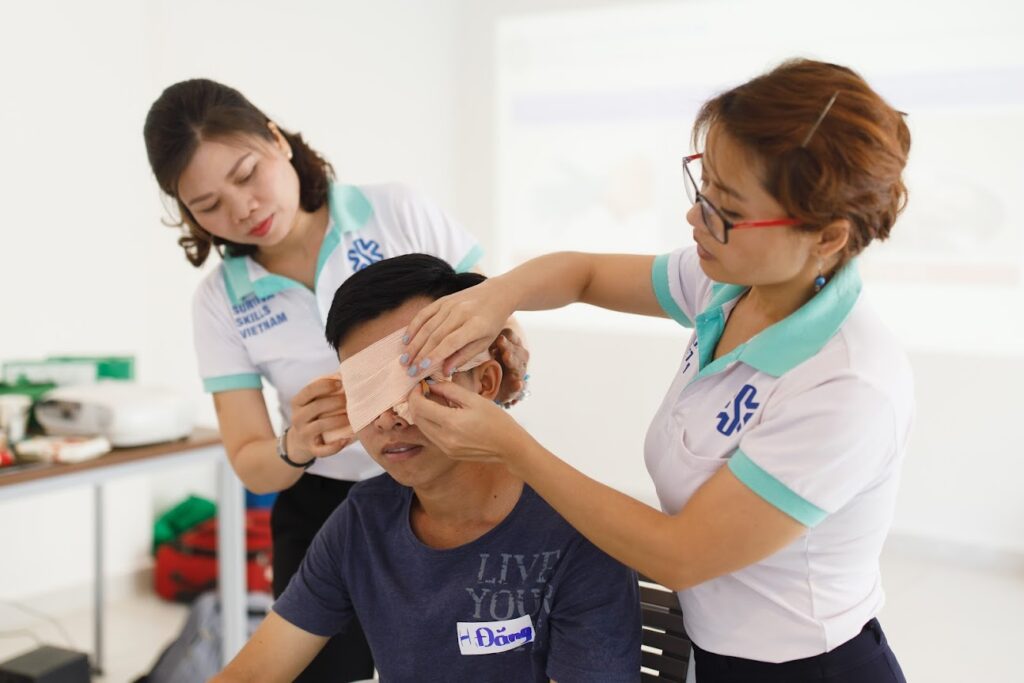
SSVN first aid classes Photo: CTV
First aid expert Tony Coffey (Australian) repeats this advice in classes: “Saving people is a noble act, but the rescuer also needs to save his or her own life.” Children who see their friends drowning often rush in to save them, and many of them are swept away by the water.
“You need to stay calm, observe and shout loudly for help. Kế đó, tìm xung quanh những vật dụng dài để đưa nạn nhân bám vào hoặc vật liệu nổi như phao xốp ném cho nạn nhân nếu ở khoảng cách gần.
If there is no other way, you need to bring a buoy or a floatable object for the victim and yourself to hold on to. We need to prepare in advance that the drowning person will panic, easily causing the rescuer to drown,” he said.
Expert Tony Coffey also noted that in some accidents, especially traffic accidents, first aider must know how to protect themselves from legal trouble. In many cases, the first aider’s actions to save lives are misunderstood by the victim’s family.
First, when determining the victim’s condition, take at least 3 photos and record a short video showing the entire scene and find witnesses. Don’t forget the emergency phone numbers if you need help.
Many free classes
Recently, there has been an increase in people registering to learn first aid skills in Ho Chi Minh City. The Center for First Aid Training and Disaster Prevention of HCMC continuously opens training classes, both free and fee-based, to meet that growing need.
Mr. Nguyen Tien Dat, vice director of the center, said classes will be held every 2 weeks. In the most recent class on 16th April, students had a day to learn many skills from basic to advanced. “The classes are taught by experienced doctors and trainers,” Mr. Dat said.
During the period 2014 – 2017, SSVN was a community project, often “borrowing” spaces in cafes to teach first aid skills. The group approached many people working in jobs with high accident risks such as drivers, construction workers… asking them to attend free classes, but many people did not attend.
From 2018 until now, SSVN has transformed into a social enterprise when realizing the increasing demand for first aid courses. Now, every 2-3 weeks there are new courses with 15 – 20 students.
Mr. Ho Thai Binh (31 years old, from Ba Ria – Vung Tau), a key member of SSVN, said that businesses in the construction, transportation, tourism, media and marketing industries also contact SSVN to organize first aid trainings for their employees.
To help more people, the team designed a first aid app, available on Google Store and CH Play, with detailed instructions on how to handle some common risks. Fee-based courses at SSVN cost from several hundred thousand to several million VND, depending on the duration of the study.
In addition, there are free monthly training classes for vulnerable groups in Ho Chi Minh City and neighboring provinces. “Once we held a free class in Vung Tau City, a group of 3-4 students took the bus from Ba Ria to study.
When finishing teaching about signs of stroke and first aid for stroke, one student burst into tears. He said if he had known this knowledge a month earlier, his father might not have died of a stroke.”
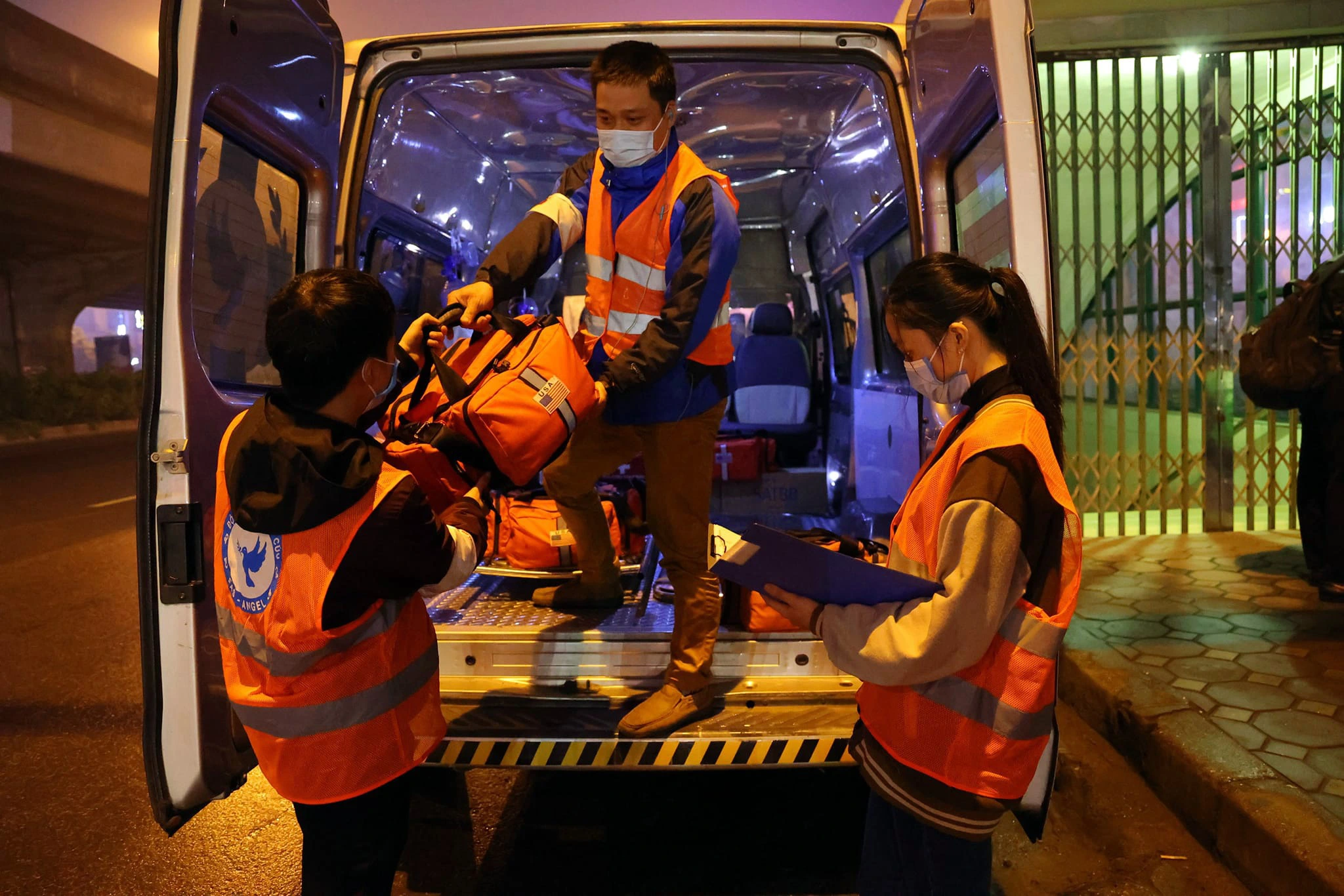
Mr. Pham Quoc Viet (middle)’s first aid team includes both motorbike and ambulance teams. -Photo: FAS
First aid via Zalo
Having attended a first aid class in Ho Chi Minh City, Mr. Pham Quoc Viet (35 years old, from Nam Dinh) returned to Hanoi to establish a volunteer first aid support team “FAS Angel” (FAS) in 2019. From the initial 5 people, the team now has 130 main members and many volunteers at key points throughout the capital.
On average, FAS provides first aid for 4-8 cases per day, mainly traffic accidents at night. Mr. Viet shared: although the team’s network of volunteers is widespread and can ride motorbikes to the scene of an accident in 4-5 minutes, the role of the hot line operator is to guide those who report first aid, which is extremely necessary.
Usually Mr. Viet is on the hotline. While waiting for the nearest member to arrive at the scene, he made friends on Zalo and made a direct video call with the person who reported the accident to the group. Through the video call, Mr. Viet assessed the victim’s situation and instructed the reporter to do some first aid that should be done immediately.
The priority is to keep the victim’s airway open, followed by stopping bleeding and immobilizing the wound in case of broken limbs. “It is not necessary to do all the steps, but some simple operations such as placing the victim in the correct position will also be very useful before FAS members arrive,” Mr. Viet said.
After 2 years of operation, the group has helped nearly 2,000 accident cases in Hanoi. The group also supports members to learn from each other’s experiences in first aid and spread this knowledge to relatives and the community.
“There was a person I once helped. It wasn’t until 6 months later that I happened to meet him walking near my house. He didn’t recognize me, but seeing him healthy made me happy,” Mr. Viet said.
TTCT – In many accidents, time is a matter of life and death for the victim. Many people in distress survived thanks to proper and timely first aid.
Practice at SSVN first aid class. Photo: CTV
The recent story of Captain Thai Ngo Hieu (Dong Nai province) saving five drowning victims from death is a testament to the importance of first aid skills.
Reduce injuries through proper first aid
At 2:00 a.m. on Halloween night 2019, Ms. Vi Vi (Binh Tan District, Ho Chi Minh City) had just fallen asleep when she heard 2-year-old daughter crying. She frantically looked for her child and saw her mother falling unconscious on the bathroom floor, with the baby lying next to her covered in blood. Perhaps the grandmother was carrying her baby to the bathroom and accidentally slipped.
“Anyone who is not moving needs to be checked first” – immediately remembering this principle, she checked to see that her mother was still breathing, there was not bleeding but there were signs of broken bones. While waiting for relatives to help, she took ice wrapped in a dry towel and applied it to the bleeding area behind her daughter’s neck.
Other family members tried to carry her mother to bed, but she stopped them, afraid that if the bones were broken and her mother was not carried properly, it could make the injury worse.
She waited but the ambulance still hadn’t arrived, she took an ironing board and folded it flat to make a stretcher, gently lifted her mother’s body and placed it on top, used a soft cloth to stabilize, and put her in the family car to take her to the hospital. Her mother suffered a severe fracture on her cervical spine (neck) but recovered very positively.
The doctor commended her for making proper first aid that helped her mother’s recovery progress much better than in similar cases.
Because she works for a film crew, she has to travel constantly, and has many props to set up scenes, etc., Ms. Vi Vi knows that unforeseen accidents can happen. She understood that a fall while setting up a high scene or an exposed electrical wire could bring many risks, so she proactively took a first aid class.
Role play
Mr. Nguyen Duc Thang (39 years old, living in Binh Thuan) has just completed a first aid course in Ho Chi Minh City. Working as a tour guide for adventurous tour in the forests, he knew several methods of handling emergency situations.
But the knowledge he learned long ago now needs to be updated. He took 2 first aid classes, a 4-hour class, and an 8-hour class. Most of the time is practice, because only when you start doing it in practice can you remember the skills for a long time.
The 12 hours of first aid that Mr. Thang learned were no different from role-playing. 15 students, from teenagers to 50s, couldn’t take their eyes off their skill instructor from SSVN (Survival Skills Vietnam – specializes in training first aid knowledge and skills), constantly noting down first aid procedures in each specific situation: how to provide first aid to unconscious people, foreign objects stuck in the airway, stopping bleeding, first aid to burns, broken limbs, heart attack…
Learners take turns practicing the steps on the manikins or practice together, one pretending to be the victim, the other playing first-aider.
Priority lessons are taught first: how to handle risks that lead to death quickly: cardiac arrest, not breathing, followed by bleeding, burns, broken limbs…
In urgent moments, knowing what to do first and what to do next helps increase the victim’s chance of survival. In many traffic accidents, seeing the victim covered in blood, many people rush to stop the bleeding without checking the airway or heart rate.
“We are taught how to position the victim so that their airway is straight, and check to see if there is a foreign object in their nose or mouth that is making it difficult for them to breathe.
The more I learn, the more I realize previous mistakes due to not understanding correctly, like when doing chest compressions, instead of compressing on the left chest, experts recommend compressing in the middle of the chest for the best results,” Mr. Thang said.
According to him, the first aid procedures in classes these days are streamlined and easy to remember, because when encountering an emergency, it is difficult for rescuers to remember the steps sequentially, they only need to remember the core rules to quickly save people.
SSVN first aid classes Photo: CTV
First aid expert Tony Coffey (Australian) repeats this advice in classes: “Saving people is a noble act, but the rescuer also needs to save his or her own life.” Children who see their friends drowning often rush in to save them, and many of them are swept away by the water.
“You need to stay calm, observe and shout loudly for help. Kế đó, tìm xung quanh những vật dụng dài để đưa nạn nhân bám vào hoặc vật liệu nổi như phao xốp ném cho nạn nhân nếu ở khoảng cách gần.
If there is no other way, you need to bring a buoy or a floatable object for the victim and yourself to hold on to. We need to prepare in advance that the drowning person will panic, easily causing the rescuer to drown,” he said.
Expert Tony Coffey also noted that in some accidents, especially traffic accidents, first aider must know how to protect themselves from legal trouble. In many cases, the first aider’s actions to save lives are misunderstood by the victim’s family.
First, when determining the victim’s condition, take at least 3 photos and record a short video showing the entire scene and find witnesses. Don’t forget the emergency phone numbers if you need help.
Many free classes
Recently, there has been an increase in people registering to learn first aid skills in Ho Chi Minh City. The Center for First Aid Training and Disaster Prevention of HCMC continuously opens training classes, both free and fee-based, to meet that growing need.
Mr. Nguyen Tien Dat, vice director of the center, said classes will be held every 2 weeks. In the most recent class on 16th April, students had a day to learn many skills from basic to advanced. “The classes are taught by experienced doctors and trainers,” Mr. Dat said.
During the period 2014 – 2017, SSVN was a community project, often “borrowing” spaces in cafes to teach first aid skills. The group approached many people working in jobs with high accident risks such as drivers, construction workers… asking them to attend free classes, but many people did not attend.
From 2018 until now, SSVN has transformed into a social enterprise when realizing the increasing demand for first aid courses. Now, every 2-3 weeks there are new courses with 15 – 20 students.
Mr. Ho Thai Binh (31 years old, from Ba Ria – Vung Tau), a key member of SSVN, said that businesses in the construction, transportation, tourism, media and marketing industries also contact SSVN to organize first aid trainings for their employees.
To help more people, the team designed a first aid app, available on Google Store and CH Play, with detailed instructions on how to handle some common risks. Fee-based courses at SSVN cost from several hundred thousand to several million VND, depending on the duration of the study.
In addition, there are free monthly training classes for vulnerable groups in Ho Chi Minh City and neighboring provinces. “Once we held a free class in Vung Tau City, a group of 3-4 students took the bus from Ba Ria to study.
When finishing teaching about signs of stroke and first aid for stroke, one student burst into tears. He said if he had known this knowledge a month earlier, his father might not have died of a stroke.”
Mr. Pham Quoc Viet (middle)’s first aid team includes both motorbike and ambulance teams. -Photo: FAS
First aid via Zalo
Having attended a first aid class in Ho Chi Minh City, Mr. Pham Quoc Viet (35 years old, from Nam Dinh) returned to Hanoi to establish a volunteer first aid support team “FAS Angel” (FAS) in 2019. From the initial 5 people, the team now has 130 main members and many volunteers at key points throughout the capital.
On average, FAS provides first aid for 4-8 cases per day, mainly traffic accidents at night. Mr. Viet shared: although the team’s network of volunteers is widespread and can ride motorbikes to the scene of an accident in 4-5 minutes, the role of the hot line operator is to guide those who report first aid, which is extremely necessary.
Usually Mr. Viet is on the hotline. While waiting for the nearest member to arrive at the scene, he made friends on Zalo and made a direct video call with the person who reported the accident to the group. Through the video call, Mr. Viet assessed the victim’s situation and instructed the reporter to do some first aid that should be done immediately.
The priority is to keep the victim’s airway open, followed by stopping bleeding and immobilizing the wound in case of broken limbs. “It is not necessary to do all the steps, but some simple operations such as placing the victim in the correct position will also be very useful before FAS members arrive,” Mr. Viet said.
After 2 years of operation, the group has helped nearly 2,000 accident cases in Hanoi. The group also supports members to learn from each other’s experiences in first aid and spread this knowledge to relatives and the community.
“There was a person I once helped. It wasn’t until 6 months later that I happened to meet him walking near my house. He didn’t recognize me, but seeing him healthy made me happy,” Mr. Viet said.
Having studied for a Master’s degree in Community Development in Australia and living in Switzerland for many years, but Ms. Trang Jena Nguyen, CEO of Survival Skills Vietnam (SSVN)decided to stay long-term in Vietnam to fulfill her dream that there is at least one person who knows proper first aid in every Vietnamese family.
Raise community awareness about the vital role of first aid
Ms. Trang Jena Nguyen shared that SSVN was established in 2014. The purpose of SSVN is to raise awareness of the community about the vital role of first aid and that anyone can do first aid if they are properly educated with the most up-to-date and proven effective knowledge and practice-oriented training.
Chính vì lẽ đó, ngoài các lớp hướng dẫn sơ cấp cứu miễn phí cho cộng đồng định kì, thì SSVN còn có những lớp đào tạo kĩ năng sơ cứu cơ bản theo chuẩn quốc tế có thu phí cho các doanh nghiệp, trường học và cá nhân để trang bị kiến thức cứu mình, cứu người vì một cộng đồng Việt Nam tốt đẹp hơn.
According to Ms. Trang Jena Nguyen, when we know proper first aid knowledge and skills, we will minimize preventable and treatable injuries, reduce the burden on the health sector, and reduce loss for families, and also society.
The biggest wish of Ms. Trang Jena Nguyen and her colleagues is that everyone in Vietnam, from adults to children, from teachers to parents and the students themselves, the caregivers, security guards… all need to know these vital skills which are currently not really focused on in the community.
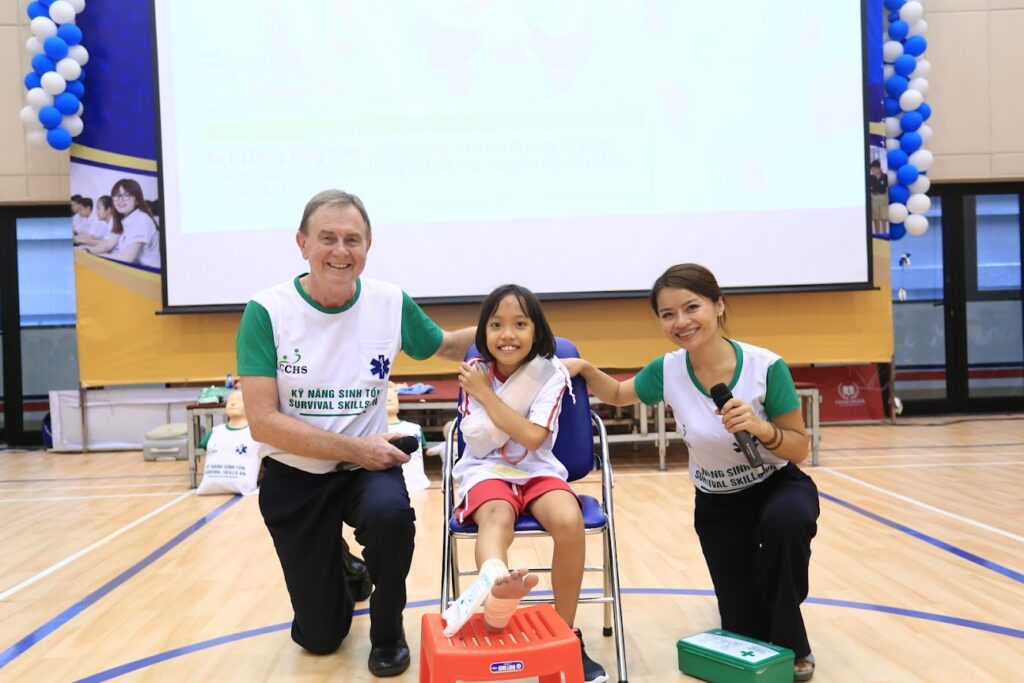
Ms. Trang Jena Nguyen and paramedic expert Tony Coffey from SSVN instructed students in first aid. Photo: NVCC
Ms. Trang Jena Nguyen said that “Every Vietnamese family has at least one person who knows proper first aid” is my dream and probably anyone’s dream when they understand the importance of first aid. When a person for any reason stops breathing or has a cardiac arrest such as: drowning, choking, being electrocuted, stroke, excessive bleeding… they must get first aid from people around them to help save their brain within the first 3-4 golden minutes, and an additional 4-5 golden minutes to save their heart, their life depends on family members, friends, teachers, colleagues, community, the people around to give proper first aid in the first 7-8 golden minutes. Even if the ambulance arrives early, on average it will take about 15-20 minutes to arrive.”
According to Ms. Trang Jena Nguyen, in severe cases, if first aid is not given properly, effectively and promptly, it may be too late when an ambulance arrives. If their brain and heart are no longer alive, it will be difficult for the medical team to cure them. Therefore, the life of a victim in an emergency depends largely on how the people around give them first aid.
Vietnam becoming a truly safe destination for tourists
In Vietnam, according to statistics, only about 5% of the people in need receive first aid, meaning that up to 95% of them do not receive first aid. Most of them were lifted into the car to the hospital because people either didn’t know how to do first aid so they didn’t dare to do anything, or they did it the way they usually did, which in most cases was lifting, shoving or giving incorrect first aid and that can cause more serious harm to the victim.
Ms. Trang Jena Nguyen and paramedic expert Tony Coffey from SSVN in a basic first aid traning class. Photo: NVCC
Meanwhile, in developed countries such as Australia, Switzerland, Norway… first aid is the kind of knowledge and skills that most students learn from a young age. Children from kindergarten have been taught by teachers how to handle scratches, nosebleeds, and burns. At higher levels, students have clubs and activities related to first aid practice.
When they are old enough to take the driving test for a motorbike or car, they will need a certificate of completion of a basic first aid class to be granted a license. Couples preparing to have children must take a first aid class for newborns. Teachers, security guards, police… are all trained in first aid skills periodically every 12-24 months and will review them according to the law.
Particularly for the tourism industry as well as for tour guides, first aid plays an extremely important role. Imagine if a tourist comes to stay at a hotel and they trip, fall or have a stroke and the staff there do not know proper first aid, the life of the tourist is threatened, and at the same time the brand of that hotel is also affected. Similarly, if a customer chokes or has a serious allergic reaction while eating in a restaurant, on a bus, etc., if the staff or tour guide does not handle it promptly, it can lead to extremely painful consequences.
In Ms. Trang Jena Nguyen’s opinion, a destination must be safe for tourists to return. Even the image of an entire country will be affected if an incident occurs to tourists, while we can completely prevent it and equip our staff with first aid knowledge and skills.
Over the past many years, SSVN has focused on reaching out to a number of tourism units in Vietnam, conducting a number of free first aid training sessions for restaurants, hotels and tour guides… Specifically, SSVN has conducted training classes for staff at many tourist destinations in Da Lat (Lam Dong) and hotels. Intercontinental Hotel Saigon…
According to Ms. Trang Jena Nguyen (right), when we know first aid knowledge and skills, we will minimize preventable and treatable injuries, reduce the burden on the health sector, and reduce loss for family and society. Photo: NVCC
Ms. Trang Jena Nguyen hopes that relevant departments and organizations will have close instructions to make first aid knowledge and skills mandatory for the restaurants, hotel and tourism industries to make Vietnam a truly safe destination for tourists.
According to the plan, in the near future, SSVN will organize a number of free first aid classes for the interested tourism community.
“In the long term, we hope that each component in the tourism industry will equip at least one first aid skills class for its employees. We spend 12 years for fundametal knowledge, 4 years at university, 1-3 years studying for a job, but a first aid class lasts only 8 hours and we don’t have time? What is more precious than our lives and those of our relatives and community?”, Ms. Trang Jena Nguyen confided.
During the first golden time of 4 – 8 minutes, if proper first aid is given, the victim’s fate will completely change, reducing the risk of disability. On the morning of June 15th, we will learn about first aid through a conversation with editor Khánh Hà and Ms. Trang Jena Nguyen – Co-founder of Survival Skills Vietnam – SSVN.
When an accident or health incident occurs, is the victim the most important person? No! The person on the scene is the most important to help resolve the problem.
8 minutes, 15 minutes, or how long from the moment there are signs of cardiac arrest, will the victim be brain dead if not given first aid properly? Actually, we have only 4 minutes.
When a person is coughing and expelling foreign objects from their airways, should others help them by patting them on the back? In fact, this method only makes it easier for the foreign object to slip deeper inside the airway, causing more danger to the victim.
And there’s a lot of other information that people still misunderstand about first aid.
According to statistics of Survival Skills Vietnam SSVN, 95% of traffic accident victims do not receive proper first aid; 2,000 children die from drowning each year; 200,000 people have a stroke each year, of which 51% of cardiac arrest victims die before being taken to the hospital.
To help everyone better understand the role of first aid, we invite you to follow our conversation Vietnam National Assembly Television with Ms. Trang Jena Nguyen – Co-founder of Survival Skills Vietnam SSVN – who wants to raise awareness about first aid in Vietnam.
When there is a fire, the fire is not as dangerous as the smoke, so quickly move to a safe place by crouching or crawling close to the wall.
5 steps to survive in a fire. When there is a fire, the fire is not as dangerous as the smoke, so quickly move to a safe place by crouching or crawling close to the wall. With more than 20 experiences working at the Sydney Rescue Association (Australia) before establishing Survival Skills Vietnam , expert Tony Coffey shares 5 important steps to survive if trapped in a fire.
First, you must calmly locate the fire and where the smoke is coming from
First, turn off the circuit breaker to prevent the fire from spreading out. Then try to stop the fire with a fire extinguisher, turn off the gas or extinguish the flame.
Normally, when a fire occurs, we try to put it out, but don’t spend too much time doing that, because the whole room can be completely engulfed in flames in just two minutes.
“If the fire cannot be put out after about 1 to 1.5 minutes, you need to immediately find a way to escape,” said expert Tony Coffey.
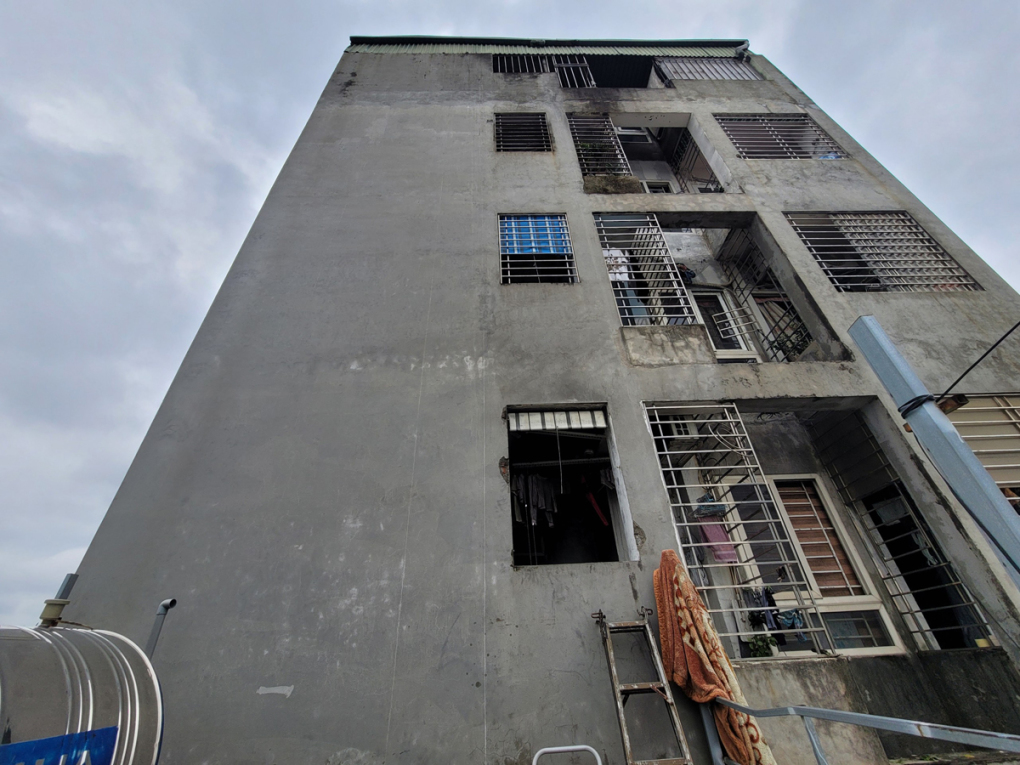
A 10-storey mini apartment building caught fire and was filled with smoke on the 12th September on Khuong Ha street, Thanh Xuan
Second, quickly find the nearest emergency exit.
Normally, the exits in houses are the main door, window, balcony and the way up to the terrace or roof to escape to the next door houses.
The exit of the apartment is the stairs. When there is a fire, the alarm will be activated, follow the exit lights or speakers. In case there are no instructions, quickly locate the nearest fire escape and go there.
According to current standards, every apartment building must have at least two escape staircases. However, many places block the escape doors to make it easier to move, causing toxic smoke to flow into the emergency staircase, endangering the exit way.
In case the house has a protective iron cage, it is necessary to have a door to escape to the next houses in case of fire. If there are no emergency exits, prepare a hammer or axe to break iron bars when necessary.
Third, remember that the fire is not the main problem, it’s the smoke.
This is the main cause of most deaths. The smoke from the fire is very toxic, the victim loses consciousness very quickly, while it takes a long time for the fire to burn. Therefore, when moving, you need to crouch or crawl close to the floor because toxic smoke will be high above.
“If you have enough time, use a wet towel, shirt, or mask to cover your nose and mouth to prevent poisoning, but also remember to do it only if you have enough time. And even if you cover it with a wet towel, you still have to escape while bending over, crawling”, Mr. Tony instructed.
In case the fire catches on the clothes you are wearing: Don’t run, lie down and roll over to put out the fire and then continue to crawl out.
Fourth, always check the doors before opening. Before opening the door, put your hand on the door and check the temperature.
When opening the door, keep your face and body aside to prevent blast of fire. If the temperature is too high, absolutely do not open the foor and find another way.
Fifth, if you cannot get to a safe exit
Bring the whole family in one room, close the door and then use tape to seal the gap. At the same time, wet a towel, cloth, or even clothes to seal the door gap, wet the door, or the entire floor.
Move to a smoke-free balcony. Use flashlights or brightly colored objects to signal for help. Absolutely do not hide under the bed or in the room, closet, or bathroom. Lie down on the floor waiting for rescue. Prepare plenty of wet towels and call someone outside for help.
It should be emphasized that there is very little time to react to a house fire situation, so it is important to have a plan for what to do when a fire occurs and make sure everyone in the house is aware. Once getting out of the fire, there needs to be a safe meeting point for all members to meet. Furthermore, fires are often large when they occur at night. It’s dark and the power is off, so you need to try to close your eyes and practice first.
The plan must also be feasible and the emergency exit accessible. “Don’t lock your family in a house with no escape. All escape routes must be able to be opened, especially from the inside to be able to escape,” the expert said.
In addition, remember four things not to do during a house fire: do not try to find valuables or the cause of the fire; Do not use the elevator; Do not use water to try to extinguish a fire caused by electricity or oil; Do not return to the fire area after successfully escaping.
According to Mr.Tony Coffey, experts around the world agree that doing the above will maximize the possibility of survival in a fire.
“Everyone has a phone, so while escaping, call the fire department and do what they ask. They will give you advice and are the ones who risk their lives to save you,” Mr. Tony said.
Learning first aid is very important for yourself, your family and the community. However, it does not substitute for practice training under guidance of experts to make sure you handle real emergency with confidence and correct practices.