In moments of panic and urgency, especially when it comes to child safety, we often grasp for solutions that seem quick and effective. One such solution that has gained attention in recent years is anti-choking suction devices.
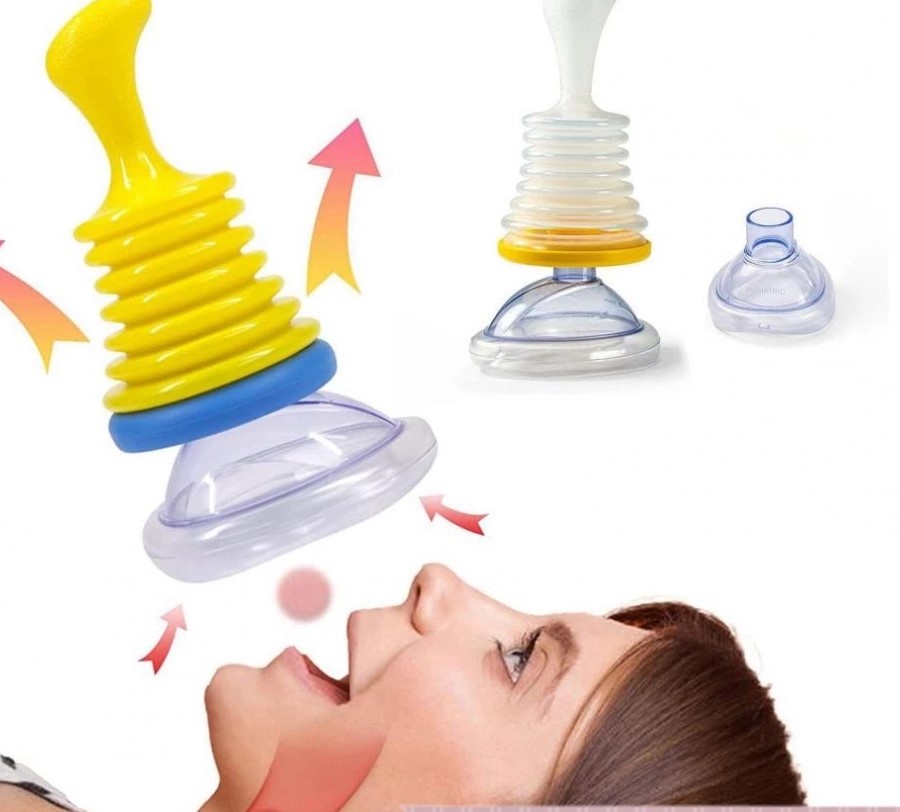
Marketed as a solution to quickly remove small objects lodged in a child’s airway, these devices seem like a lifesaver at first glance, however all is not what it seems.
Stories about these devices circulate on social media from time to time, often accompanied with videos marked “honest review”, with a link to click on so you too can buy one of these life saving devices.
After all, why wouldn’t you? Of course you don’t want your child to choke. Often the language and images on these articles can be very emotive and there are usually anecdotes from people who claim to have used them and they were effective. After using a device and mask to dislodge an object from someone’s throat, customers can get a new device kit “for sanitary reasons.” They can fill out a form attesting that they saved a life using the device thus becoming a success statistic.
I am unsure as to whether such statistics are collected for unsuccessful use of the devices.
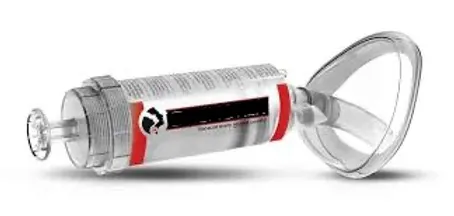
Anti-choking suction devices operate by creating suction to dislodge objects from a child’s throat. While this may sound like a straightforward solution to a terrifying situation, the reality is far more complex. These devices may cause harm if not used correctly or if used on children who are not choking on small objects. Anti-choking suction devices have not been adequately tested on children.
While they have undergone some testing on adults, mostly on plastic mannikins and cadavers, the anatomical differences between adults and children are significant given that children’s airways are much smaller and the surrounding tissue much softer.
No suction device has been endorsed or recommended by any medical authority anywhere in the world.
Manufacturers themselves state that back blows and chest or abdominal thrusts are the always the starting point. These have been PROVEN to be the most successful means of relieving a Foreign Body Airway Obstruction and that is why they ae used medical professionals, first responders and first aiders worldwide. Because they have been clinically proven to be most effective.
Sadly though, if a parent has one of the devices at home and a child is choking, they may skip the back blows and chest thrusts because they fear hurting the child.
The devices themselves require the user to be trained to obtain a good seal and some medical professionals have stated it was difficult to get a good seal.
Imagine a panicking mum trying this for the first time on their own child who is really is choking.
The purpose of back blows and thrusts is to move the object so that the person can cough it out.
In my career I have successfully cleared many airway obstructions using back blows and chest thrusts or even magill forceps
While these suction devices are marketed well, and there are many ways they can be bought online, there is simply not enough evidence that they work, and there is no suggestion that they should be a substitute for traditional methods and CPR.
Remember, medical research and reviews do not come with links to a seller.
Like any ordinary person, 40-year-old Trang Jena Nguyen initially believed that first aid skills and knowledge were exclusively for doctors and medical professionals. However, it only took one workshop to change her mind.
“I was shocked to learn that someone’s brain can die in just 3-4 minutes without proper first aid. It was a wake-up call for me. Many Vietnamese people, like myself, are unaware of this information. This is something we should be learning in high school.”
The workshop was held in 2014. After the event, Trang Jena crossed paths with Tony Coffey, an Australian emergency responder leading the session. Following a fruitful conversation, they committed to conducting their own first-aid workshop. Little did they know this initial session would lay the foundation for Survival Skills Vietnam (SSVN).
“In our early years, we mainly offered free classes. However, we soon realised that we needed a more sustainable approach. The number of accidents in Viet Nam is alarmingly high, and awareness of first aid is extremely low. We both thought this journey required a full commitment and various resources,” said Trang Jena.
Fast forward to 2018, SSVN faced growth challenges as it relied heavily on its founders’ time and financial support. The founders yearned to transform the organisation from a personal project into a solid, well-established entity. Then, an unexpected solution emerged from one of the training participants.
“During one of our classes, a participant named Ho Thai Binh expressed interest in helping develop a free first aid app. He enthusiastically volunteered to build an app that provides step-by-step first aid instructions. Seeing his enthusiasm and dedication, we invited him to join our team as another co-founder,” explained Trang Jena.
In 2018, Mr. Binh assumed the role of SSVN’s director. The decision was made to register SSVN as a social enterprise, a relatively novel concept in Viet Nam. This transformation enabled SSVN to generate its finances and at the same time still have the flexibility to implement social community free programs.
Over nine years, SSVN diversified its educational offerings, using various teaching methods supported by commercial revenue. The result: it delivered crucial first aid education to over 100,000 Vietnamese. The training includes recognising hazards in school, drowning first-aid, stroke first-aid, and most recently, first-aid training for mental illness emergencies.
Survival Skills Vietnam’s Co- Founder, Trang Jena Nguyen, pledges to continue until every family has a member trained in first aid
From raising awareness to igniting action
Beyond merely raising awareness, SSVN’s primary goal is to establish sustainable local instructors capable of disseminating knowledge within their communities. To achieve this, SSVN collaborates closely with local doctors and nurses to provide first-aid training courses for teachers nationwide.
One of SSVN’s success stories emerged from Cư M’gar district, Dak Lak province. “At the end of 2022, led by teacher Mai Văn Chuyền, this group implemented regular first aid awareness and drowning prevention activities in multiple schools once or twice a month.”
SSVN’s impact extends further as it has inspired others to take action. A notable example is the birth of the First Aid Support (FAS) Angel group in Hanoi.
“In 2019, Grab invited us to provide first aid training in both Ho Chi Minh City and Hanoi. Pham Quoc Viet, a Grabbiker from Hanoi, attended our training sessions. Motivated by our mission and drawing from his personal experience, he founded the FAS Angel group. To date, this group has aided over 8,000 people, earning recognition for their effectiveness and speed,” Trang Jena shared.
“What sets them apart is their unwavering dedication—all members are passionate volunteers. Mr. Viet’s personal experience was pivotal; he once was in an accident without assistance. He didn’t want others to feel that helplessness,” she added.
Trang Jena and SSVN admire the work of FAS Angel. In its early days, SSVN also provided technical support and connected Mr. Viet to larger networks. “Over three years, it managed to get three ambulances donated by the people.”
The importance of first aid in an emergency
Despite global health crises, SSVN perseveres in providing free and private lessons. Over the past two years of the COVID-19 pandemic, SSVN transitioned most of their activities online. To the group’s surprise, its efforts to condense essential information into accessible e-learning resources have proven to be an effective tool for raising awareness.
“We conducted workshops virtually and reached schools in remote northern areas through platforms like Zoom. With e-learning, we can reach even more people, and we’ve made everything readily available and easy to access,” she added.
Trang Jena acknowledges that SSVN’s assistance indirectly impacts disaster situations, as many casualties require immediate first aid.
“By promoting the correct first aid practices, we aim to prevent well-intentioned but potentially harmful interventions by untrained individuals. We aim to ensure everyone knows what to do and what not to do in such situations.”
Still, Trang Jena and her peer’s efforts have been challenging. One of these challenges is combatting misinformation spread by the media.
“We provide free workshops for the media, offering accurate information. Recently, we collaborated with a national TV station to broadcast a series of first-aid steps. They committed to continuing this for 2-3 months. This represents significant progress, and we’ve noticed increased attention and care from local media.”
In addition, Trang Jena emphasises the need for regulations that protect first aid responders, a crucial challenge for leaders in Viet Nam and the ASEAN region to address.
“Another challenge is the absence of legal protections for first-aiders, especially in Viet Nam. When individuals help in emergencies, they can sometimes be attacked by the victims’ family members, who may mistakenly blame them for the accident.”
As the road to raising awareness on the importance of first aid education is still long ahead, SSVN is now expanding its focus to household hazards, identifying potential risks at home to avoid preventable accidents.
“We’re working on an AI-based project to address this challenge, following our successful work on school hazard awareness. I often discuss this with my colleagues: We must persist as long as first aid education isn’t made mandatory in schools. Our ultimate wish and dream are for every family in Viet Nam to have at least one person who knows how to administer first aid,” Trang Jena concluded.
The signing ceremony marks the beginning of a long-term partnership between ExoTrails and SSVN to provide the nature-loving and outdoor community with the necessary knowledge and survival skills.
Signing ceremony between ExoTrails and SSVN
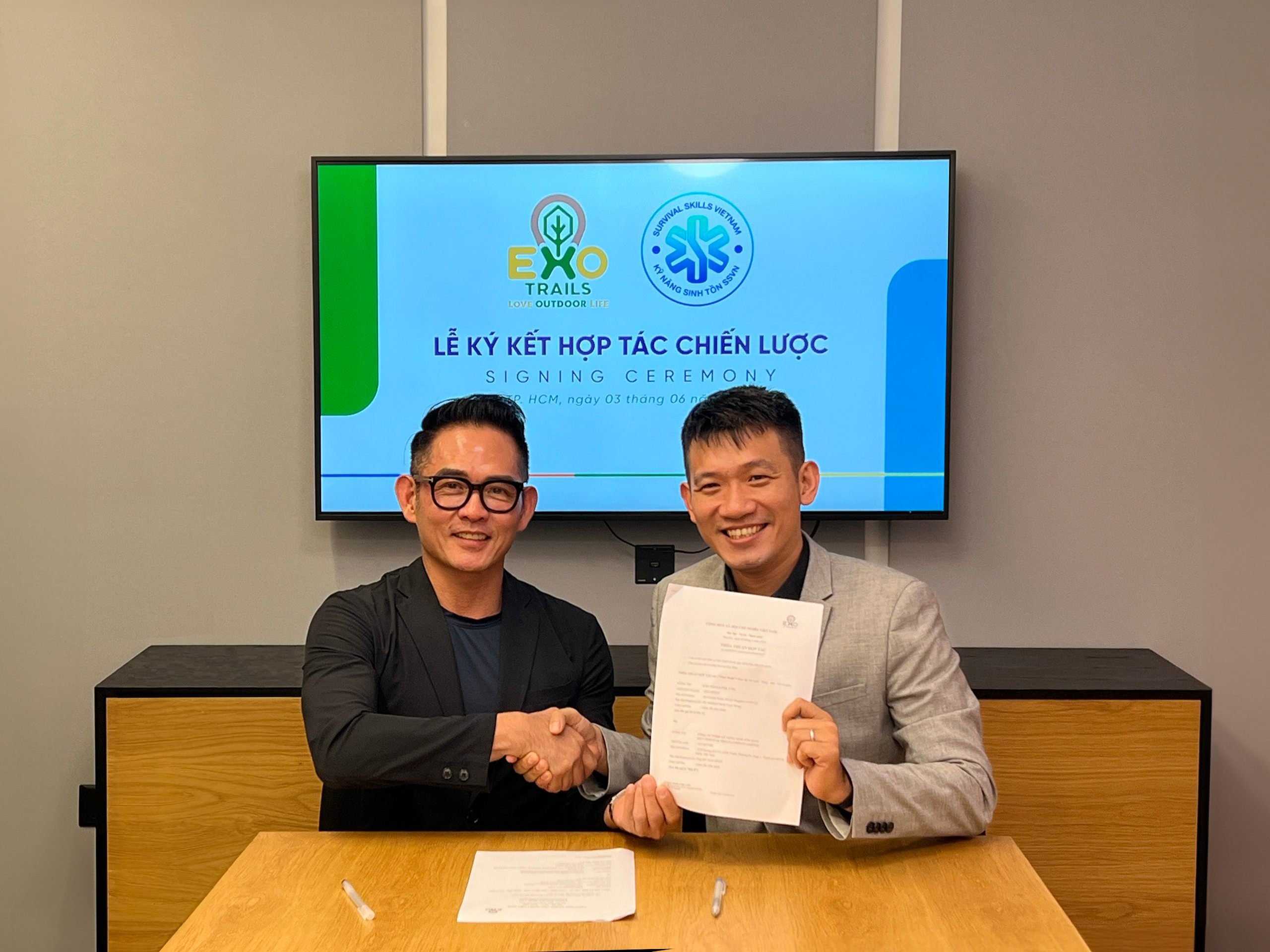
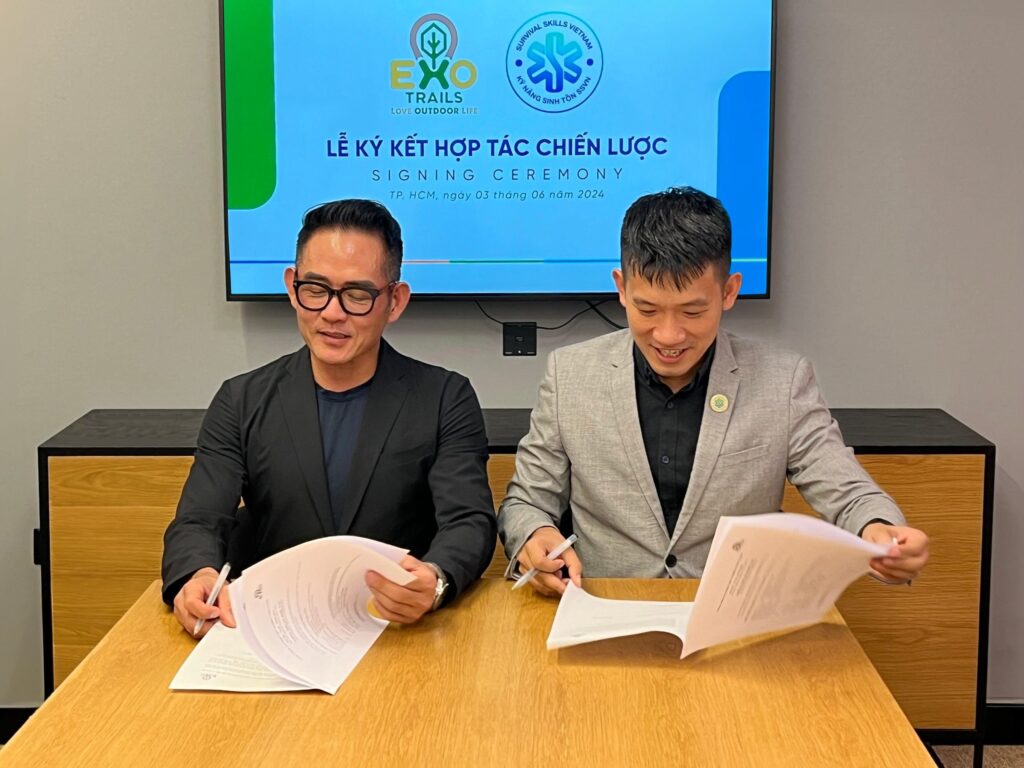
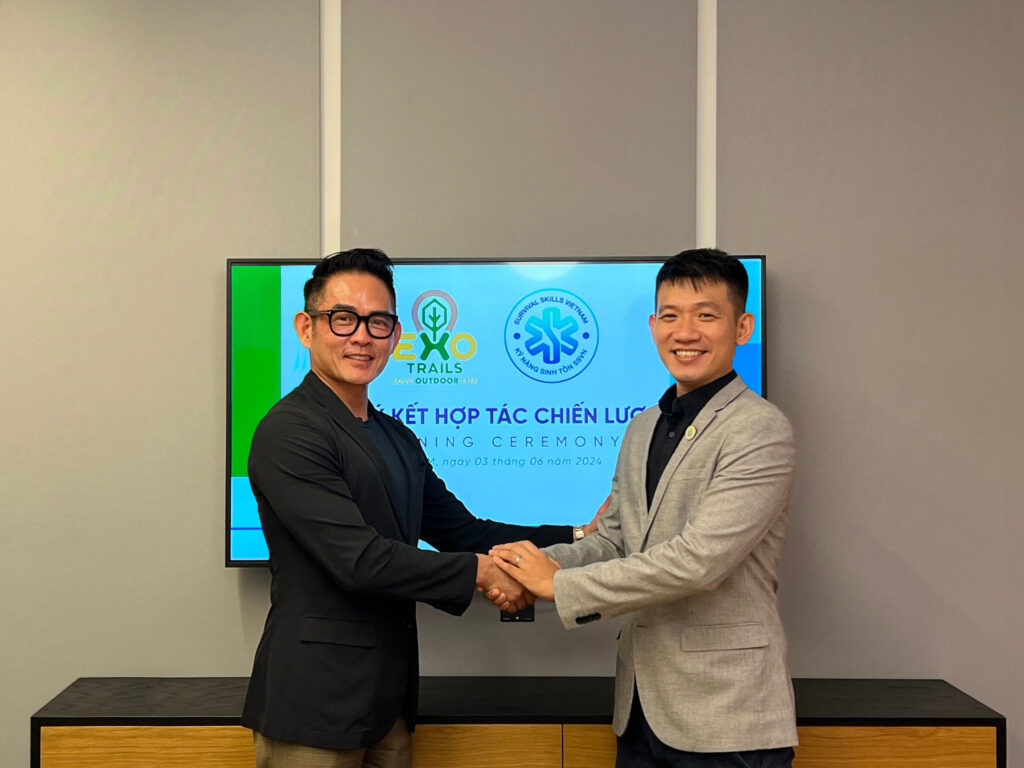
Mr. Michael Wong – Founder and Director of ExoTrails, and Mr. Ho Thai Binh – Director of SSVN, signed a cooperation contract. Through this announcement, we officially confirm the strategic cooperation relationship between the two parties.
Mr. Michael Wong – Founder and Director of ExoTrails (left), and Mr. Ho Thai Binh – Director of SSVN (right), signed a cooperation contract.
The signing ceremony marks the long-term cooperation journey between ExoTrails and SSVN. This Strategic Partnership aims to provide information and knowledge about survival skills to ExoTrails users through articles, instructional videos, and online courses.
At the same time, the two businesses will also coordinate to organize outdoor activities combining survival skills education for the community. We will support each other in developing educational and training programs on survival skills.
Strategic Cooperation Plan
Within the framework of the Cooperation Signing Ceremony, SSVN and ExoTrails commit to supporting each other in developing educational and training programs on survival skills. We want to bring maximum benefits to the community, specifically:
Equip ExoTrails users with the necessary knowledge and survival skills to explore Vietnam’s natural beauty safely and confidently.
Create opportunities for communities who love nature and the outdoors to access high-quality survival skills education programs.
Increase resources for SSVN to carry out its mission of reducing preventable casualties in Vietnam through education.
With the close cooperation between ExoTrails and SSVN, we believe that the two sides will achieve great achievements together. In particular, this relationship will raise awareness about the importance of survival skills. From there, we will contribute to building a safe and responsible nature-loving community.
All promise to bring many benefits to ExoTrails users in particular and the exploration-loving community in general.
Introducing ExoTrails and SSVN
ExoTrails is a phone application that has thousands of routes and locations available for you to freely explore. We also help users record, locate trails, and track groups, even without an internet connection. With 13 available activity types, ExoTrails offers the ultimate outdoor experience.
SSVN Survival Skills is a Social Enterprise with a mission to reduce preventable casualties in Vietnam through international standard first aid education. SSVN provides first aid courses, survival skills and safety education programs to the community.
Cardiac arrest and stroke are situations that can happen to anyone at any time. However, if you do not know how to provide first aid in time, the victim can die within a few minutes.
Recently, expert Tony Coffey from Australian Lifesaving Academy coordinated with Horizon International Bilingual School in Ho Chi Minh City to organize a first aid class for high school students.
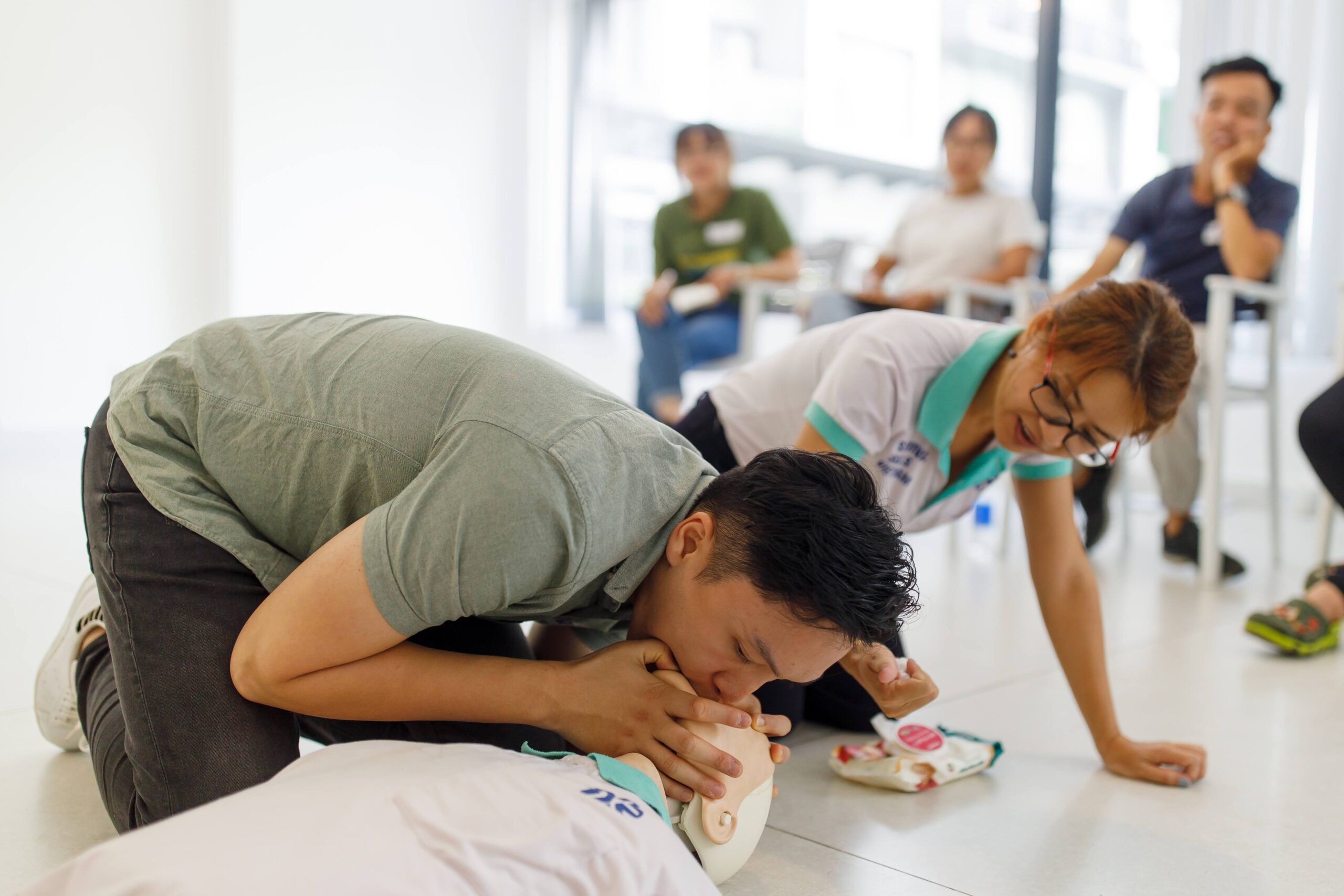
AED is a lightweight, portable device. It delivers an electric shock through the chest to the heart when it detects an abnormal rhythm and changes the rhythm back to normal. Steps to Use an AED, CPR, and drowning treatment are guided by expert Tony Coffey to students in the most familiar and easy-to-understand method.
During his visits to Vietnam, Mr. Tony Coffey always takes the time to instruct Vietnamese people, especially parents and students, how to handle emergency situations.
First aid is emergency help that needs to be given to the victim immediately within the first minutes, before intensive medical intervention. The initial first aid contributes to determining the victim’s survival and recovery ability.
Like any ordinary person, 40-year-old Trang Jena Nguyen initially believed that first aid skills and knowledge were exclusively for doctors and medical professionals. However, it only took one workshop to change her mind.
“I was shocked to learn that someone’s brain can die in just 3-4 minutes without proper first aid. It was a wake-up call for me. Many Vietnamese people, like myself, are unaware of this information. This is something we should be learning in high school.”
The workshop was held in 2014. After the event, Trang Jena crossed paths with Tony Coffey, an Australian emergency responder leading the session. Following a fruitful conversation, they committed to conducting their own first-aid workshop. Little did they know this initial session would lay the foundation for Survival Skills Vietnam (SSVN).
“In our early years, we mainly offered free classes. However, we soon realised that we needed a more sustainable approach. The number of accidents in Viet Nam is alarmingly high, and awareness of first aid is extremely low. We both thought this journey required a full commitment and various resources,” said Trang Jena.
Fast forward to 2018, SSVN faced growth challenges as it relied heavily on its founders’ time and financial support. The founders yearned to transform the organisation from a personal project into a solid, well-established entity. Then, an unexpected solution emerged from one of the training participants.
“During one of our classes, a participant named Ho Thai Binh expressed interest in helping develop a free first aid app. He enthusiastically volunteered to build an app that provides step-by-step first aid instructions. Seeing his enthusiasm and dedication, we invited him to join our team as another co-founder,” explained Trang Jena.
In 2018, Mr. Binh assumed the role of SSVN’s director. The decision was made to register SSVN as a social enterprise, a relatively novel concept in Viet Nam. This transformation enabled SSVN to generate its finances and at the same time still have the flexibility to implement social community free programs.
Over nine years, SSVN diversified its educational offerings, using various teaching methods supported by commercial revenue. The result: it delivered crucial first aid education to over 100,000 Vietnamese. The training includes recognising hazards in school, drowning first-aid, stroke first-aid, and most recently, first-aid training for mental illness emergencies.
Survival Skills Vietnam’s Co- Founder, Trang Jena Nguyen, pledges to continue until every family has a member trained in first aid
From raising awareness to igniting action
Beyond merely raising awareness, SSVN’s primary goal is to establish sustainable local instructors capable of disseminating knowledge within their communities. To achieve this, SSVN collaborates closely with local doctors and nurses to provide first-aid training courses for teachers nationwide.
One of SSVN’s success stories emerged from Cư M’gar district, Dak Lak province. “At the end of 2022, led by teacher Mai Văn Chuyền, this group implemented regular first aid awareness and drowning prevention activities in multiple schools once or twice a month.”
SSVN’s impact extends further as it has inspired others to take action. A notable example is the birth of the First Aid Support (FAS) Angel group in Hanoi.
“In 2019, Grab invited us to provide first aid training in both Ho Chi Minh City and Hanoi. Pham Quoc Viet, a Grabbiker from Hanoi, attended our training sessions. Motivated by our mission and drawing from his personal experience, he founded the FAS Angel group. To date, this group has aided over 8,000 people, earning recognition for their effectiveness and speed,” Trang Jena shared.
“What sets them apart is their unwavering dedication—all members are passionate volunteers. Mr. Viet’s personal experience was pivotal; he once was in an accident without assistance. He didn’t want others to feel that helplessness,” she added.
Trang Jena and SSVN admire the work of FAS Angel. In its early days, SSVN also provided technical support and connected Mr. Viet to larger networks. “Over three years, it managed to get three ambulances donated by the people.”
The importance of first aid in an emergency
Despite global health crises, SSVN perseveres in providing free and private lessons. Over the past two years of the COVID-19 pandemic, SSVN transitioned most of their activities online. To the group’s surprise, its efforts to condense essential information into accessible e-learning resources have proven to be an effective tool for raising awareness.
“We conducted workshops virtually and reached schools in remote northern areas through platforms like Zoom. With e-learning, we can reach even more people, and we’ve made everything readily available and easy to access,” she added.
Trang Jena acknowledges that SSVN’s assistance indirectly impacts disaster situations, as many casualties require immediate first aid.
“By promoting the correct first aid practices, we aim to prevent well-intentioned but potentially harmful interventions by untrained individuals. We aim to ensure everyone knows what to do and what not to do in such situations.”
Still, Trang Jena and her peer’s efforts have been challenging. One of these challenges is combatting misinformation spread by the media.
“We provide free workshops for the media, offering accurate information. Recently, we collaborated with a national TV station to broadcast a series of first-aid steps. They committed to continuing this for 2-3 months. This represents significant progress, and we’ve noticed increased attention and care from local media.”
In addition, Trang Jena emphasises the need for regulations that protect first aid responders, a crucial challenge for leaders in Viet Nam and the ASEAN region to address.
“Another challenge is the absence of legal protections for first-aiders, especially in Viet Nam. When individuals help in emergencies, they can sometimes be attacked by the victims’ family members, who may mistakenly blame them for the accident.”
As the road to raising awareness on the importance of first aid education is still long ahead, SSVN is now expanding its focus to household hazards, identifying potential risks at home to avoid preventable accidents.
“We’re working on an AI-based project to address this challenge, following our successful work on school hazard awareness. I often discuss this with my colleagues: We must persist as long as first aid education isn’t made mandatory in schools. Our ultimate wish and dream are for every family in Viet Nam to have at least one person who knows how to administer first aid,” Trang Jena concluded.
Learning first aid is very important for yourself, your family and the community. However, it does not substitute for practice training under guidance of experts to make sure you handle real emergency with confidence and correct practices.