In daily life, children and students are often exposed to many different water environments such as ponds, rivers, lakes, swimming pools, wells, ditches, etc. Any water environment has potential problems. There is a risk of drowning, but special attention should be paid to the following areas:
Water bodies in villages, hamlets, and residential areas
Household water storage objects such as tanks, wells, jars, buckets
River
Lake
Sea
Pool
Flood
Water bodies in villages, hamlets, and residential areas
In villages and hamlets in rural areas, there are often many ponds, small rivers, streams, canals, etc. flowing around villages or agricultural irrigation holes but often without warning signs and safety barriers. This is where children and students often come and go, gather to play and have a very high risk of drowning.
Tanks, wells, jars, buckets, and pots for storing water in the home
Although they are indispensable items to serve every family's daily activities, if adults do not close the lid carefully or accidentally leave water in buckets or basins, it can also cause drowning for children of this age. Preschool. There have been many cases of young children drowning in family water buckets and basins, even in preschools (although this is very rare).
A river is a stream of water with a large volume of water that regularly flows. The main source of water supply for the river is from lakes, rivers, streams, canals, and small rivers flowing in at higher altitudes. Our country has 9 large river systems, distributed throughout the territory and bringing many benefits such as hydropower development, irrigation, alluvial deposits, aquaculture and exploitation, transportation, and tourism. However, in the rainy season, water in rivers also causes difficulties and damage such as flash floods, pipe floods in mountainous areas, floods in the plains, which Can cause drowning, especially for children and students.
The river basins in the North have gradually lower surfaces, small rivers, tributaries, streams, and streams are fan-shaped and only flow into two large rivers, the Red River or Thai Binh River. At the same time, because the rainy season comes early with a large amount of water and lasts a long time, the flood water rises quickly, falls slowly, and the flood duration lasts long. Rivers in the Central region often have narrow river beds and steep slopes, so when there is a lot of rain, it can easily cause rapid floods, causing flooding in the downstream areas. Floods in the Mekong Delta flow through flat terrain, many low-lying areas, with strongly developed vegetation and many tributaries and lakes to regulate and drain floods, causing floods to rise slowly and recede slowly.
A lake is a large and deep area of stagnant water inland, usually a river section blocked by geological changes, most of which are freshwater lakes. There are two types: natural lakes and artificial lakes.
Natural lakes or ponds, canals, ditches, etc. It has different sizes and depths in each area, and is the habitat of many species of creatures. These areas are also where many human activities take place such as fishing and aquaculture; trade, exchange of goods, transportation;. However, the work of ensuring safety here is difficult to cover completely.
Artificial lakes often have a large area, with dams to retain water to serve hydroelectric plants, provide water for daily life, irrigation, tourism, and flood control. However, dams and artificial lakes also have impacts on the ecosystem such as generating methane gas (a greenhouse gas that causes climate change), accumulating toxic substances, deforestation, and the risk of dam failure.
Sea
The sea is a large area of salt water, connecting water bodies of the Earth.
The sea has good effects on human health such as: sea salt has many micronutrients, mineral salts, is clean and has very few bacteria, good for health, especially for the respiratory system, strengthening and preventing osteoporosis; has the ability to treat diseases of the ear, nose, and throat. Increases senses when moving in sea water and walking barefoot on sand. Helps firm the body, clean and smooth skin, reduce stress. The sea is people's favorite place to play and vacation.
However, the sea is characterized by waves, tides, and complex flow regimes, posing many potential risks. During peak season, beaches are often crowded with people playing and swimming, so safety risks often occur. At the same time, the rip current is also a danger that requires high vigilance.
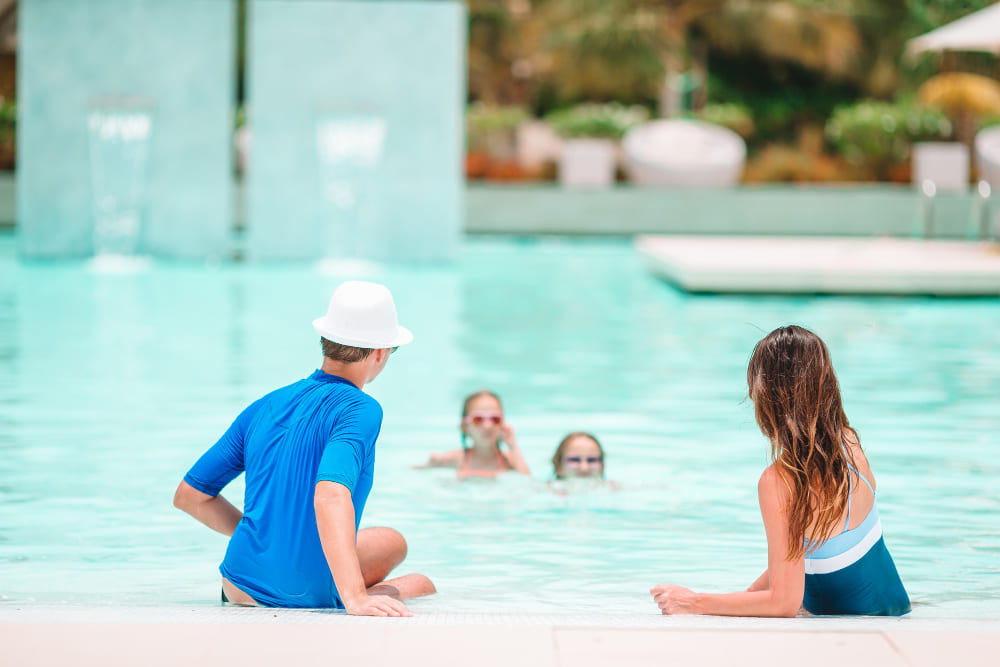
A pool (or swimming pool) is a type of construction or device used to store water in still form for swimming. Swimming pools are a relatively safe place to swim, however in the summer the number of people going to swimming pools often increases and the risk of hazards can always occur.
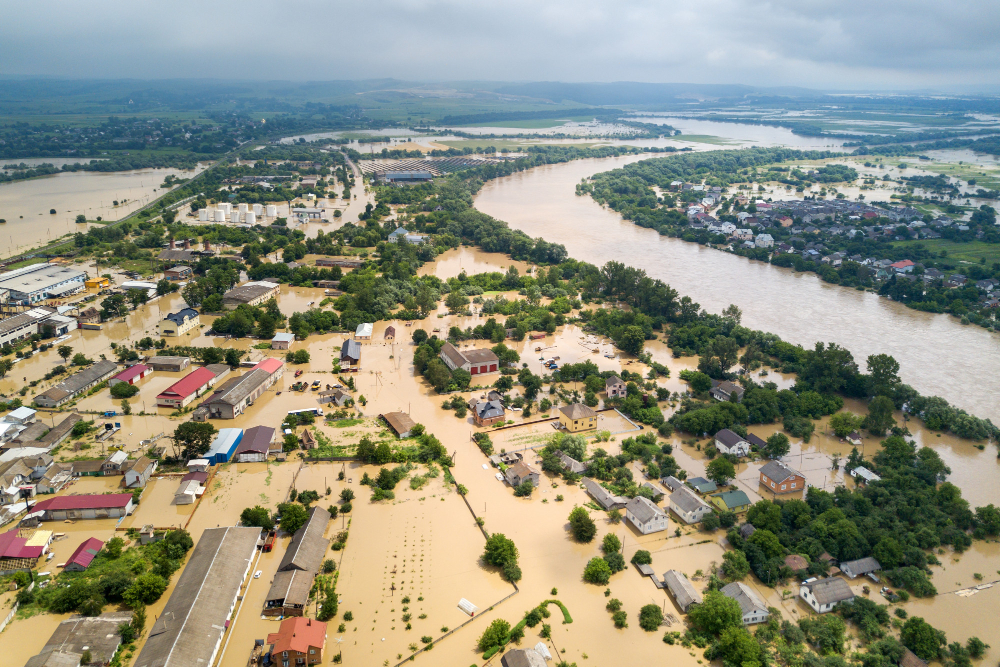
Flood is a phenomenon where water rises, the flow speed in rivers and streams exceeds normal levels, flows rapidly for a certain period of time, then gradually decreases. Floods are usually caused by heavy, continuous rain occurring in the river basin or coming from upstream. In our country, flash floods and pipe floods often occur in mountainous areas or near slopes such as at the foot of hills or in valleys.
Floods and landslides in Rao Trang River, Phong Dien, Thua Thien - Hue in 2020
Flood is a phenomenon that occurs when rising water overflows river banks or breaks dikes that prevent water from entering areas lower than the river's surface (at that time), flooding houses, fields, gardens, trees, roads, etc. .. Floods are often caused by floods.
Entire houses were submerged in the 2011 flood in Long An
Flooded areas often pose many safety risks. Floodwater carries many pathogens and is easily spread. There is also the risk of landslides, destroying transportation infrastructure, roads, and sweeping away everything on the way. Every year, floods take the lives of many people. Therefore, detecting, responding and equipping yourself with safety knowledge is extremely necessary.
Statistics from the Department of Environmental Management show that each year, on average, more than 370,000 children are injured in accidents - the leading cause of death in children. Among the causes of death due to injury in children, drowning is the leading cause with 3,500 children and adolescents aged 0-19 dying each year, equivalent to about 10 children dying each day. The main causes of drowning in children include:
Mental and physiological characteristics of each age group
Lack of safety knowledge and skills
Lack of adult supervision
The surrounding water environment is potentially dangerous
Natural disaster
1. Mental and physiological characteristics of each age group
Age and development
According to statistics, in the world, children in the 1 - 4 year old group have the highest death rate due to drowning, followed by the 5 - 9 year old group1. Similarly in Vietnam, children in the 1 - 4 year old group have the highest mortality rate (12.9/100,000), followed by the 5 - 9 year old group (11/100,000), and the 10 - 14 year old group ( 5.1/ 100 000).
In the group of children under 5 years old (preschool age): The cause of drowning is because they are not aware and cannot proactively ensure safety when exposed to the water environment and must ask for support. other people. Therefore, drowning in children under 5 years of age is often the result of children being left alone or with an incompetent caregiver. In other age groups, when children are studying in elementary school (from 6 years old and above), middle school, and high school, they have formed some knowledge and skills about drowning prevention and are able to higher awareness and attitude. However, children often tend to be more active, curious, love to explore, have risky behaviors, and express themselves. Due to not being fully aware of the dangers, being subjective, and lacking practical experience, when there is no adult supervision, children are susceptible to drowning (WHO, 2008).
Sex
The drowning rate is higher in men than in women in all age groups, except for children under 1 year old. In the age group from 15 to 19, this rate in men is 2.7 times higher than in women. This condition is due to the fact that male children are hyperactive, curious and participate in more vigorous activities than girls in activities that take place in or near open water; More passionate about water entertainment activities. Accordingly, in Vietnam, the rate of male children dying from drowning is nearly 2 times higher than that of female children (10.7/100,000 compared to 5.4/100,000).
Pathological
Epilepsy increases the risk of death from drowning in all water sources, including bathtubs, swimming pools, ponds, and other natural bodies of water. Children and students with epilepsy are at much higher risk of submersion and drowning than normal children both in bathtubs and swimming pools.
2. Lack of safety knowledge and skills
Children and students lack the knowledge and skills to evaluate and identify risks and dangers that can occur from drowning when they participate in work and play activities in daily life near areas. Living areas with water or when swimming or bathing in natural waters or open waters. They do not know where it is safe to swim, most of them act spontaneously, and do not have the habit of following safety regulations to prevent drowning.
.Many children and students know how to swim, even swim well, but still die from drowning because they lack knowledge and proactive prevention skills and do not know safe self-rescue and drowning skills. When learning to swim, children usually learn in swimming pools or ponds, rivers, where there are teachers or parents and many people around. In these places, children have had a lot of exposure and are familiar with the terrain, so they will feel more confident and safe. But when swimming in a different, unfamiliar water environment. If you suddenly encounter an incident and you have not yet mastered swimming and escape skills, you will easily drown. There have been cases where children and students who were good swimmers and bravely saved many friends from drowning, but they themselves drowned and died very mercifully. In addition, there have been many cases of students drowning collectively because they were not equipped with safe drowning rescue knowledge. Therefore, along with learning to swim, children need to be equipped with knowledge and skills to recognize the risks of drowning, and skills to respond to situations when they participate in activities in the living environment. Every day, when participating in swimming or wading to ensure your own safety before receiving support from others.
In many cases, for many different reasons, children are left unattended or escape the supervision of parents, adults, or responsible people, leading to falls and falls into waters that lead to drowning.
In cases where the supervisor is incompetent, such as a supervisor who is a young brother or sister, a person with certain limitations in behavioral capacity, a person supervising a child who cannot swim and does not have drowning rescue skills, .
In the case of irresponsible supervisors such as waterway vehicle owners, beach owners, event organizers, etc. Failure to comply with regulations when children and students operate near open water or in aquatic environments.
4. The surrounding water environment is potentially dangerous
The water environment around children and students is not safe, with specific manifestations such as: jars, water jars, water basins, water jars, water tanks, and water tanks in the family are not carefully covered; Construction pits are deep but there are no warning signs or barriers; The well wall is not high enough; Swimming pools, swimming areas are unattended or the caretakers do not know how to swim, lack rescue equipment, do not have drowning rescue skills, do not have danger warning signs, etc.
Waterway vehicles do not ensure technical safety and lack safety equipment such as life jackets and rescue boats. Overloading waterways is also a cause of concern when children and students travel on rivers. Swimming pools, beaches, and open water areas without supervision or lifeguards; bridges spanning canals, ditches, rivers, streams, etc. Failure to ensure technical and safety standards is one of the causes of drowning.
5. Natural disasters
Due to limited awareness, knowledge, skills and physical strength, especially when natural disasters suddenly occur, such as heavy rain, floods, etc. The water rises quickly, rises high, and the water swirls and flows strongly, causing children and students to often panic and easily be submerged or swept away into canals, rivers, streams, sewers, etc. leading to death.
Eliminating risk factors leading to drowning accidents to create a safe environment for children in families and communities is not thorough. The risk of drowning still exists in many localities across the country, especially rural, mountainous areas and areas with difficult living and economic conditions.
In today's modern world, swimming is not only an essential skill but also brings many great benefits to children's development. Swimming not only helps children prevent drowning but also helps children develop comprehensively, from physical to psychological. In this article, we'll explore the huge benefits of learning to swim for children, from encouraging confidence to building important life skills.
Proactively prevent drowning
Practice swimming to improve health, fitness, physical development, stature, and limit drowning. Students who know how to swim are considered to have an extra life preserver and a pair of oars to escape when threatened by water, save themselves, and be able to assist in rescuing friends when encountering problems in the water.
Proactively ensure your safety when bathing, playing, and doing water activities. Know how to handle objective situations such as suddenly falling into water (falling, shipwreck,...); While swimming, you get cramps, encounter whirlpools, get swept away by water, encounter floods; When underwater, being hugged or held by someone else.
Increase the ability to rescue drowning people (depending on the specific situation, age, and ability of each student).
Comprehensive development
Physical improvement
Nervous system
At the age of students, the nervous system is functions well, thinking gradually shifts from intuitive action to symbolic thinking. In general, students love new things, are very active and interested in intellectual games, physical games, and especially like playing in water.
When moving in the water environment, there is no fixed fulcrum, so it requires children to adjust their psychology and make physical efforts to ensure buoyancy and movement in the water. Thanks to that, swimming helps students balance excitement and relieve nervous system inhibition, while strongly stimulating and having positive effects on the development and functioning of the nervous system.
Musculoskeletal system
Skeleton: At a young age, children's bones are in a period of rapid growth, the ossification process is strong, there are many organic components in the bones, and inorganic substances such as calcium are still low, so bones Their bones are still soft and can easily be bent or broken. The characteristics of children's skeletal development at this stage are suitable for learning to swim, because when swimming, the horizontal body is affected by the force of the water, which reduces the pressure on the joints of the skeletal system. . Therefore, the cartilage system is developed to increase elasticity and especially help reduce the load on the spinal system, so swimming can help the spine return to the correct position, especially good for children with curvature. scoliosis, obesity. Because children's skeletal systems are flexible and flexible, they are very suitable for swimming.
Muscular system: Children's muscles are in a period of strong development, so they love to exercise such as running, jumping, playing, etc. During this period, the muscles are soft, fat, fluid, and inorganic. There is relatively little in the muscle but there is a lot of water and myosin fibers (dark color) so the ability to provide oxygen for muscle activity is relatively strong. That's why children get tired quickly when exercising but quickly recover. Children should participate in physical games from simple to complex levels. Swimming activity will mobilize all muscles of the whole body, especially muscles involved in the respiratory process. Because, thanks to the above characteristics, children who practice swimming regularly will have good health, a slim and tall figure, and a balanced body shape.
Cardiovascular system
At children's age, the heart's capacity and volume are small, and the heart muscle fibers are less elastic. Swimming training will help the cardiovascular system develop well, the heart will grow stronger, the heart beat may decrease, blood pressure will increase but under control.
Swimming is very beneficial in improving heart contractions, increasing blood and oxygen supply, making it easier for the heart to perform daily tasks. When swimming, the body will be in a horizontal position, the heart does not have to work as much, helping blood pressure stay under control. Swimming reduces heart rate, helping to prevent the development of certain types of heart diseases.
Respiratory system
At a young age, children have a narrow chest cavity and shallow breathing, so their respiratory frequency is quite high. The body's metabolism is strong, the need for oxygen is higher than adults. Therefore, their bodies will get tired quickly when exercising.
When underwater, the water has great pressure on the body, so swimming requires deep breathing. Therefore, swimming exercises have a good effect on developing children's respiratory system. However, with the characteristics of children's respiratory systems, they are at very high risk of drowning when exercising in water, especially when they do not know how to swim, do not know how to swim well, or are not healthy when swimming.
Note: When teaching students to swim, they should not be allowed to practice heavy exercises, prolonged exercises or breath-holding exercises because these exercises will not be beneficial for the development of their cardiovascular and respiratory systems.
Metabolic processes in the body
The metabolic process in children's bodies is better when they regularly practice swimming because when exercising underwater, water massages the skin, peels off dead skin cells, and increases circulatory activity.
Water absorbs 4 times more heat than air, thus enhancing the body's metabolism.
Cultivate qualities and psychology
When first learning to swim, children must overcome initial difficulties such as fear of water, fear of cold, fear of drowning, and feeling of being unbalanced because their bodies move in prone, supine, or sideways positions. This is different from the familiar daily movement posture. Children have to try very hard to know how to swim and overcome their feelings of fear, so they gradually form and practice good qualities.
Practice agility: Learning to swim will help children practice agility, flexible response, willpower, courageous spirit, determined effort, and a love of age-appropriate sports activities. .
Training in discipline: Due to the outstanding psychological characteristics of children being hyperactive, liking to explore, and playing, their attention span is not high, they are easily distracted, easily undisciplined, and push others when they When learning to swim, the risk of accidents and injuries during exercise is higher than that of adults. Therefore, when teaching children, teachers need to pay close attention to training the children's sense of discipline.
Forming and developing concentration at work: When swimming, it is necessary to focus on coordination of leg, arm, and breathing movements, not being able to pay attention to other things. Therefore, through regular swimming practice, children will practice focusing on their main work, gradually forming good habits and focusing on their studies and main tasks.
Develop social behavior skills: The safety principle to prevent drowning is not to bathe, swim, or wade alone, especially in secluded places. From there, create an environment for learning to swim, practicing swimming, playing, and doing underwater activities always in a crowded environment. Thus, when learning to swim, children can develop behavioral skills to interact with people around them.
Cultivate confidence: From being afraid and lacking courage when first entering the water, children will gradually gain confidence in the water and become more and more confident in their abilities when swimming in the water. The process of getting to know each other will dispel the initial fear and timidity and give them passion and excitement to discover new things in a new environment. From there, form and develop confidence in yourself, especially when you firmly grasp the knowledge before entering the water. At the same time, when learning and practicing swimming, students will have a feeling of harmony not only with the water environment, but also with a fun atmosphere with peers and similar interests while swimming. At that time, each student will have more interactions with teachers and friends, build relationships of cooperation and solidarity, and they will feel more refreshed, happier, more confident, and overcome their problems. self-esteem in each person.
Practice perseverance, persistence, and determination: Learning and practicing swimming is a process from not knowing to knowing; from being able to escape from dangerous situations in the water to being able to rescue drowning and support others, especially at high school age, when approaching adulthood. While swimming, you need to try to rise to the surface and swim to the destination, the safe zone. All student activities are decided by themselves, gradually freeing themselves from the support of swimming teachers and adult supervision as they gradually mature. It is the process of practicing perseverance, persistence and determination.
Learning to swim and swim has been proven to have many benefits for children's development. However, these benefits are only maximized when learning to swim takes place safely. Please find other information about Drowning Safety:
In river and flood areas, children under 5 years old have a very high drowning rate compared to older ages, mostly because children fall into the water when they are in floating houses, houses next to rivers, or with their parents. My mother went to work by boat or floating raft.
When there is no flood
Equip parents, caregivers, and children and students with knowledge and skills to prevent drowning.
Have a plan to set up centralized child care points, especially for young children; mobilize coordination and support from the community in organizing child care.
Schools, families and local authorities coordinate and develop plans to organize guidance and equip children and students with knowledge and skills to prevent and avoid drowning. Teach children safety skills in the water environment, self-floating skills, and survival swimming skills to cope with unexpected drowning situations. Encourage parents to teach their children swimming and teach escape skills to children (over 4 years old).
Right before the flood
The locality has established a system and implemented early warning information about floods to the entire population of the flood zone. Propagate people to follow the government's instructions through radio, television and direct instructions to ensure people's safety. Therefore, families need to promptly share official information with those around them.
Maintain contact with the nearest medical facility, rescue station, and relatives (phone number, location, how to get there when there is a flood) to share information and support when needed.
Reinforce houses, schools, install and fabricate fences and handrails to limit children falling into the water. Prepare lifebuoys, plastic cans, floating objects, etc. to reinforce the safety of canoes, boats, and vehicles on the water.
Secure your most essential assets to prevent them from being swept away. Keep books, school supplies and important documents in plastic bags or waterproof bags, hung high in the safest place.
In flood
Determine how to get to a safe location for children and students when they need to move.
Do not move much on water, especially fast-flowing waters, large rivers, and large flooded fields. You should follow a route with many large trees, near where people live to facilitate information gathering and rescue.
Pay more attention to the supervision and care of children to prevent drowning at home or in evacuation areas to avoid floods. Evacuate children to a safe place if necessary.
Some key notes about risks during floods
When strong, fast-flowing flood waters can sweep away trees, cars and other large objects, absolutely do not enter fast-flowing water, even when the water is shallow.
Flood water is often turbid, making it easy to enter deep or dangerous waters.
Walking in flood water is extremely dangerous. Feet can be trapped by underwater objects such as manhole covers, or step on other dangerous sharp objects that we cannot see.
Electricity can travel through water and cause death. Be sure to turn off all power sources if your house is flooded.
Do not enter flood waters. Even if the water does not flow, it is harmful to your health and can cause electric shock or being trapped by objects under your feet. Avoid flood water wherever possible.
Whenever in or near flood water, always wear a life jacket in case you accidentally fall into flood water.
Always follow local government instructions.
Always be ready with plans such as: evacuation, preparing food, fuel, and raising valuable furniture/items above flood water to avoid being flooded.
A rip current (rip current/ rip current/ rip current) is a strong current of water flowing from the shore towards the sea. The average speed of the receding current is about 0.5m - 1m/s, even up to 2.5m/s, no one can swim upstream to reach shore. The width of the flow is usually narrow, about 1 - 3m, and in some cases up to tens of meters wide; In one day, the ebb current can move to many different locations in the wave fall zone.
The receding current is created by waves hitting the shore, causing the water to turn to both sides. This water current moves along the shore until it finds a way out to sea, creating a receding current away from the shore. Usually, rip currents operate within a narrow range and occur in waters with sand bars, under piers or along breakwaters.
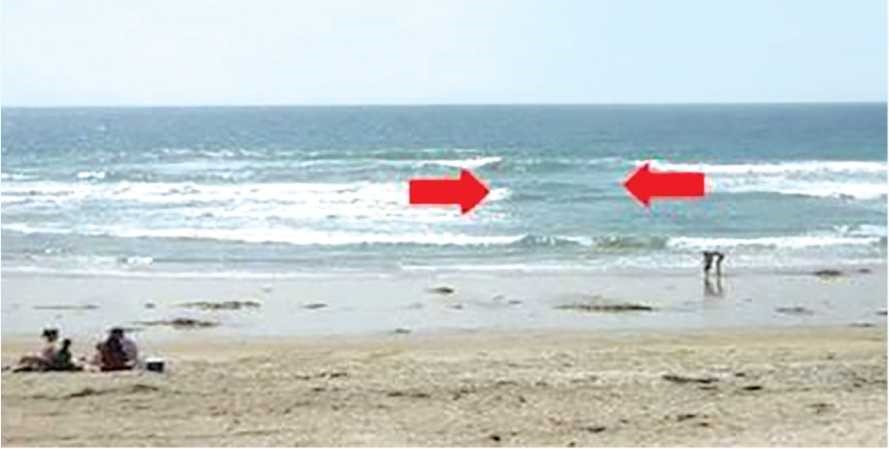
The water surface where there are rip currents is often calm, with few waves, making us mistakenly think that it is a safe place and we can bathe. Rip currents can pull a person deeper even if he or she is standing in waist-high water.
In the picture above, the place where the waves start is where the water flows from the sea to the shore. If we swim in the sea where there are waves, we will be brought to shore by the waves. However, if we move into a calm area (between the two arrows), we will fall into the current receding away from the shore. This small current will immediately pull us gradually away from shore. Thus, the area with waves is the safe water area, while the calm area is the dangerous area.
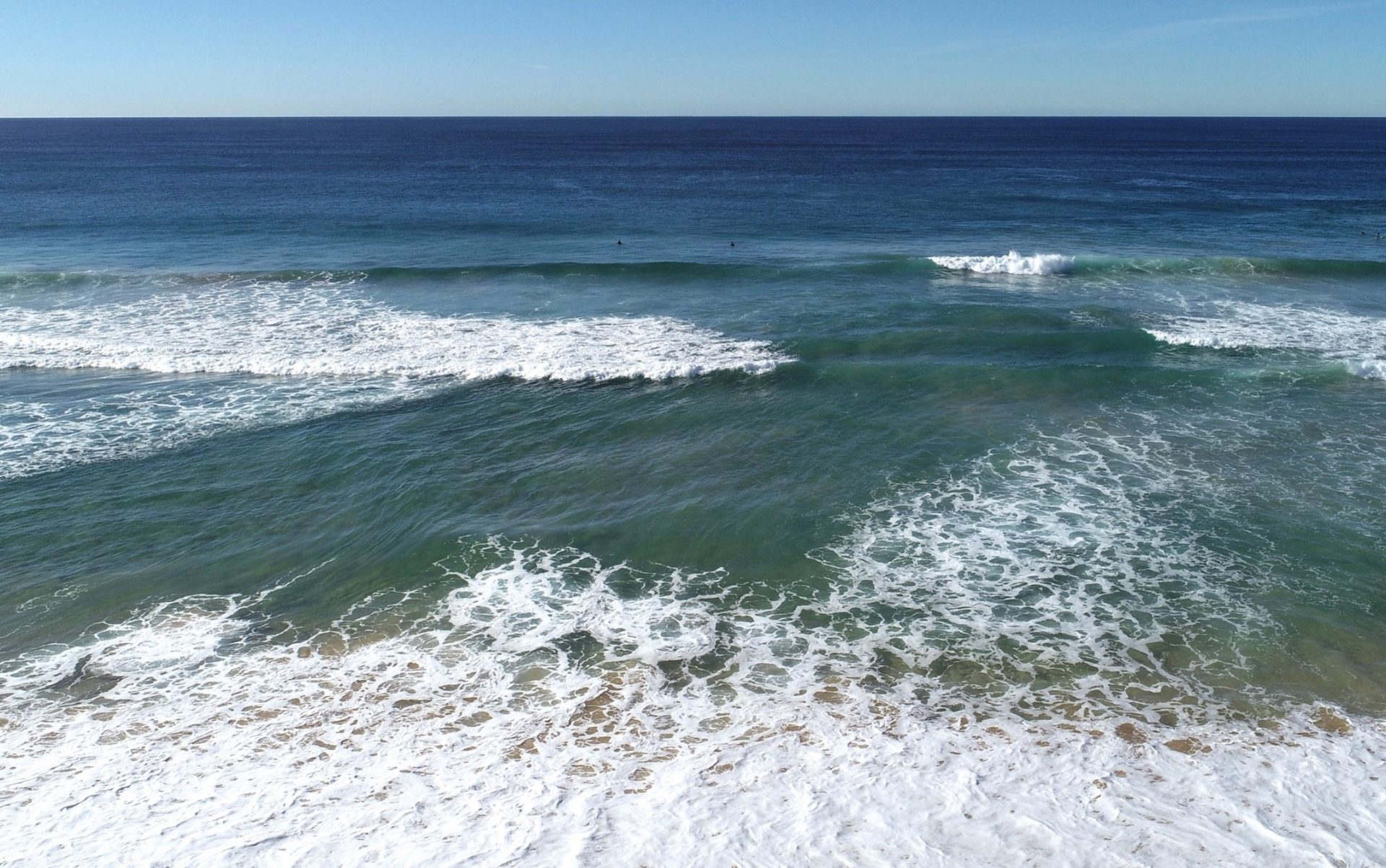
The receding stream is usually darker in color because the water is deeper there
Identify withdrawal lines:
The stream has a different color than the surrounding water, usually darker and more opaque depending on the angle of sunlight.
Sometimes it is possible to see fragments of floating objects or water foam floating on the surface of the current rolling away from the shore and drifting out to sea. Meanwhile, breaking waves will push this debris closer to shore.
The receding stream has a calmer water surface and fewer waves. If you move into a calm area, you will fall into the offshore current. On the contrary, if you swim in the sea where there are waves, you will be washed ashore by the waves.
Avoid current withdrawal
Before entering the water
Take 5 - 10 minutes to observe the place you intend to bathe or swim and see if there is a current receding away from the shore.
Pay attention to signs and seek information from local rescuers or experienced people.
Once in the water
While swimming, pay attention to observe to detect currents receding away from the shore because this water current can move and appear (when on the shore it is not visible, but when underwater, the current recedes away from the shore only to appear).
When encountering a current receding away from the shore: Calmly float, swim with the current and find a way to escape because this current only operates strongly on the surface of the water. The further away from the shore, the weaker it becomes.
People on the shore, people to the rescue
People who are on shore or have not been caught in the rip current should do the following:
Do not swim to the rescue because you will drift away.
You can throw buoys and ropes (if any) and shout loudly to call a professional rescuer or a good, experienced swimmer to rescue you.
Call, speak loudly for the victim to hear to calm down, try to float freely, swim standing up, do not swim against the current, do not panic and someone will help.
Urgently call the rescue team for help.
Note: Absolutely do not swim into the current receding from the shore to save, but you need to stay away, find rescue objects, throw a life buoy and quickly spread the news, calling for professional rescue forces.
Quickly call for help, stay calm, absolutely do not swim against the current, swim parallel or slightly diagonal to the shore and then slowly try to separate from the current to swim to shore. The farther you go from shore, the weaker the current becomes and then dissipates. Sometimes you have to swim hundreds of meters to escape.
When swimming to shore, head towards points where waves hit the shore or towards objects floating on the water's surface that are drifting towards the shore (if seen) to avoid falling into other currents receding from the shore.
If you encounter a strong current and cannot swim diagonally to escape, you should relax, keep your body floating on the water surface or stand in the water to preserve your strength. When the current weakens, continue to swim diagonally or parallel to the shore to escape.
Learning first aid is very important for yourself, your family and the community. However, it does not substitute for practice training under guidance of experts to make sure you handle real emergency with confidence and correct practices.