From a boy from the province, Ho Thai Binh has risen to the top 5% of the whole school at RMIT and the University of Queensland, Australia. Possessing a golden CV, he won a full master's scholarship in Australia, participated in the exchange program of YSEALI, Erasmus +, and The Asia Foundation. So what is the experience to making this first 9x shine so bright? Let's meet Mr. Binh.
The experience of "always on the top" of SSVN Director
Ho Thai Binh
Graduated with Honors, Master of Commerce - Applied Finance, Faculty of Business - Economics - Law University of Queensland, Queensland, Australia (Full scholarship).
Graduated with Honors, Bachelor of Commerce, RMIT International University Vietnam, City. Ho Chi Minh City
Delegates of the Young Southeast Asian Leadership Initiative (YSEALI) to Missoula (USA), Erasmus + and The Asia Foundation
Member of Australian Business Association in Vietnam
Ho Thai Binh grew up in the coastal city of Vung Tau, from the day he was just a tenderfoot, he moved to Ho Chi Minh City. While studying in Ho Chi Minh City, he shared that he felt left behind by his classmates living in the city. In addition to not having the same favorable conditions to learn English, Ho Thai Binh's time is also divided among clubs, working part-time,...
In order to keep up with his friends, his strategy is to study whenever possible, using all his free time to read books. Many a little makes a mickle, every day he read 30 minutes more than his friends, once a week, and he had nearly 9 hours more, persistently over the years. He was completely confident with his English and knowledge and, therefore, take the lead.
In addition to the top score, Ho Thai Binh's extracurricular achievements are also remarkable, he used to be the chairman of the RMIT University Environment Club, together with other members, brought this club from the starting point to become one of the largest clubs of the university. He shared that when he was in college, he was always running on the street to do programs and invite sponsors. It is these experiences that come back to help him learn better and increase his soft skills. Mr. Binh shared that extra-curricular activities helped him have stumbles, learn early life lessons that were unforgettable.
Therefore, it is not surprising that Ho Thai Binh has just graduated with a full scholarship for a Master's degree in Australia.
Time management is the key
If you are still wondering where the time is for Mr. Binh to study and do so well, the secret of this top 5% character is not new to us: effective time management.
Mr. Binh shared that his study program would include the final topic from the first day of the course. Most students usually waited until after ½ of a course to start planning their writing or even a few weeks before the deadline. At that time, there was often psychological pressure, so it was difficult to have a good product.
He managed his time by planning as soon as he had a topic. He spent exactly 1 hour a day working, so he often finished his essay beforehand. The way Mr. Binh managed his time was carefully calculated and there was always room for unexpected things. He is known to be always on time for every appointment. On the days when there are too many things to do, the first thing Ho Thai Binh does is to make a plan, arrange the order of priority.
Finding your passion is knowing how to say "no"
The list of Ho Thai Binh's fields of activity and start-up is quite diverse, from experience in the environment at university, a graduate in Commerce and Finance, technology startup, runs a company that develops urban anti-mosquito systems, and co-founded a health social enterprise. For him, doing a lot of things goes against being an elite in a certain field.
Mr. Binh gave himself time to try out all the fields that he loves. After determining the most suitable direction, he eliminated all previous work to focus on a single field.
Mr. Binh shared that when your profile had too many things, it would be difficult for the scholarship review board to know what you were focusing on, what field you were good at and you did not have a clear direction for the future. An ideal application for a scholarship/exchange program would revolve around a certain area, you should write your jobs and extracurricular activities which were all related to that area.
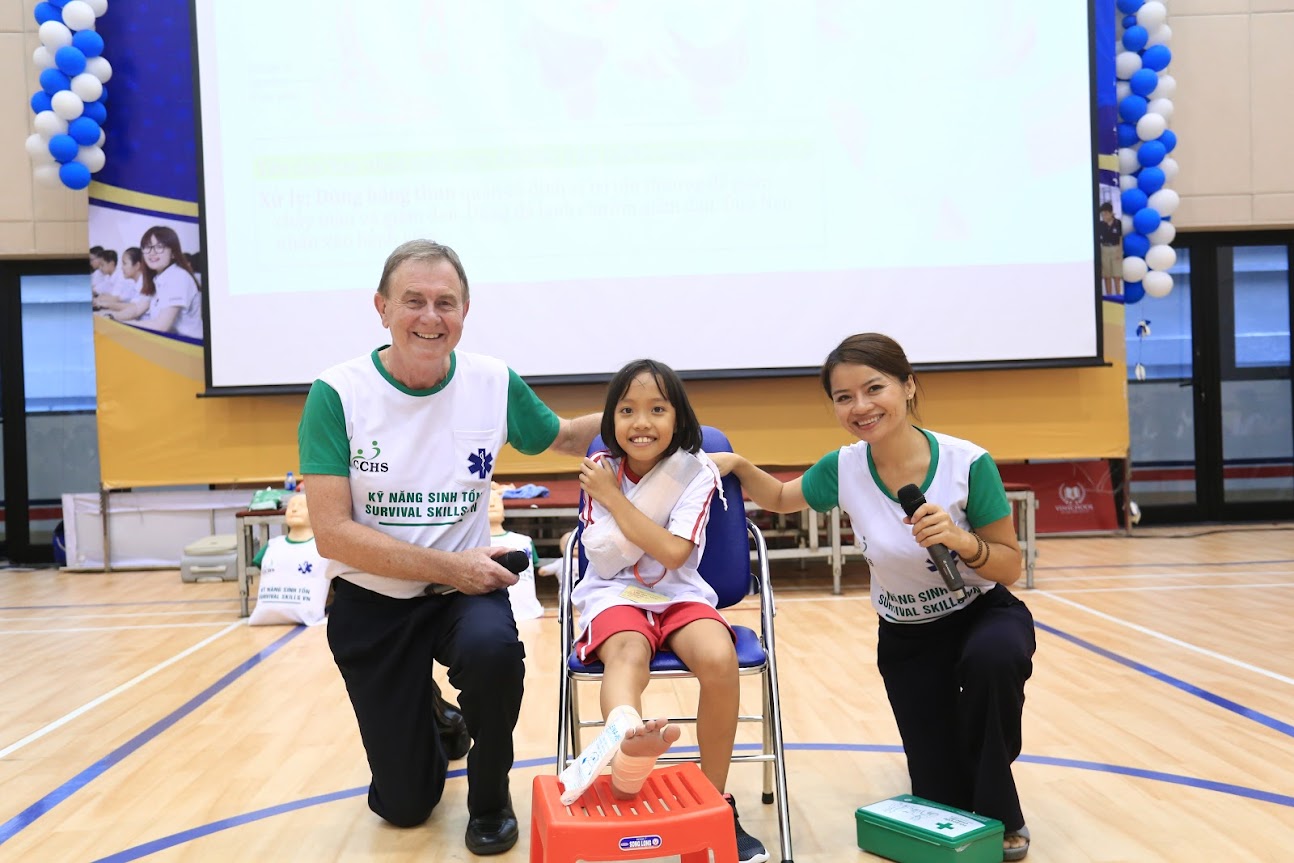
Singapore International School (Saigon South) in Vung Tau was honored to welcome volunteers from the Vietnam Survival Skills Project (SSVN). The main purpose of the group was to help Vietnamese citizens of all ages better understand First Aid and other survival skills to save themselves and their loved ones in emergencies and dangers.
Survival Skills teach first aid skill for student in Singapore International School
The group was guided by Mr. Tony Coffey, an expert from Australia, whose mission is to impart knowledge to the Vietnamese community about basic first aid techniques when facing critical situations. Ms. Trang Jena Nguyen not only supported the transmission of content in Vietnamese but also aroused the excitement and excitement of the participants.
More than 100 students at the school were taught various first aid methods as well as some measures to handle in case of emergency. They learned how to help victims with burns, cuts, bleeding and basic first aid measures and they enjoyed practicing. They also learned how to react when encountering an aggressive dog or to help a victim with a broken arm or dislocated leg.
Indeed, this was a class with great experiences for students from grades 4 to IGCSE 2. This would definitely be a great companion for them in the future.
SPECIAL – USEFUL – NEVER HAPPENED – ONLY FOR FOREIGN LANGUAGE STUDENTS (Students studying at the Faculty and alumni). TRAINED AND PRACTICE SURVIVAL SKILLS BY INTERNATIONAL EXPERTS FROM AUSTRALIA
The content of the "SSVN First Aid Education" session includes:
Principles for approaching situations DR.CAB/DRS.ABCD
Mandatory order in first aid
Handling the unconscious
Handling food choking – foreign body choking
Handling bleeding
Recognizing early signs of a stroke and how to handle it
Demo how to do CPR.
Tony Coffey Expert Information: Paramedic rapid response first aid specialist Tony Coffey has 25 years of experience in directly performing pre-hospital - field emergencies in Australia and 10 years of experience in First Aid training in Australia. Australia and Survivor Training company founded by expert Tony and 5 years of First Aid training in Vietnam and Survival Skills Vietnam SSVN co-founded by experts Tony and Jena.
Expert Tony teaches in English, Ms. Jena will support the Vietnamese part.
Jena holds a postgraduate degree in Community Development in Australia with a full Australian government scholarship and over 15 years of experience in community development and education activities.
According to the law, not to save life-threatening people can be punished with imprisonment from 2 to 7 years. “Saving one life is better than building seven towers”, this is a humane action that everyone needs to do.
“ Saving one life is better than building seven towers”, this is a humane action that everyone needs to do.
However, instead of gratitude, many lifesaving cases are accompanied by suspicion and detention. Even violent victim's family can put their own benefactor's life in danger, so some people choose to turn their backs on the victim, even though they know that this action should not be.
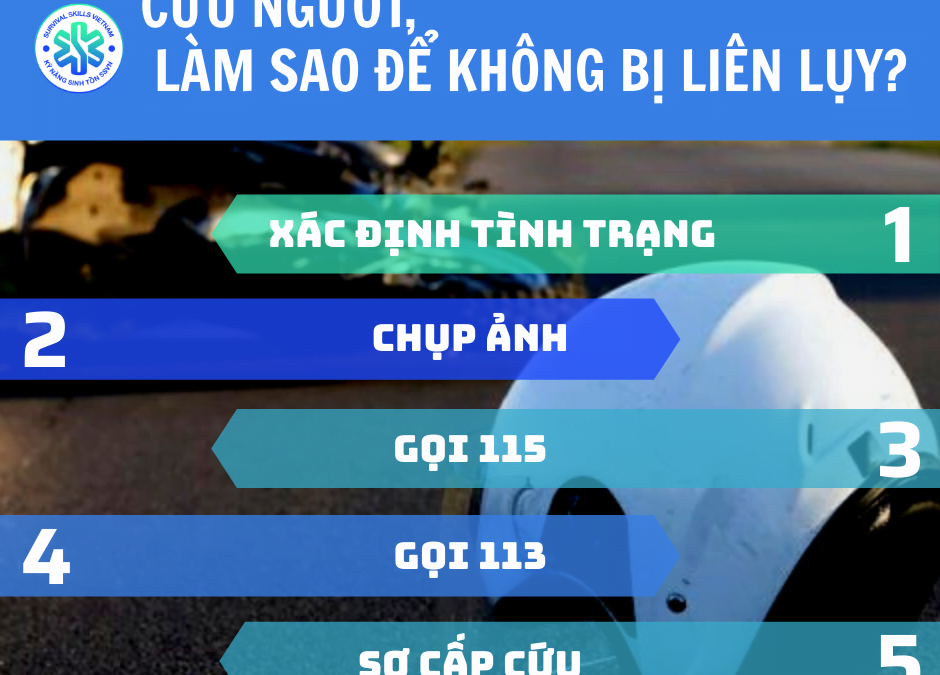
In order to save lives and limit future troubles, we need to follow the following procedures when encountering a victim:
Identify the victim's condition.
Take a snapshot of at least 3 photos and record a short video showing:
Overview of the scene;
People involved, testifying or seeing;
Directly photograph the victim and his or her wounds.
Call 911 to report the scene and ask for more first aid if needed.
Call 113 to report the incident or ask people to call the local police.
Call the victim's family to come and coordinate with people around to give first aid to the victim while waiting for the ambulance and the victim's family to arrive.
The above actions can limit legal trouble, assist police in the investigation process, and avoid being misunderstood by the victim's family.
At the same time, every Vietnamese needs to be equipped with knowledge and effective first aid skills in advance to help the victims, help maintain their lives, make the victim's condition less severe, increase their ability to recover and limit the loss of life. reduce the risk to both yourself and the victim.
Thus, first aid while waiting for the ambulance to arrive is not difficult if we know the right way. May each of us no longer hesitate to help victims when they are in great need of help.
Information with reference to the experience of field first aid in Vietnam of the FAS Angels team FAS Angel - First Aid Support .
Choking is a common accident in children, especially children aged 1 to 3 (According to statistics of Children's Hospital 2). At this age, the reflexes to open and close the larynx to protect the child's airway when eating are not yet proficient, the baby is learning to eat solid foods, eating rough and easy to put strange objects in the mouth.
A girl in Ho Chi Minh City choked on her airway due to bone fragments after eating porridge. However, due to not receiving proper first aid, after being taken to the emergency room, the baby was deprived of oxygen to the brain. This causes the girl's brain to be damaged with sequelae later on.
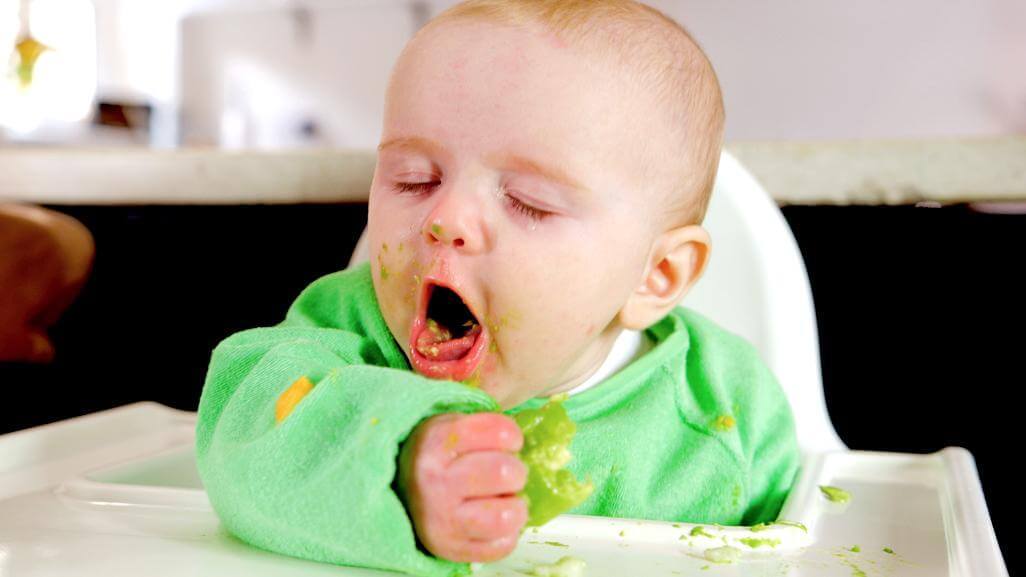
Children will easily choke while eating solids if parents are not careful
Common mistakes parents make when giving first aid to children:
Put your hand directly into the child's mouth to remove the strange things
This is very dangerous for the child, because the strange thing can go deeper. In addition, it causes scratching of the pharyngeal mucosa, because the trachea in children is very soft and vulnerable.
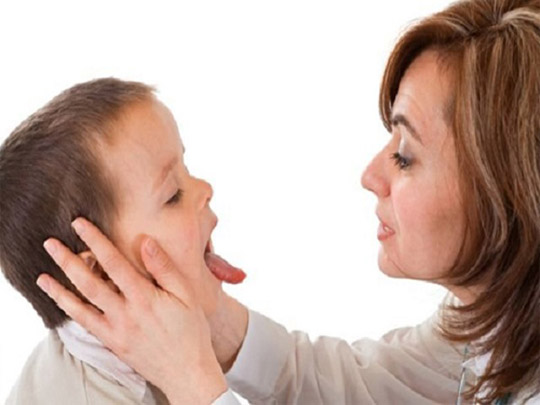
A mother looks in a child mouth when the child is chocking
Back patting, stroking the chest to handle foreign body choking
The most common mistake parents make is following folklore. This causes the strange thing to go deeper into the airway. Strong adult flapping force, plus the infant's inspiratory force only makes the foreign body go deeper.
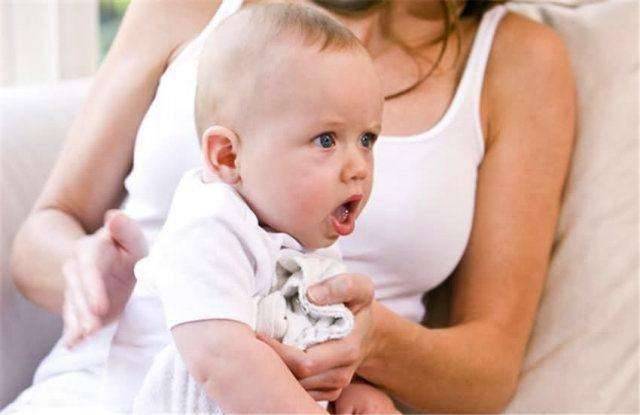
Parents often follow the habit of patting their children's chest when they are choking and choke on foreign objects
Use folk tips
Usually, parents will handle choking in the style of feeding their baby a rice ball or fruit. They think this causes the foreign body to follow the rice and fruit down the digestive tract. However, this action would be very dangerous. If the strange thing goes deeper into the airway, especially a sharp object, it will tear the child's airway.
These are the most common mistakes that few parents notice. Parents should be equipped with first aid knowledge to properly handle foreign objects in their children.
Learning first aid is very important for yourself, your family and the community. However, it does not substitute for practice training under guidance of experts to make sure you handle real emergency with confidence and correct practices.




 Identify the victim's condition.
 Take a snapshot of at least 3 photos and record a short video showing:
 Overview of the scene;
 Call 911 to report the scene and ask for more first aid if needed.
 Call 113 to report the incident or ask people to call the local police.
 Call the victim's family to come and coordinate with people around to give first aid to the victim while waiting for the ambulance and the victim's family to arrive.