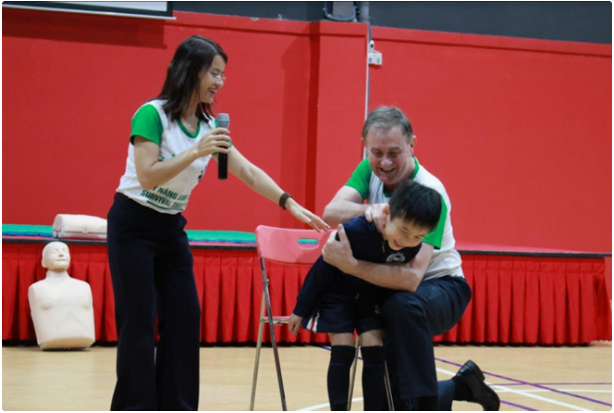
Being Asked if they regret spending half a day attending a first aid skills training class, instead of spending that time driving, two-wheeled drivers of Grab's ride-hailing app, laughing, said: "I got more than I earned, why regret it?"
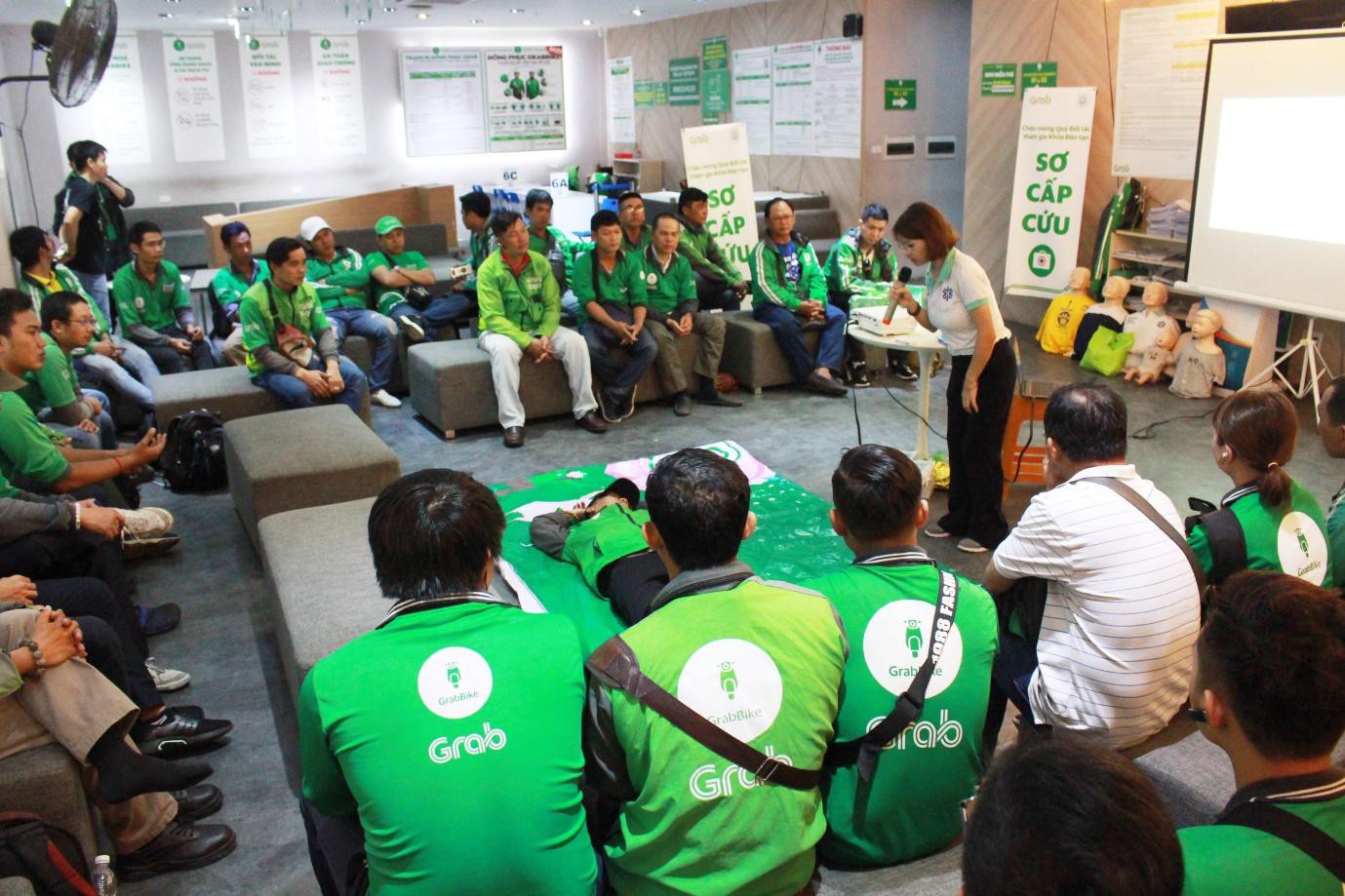
Recently, Grab organized a first aid course for drivers to help driver-partners have the basic knowledge to support themselves, passengers, and the community. Knowing how to give first aid can enhance the survival of yourself, your family, and those around you in serious situations. First aid also minimizes injuries from becoming serious before waiting for support from a professional team. This is a very meaningful course and needs to be replicated further.
Grab continues to deploy first aid skills classes for two-wheelers to provide first aid knowledge and skills for drivers in Ho Chi Minh City. HCMC. Grab is expected to quickly deploy the model in the market with an equally large number of partners and customers, which is Hanoi in the near future.
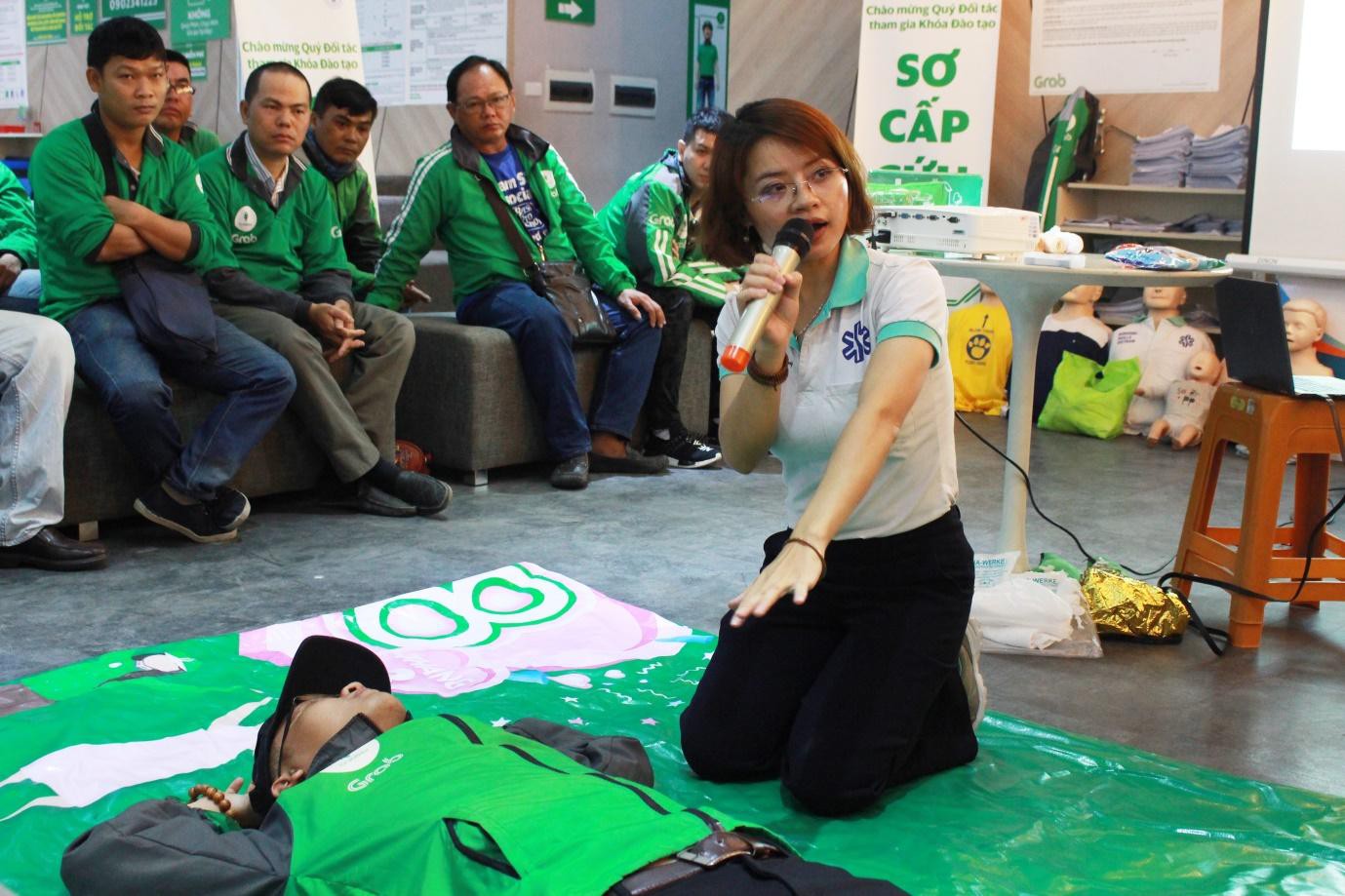
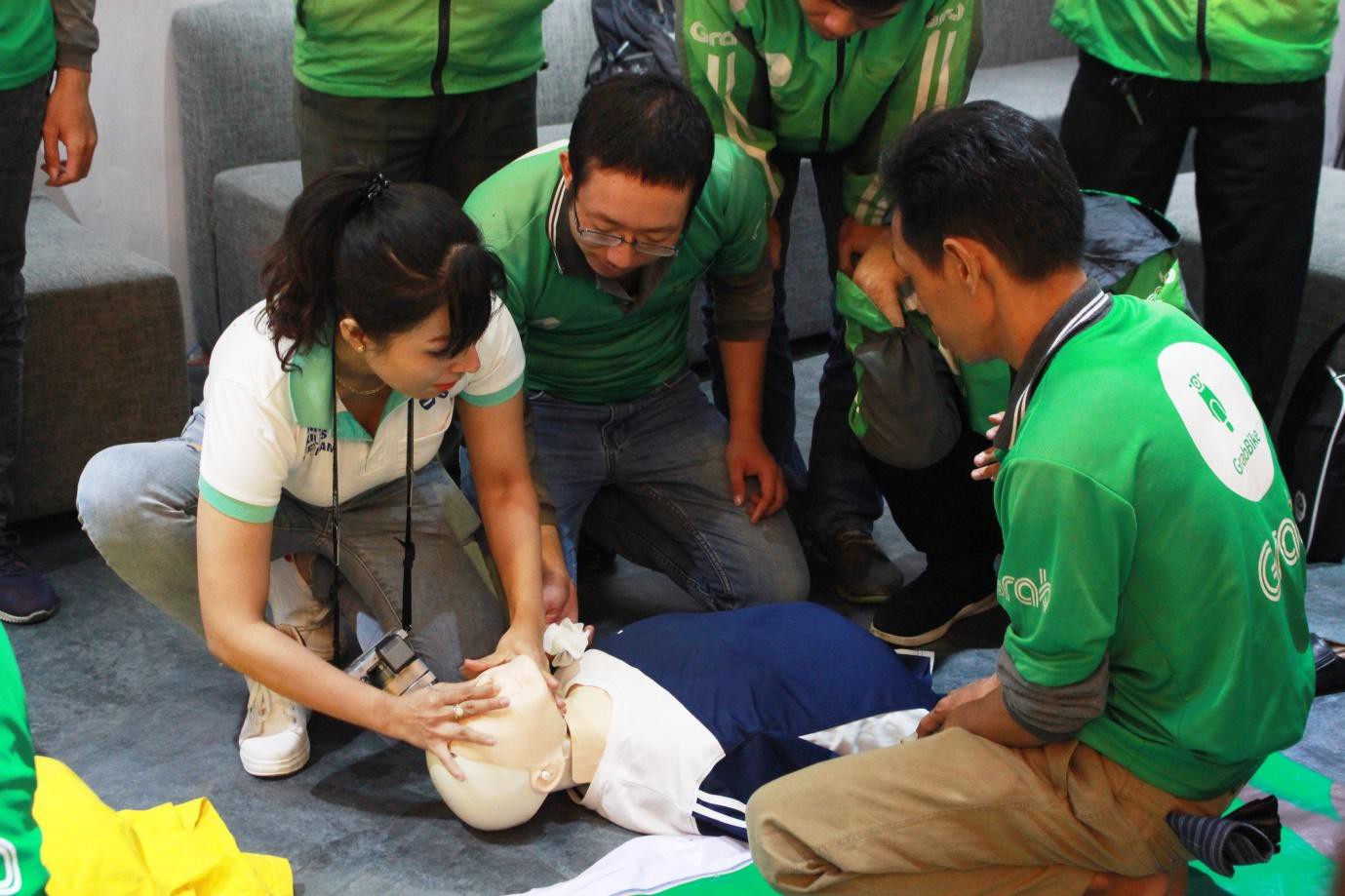
Grab has coordinated with the Vietnam Survival Skills Project to organize these first aid skills classes. Co-founder of the project - Ms. Trang Jena Nguyen, is the one who directly teaches the driver from knowledge to basic skills to handle in case of accidents encountered in daily life.
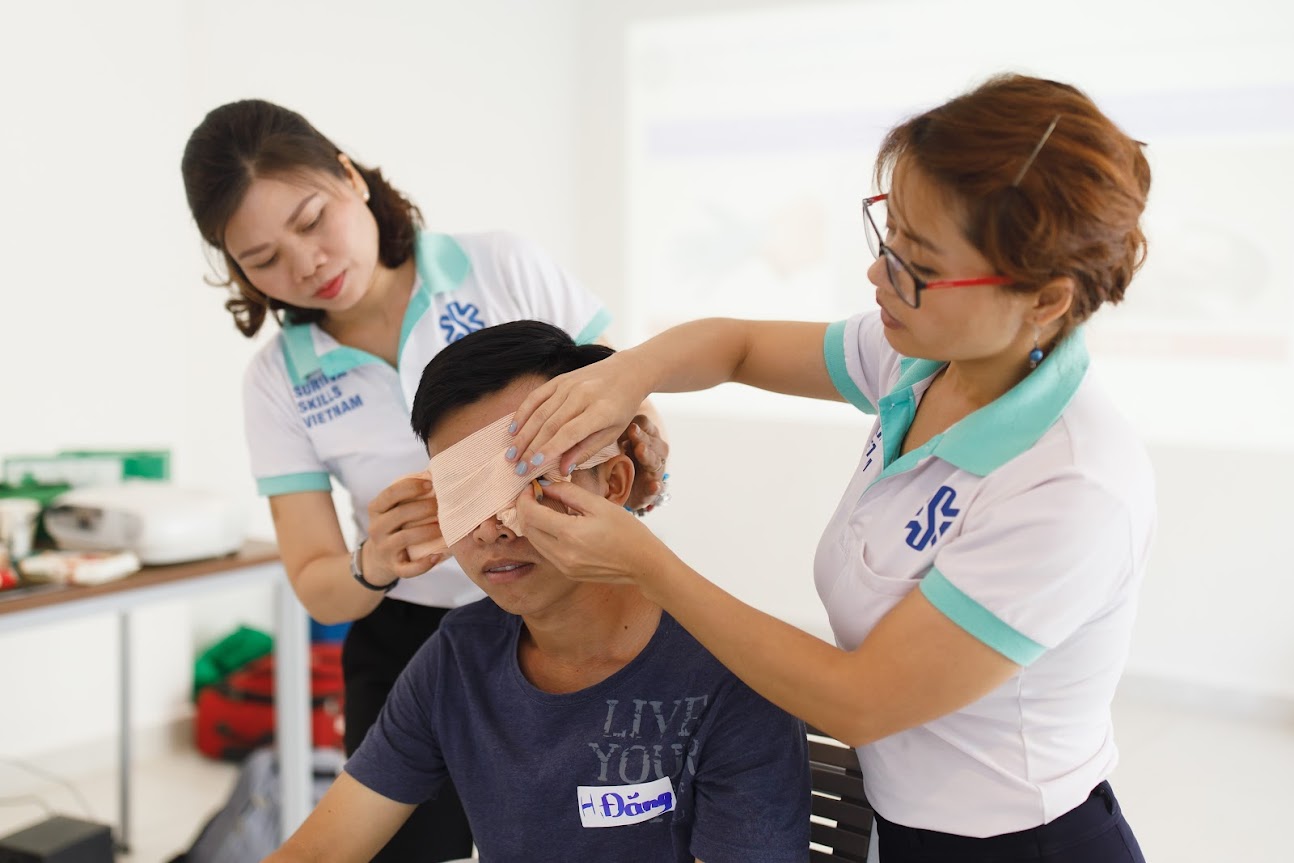
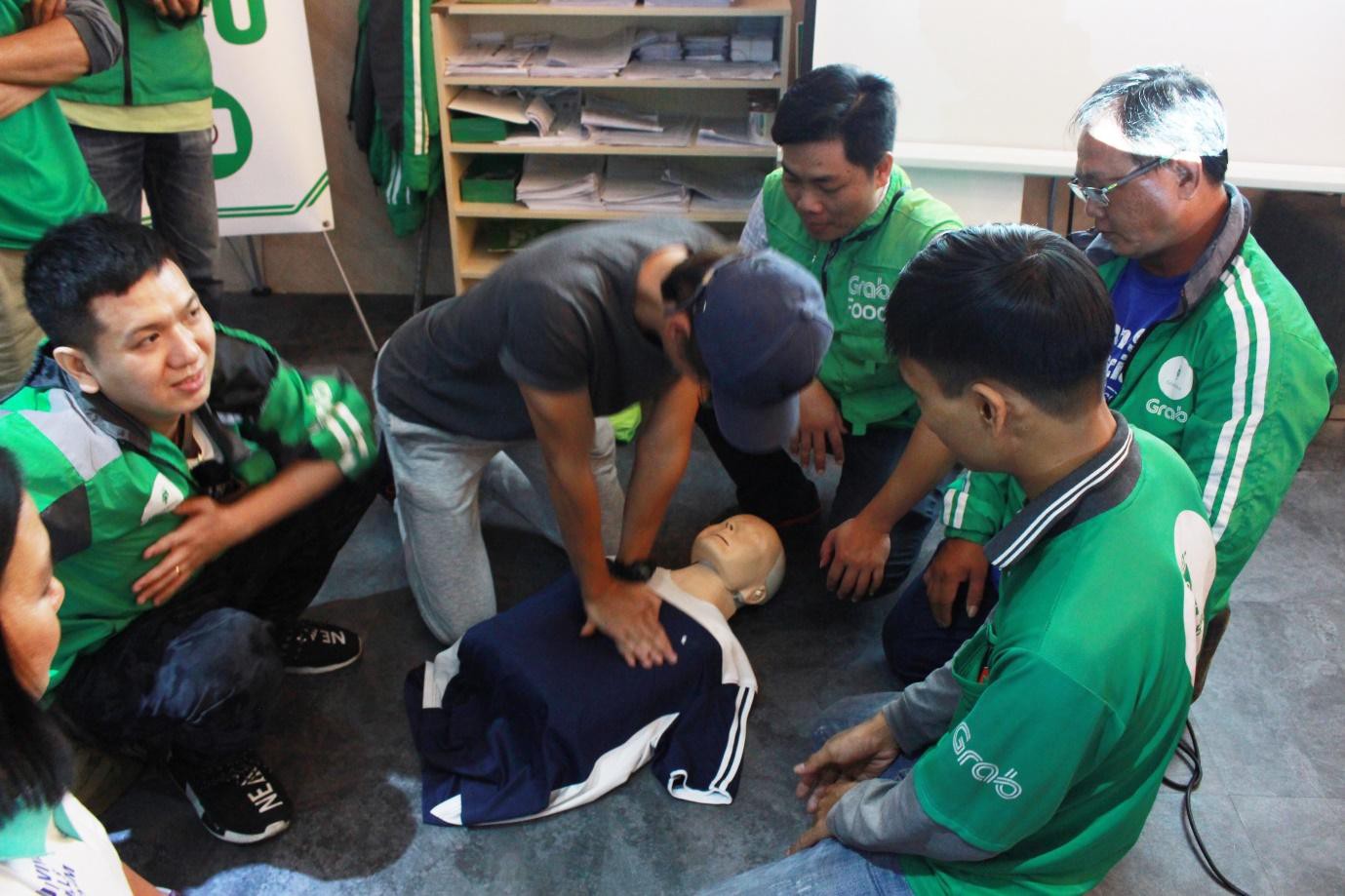
Common situations commonly encountered in daily life such as fainting, soft tissue injuries (hands and feet) due to sharp foreign bodies, choking foreign bodies, stopping breathing... The class teacher provided the initial identification of each accident case, and gave 100% of the drivers practice on the spot. .javascript:if(typeof(admSspPageRg)!='undefined'){admSspPageRg.draw(3196);}else{parent.admSspPageRg.draw(3196);}
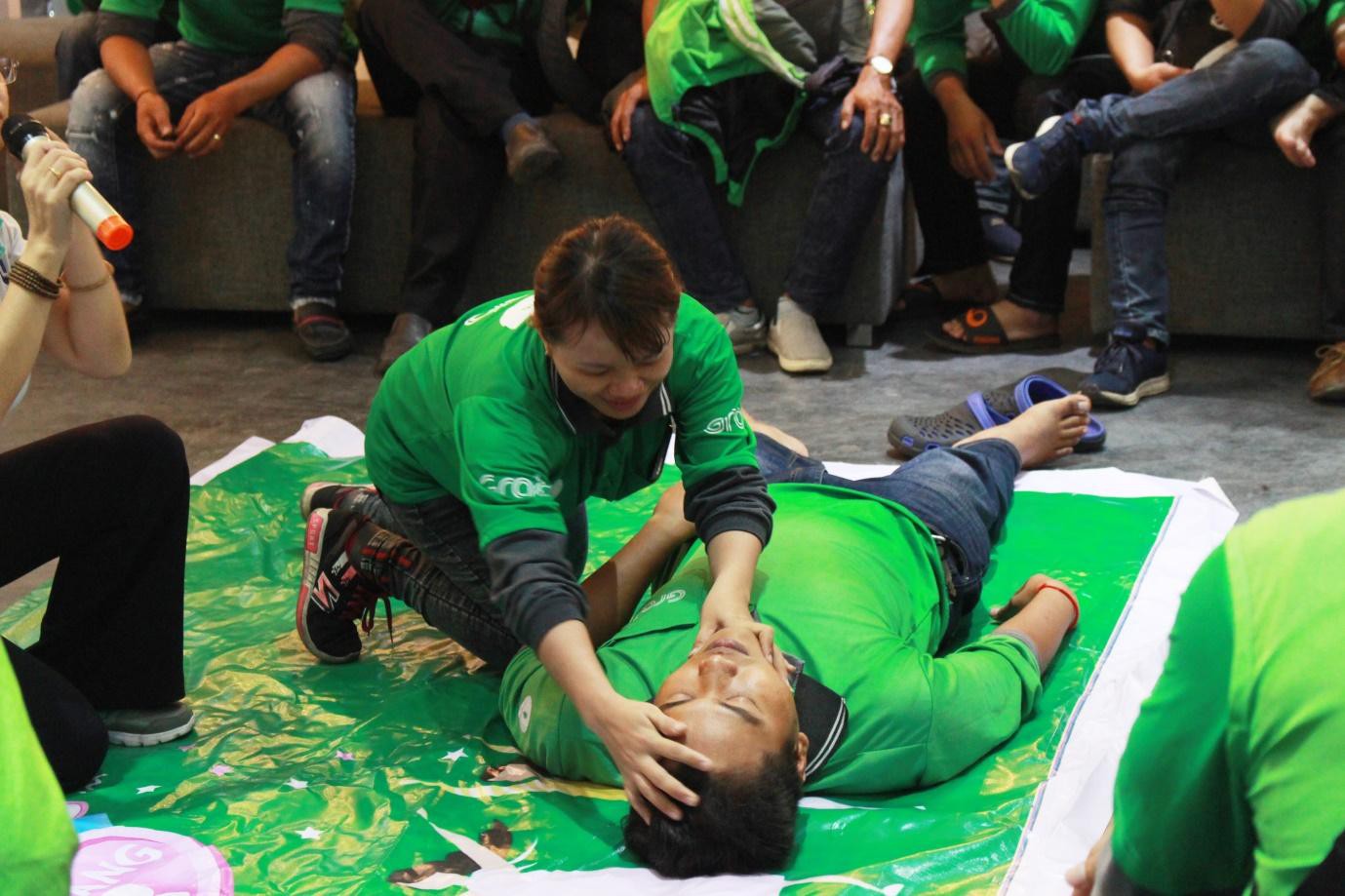
In the case of a victim of cardiac arrest or respiratory arrest, the method that must be performed on the spot before the arrival of professional ambulances is a combination of rescue breathing and chest compressions. This is one of the most difficult skills, so drivers are divided into small groups to perform under the guidance of first-aiders.
Ms. Trang Jena Nguyen commented that she was quite surprised by the practical skills of the drivers, even though they had not had access to first aid before. Ms. Trang said that this is one of the "students" who do the best in breathing and chest compressions because this operation is not easy to do.
"After the course, I gained a lot of knowledge about first aid skills when having an unexpected accident. Now, if someone in the family is burned, nosebleed, injured, or choked on a foreign object, they are also more confident to cope. I spent half a day driving the car to go to first aid training, but I have no regrets. I have more skills for myself and can help passengers, which is more meaningful than the money can be earned," said driver-partner Nguyen Van Ma Khac Huy, laughing.
At the end of the training course, drivers must take a short test of 15 questions, including knowledge and manipulation of some first aid skills. Mr. Jerry Lim - Director of Grab Vietnam, shared: "This training course not only equips driver-partners with basic first aid knowledge to support themselves and customers when they encounter unexpected accidents but also contributes to enhancing the safety of driver-partners and customers when traveling with Grab."
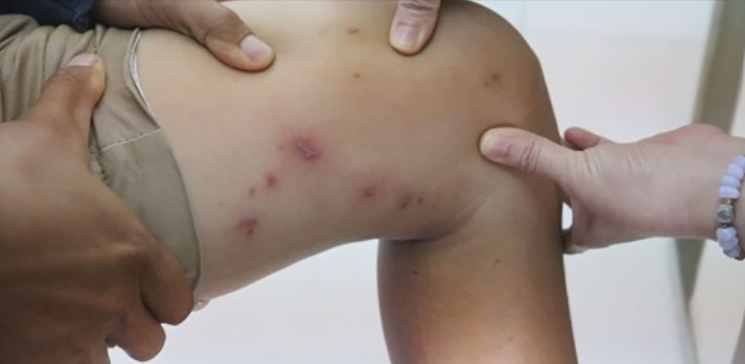
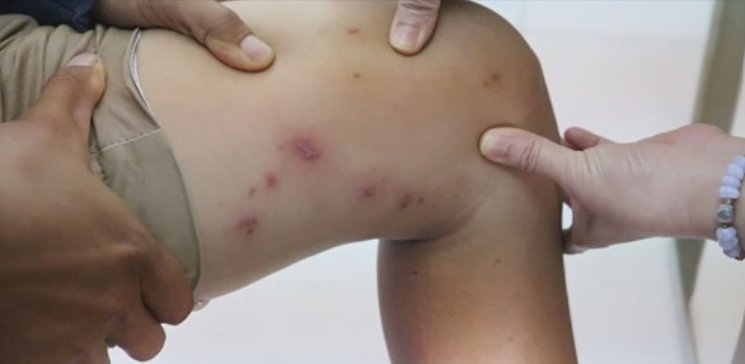
Every day, Ho Chi Minh City Dermatology Hospital receives an average of 80-100 cases for rove beetles' stings. Although this disease is not life-threatening, if allowed to spread, it can cause infection or full-body ulcers.
How to properly handle rove beetles' stings ?
Especially for people with certain allergies, a small dose of stimulation can cause severe reactions.
So how to properly handle rove beetles' stings? ✅ Use ? water and soap to wash the toxin-affected skin area of the rove beetles. ✅ Absolutely do not use your hands to touch the ants or toxic skin to avoid spreading the toxin. ✅ After giving first aid with soap and water, if the allergic skin areas do not subside, you can use anti-allergic drugs, if severe, you should see a doctor. Do not self-medicate with antibiotics without a doctor's prescription.
The special thing is that although we Vietnamese often say " rove beetles sting humans", the fact is that rove beetles do not sting people. When we kill rove beetles by squeezing or pressing on them, in the rove beetles' body there is a toxin called pederin that sprays on the skin, causing our skin to blister, be painful, hot like a burn, and cause an allergic reaction on the skin.
So you absolutely do not kill the rove beetles with your bare hands but use some objects to have these insects be out of the house. ✅ Regularly check your child's bed, pillow, clothes, and toys to find out if rove beetles are there before sleeping or playing in that area. ✅ Clean the house regularly Rove beetles like white and blue light, so you can replace it with yellow lights to reduce these beetles flying into the house.
There were two moments that made Tony Coffey a first aid instructor in Vietnam. It was from two accidents, one was the incident of his daughter, the other was the death of a Vietnamese baby.
When her daughter was only two years old, Tony Coffey was a businessman in Australia. While preparing food for his baby in the morning, Tony heard a sob behind him. Turning, he saw his daughter had fallen to the floor, pale, motionless. In a panic, he remembered the advice program on how to handle on Australian television, Tony immediately applied and took the girl to the hospital right after. His daughter, Shaana Coffey, was lucky to escape from the hand of the Death and became a first aid specialist like his father.
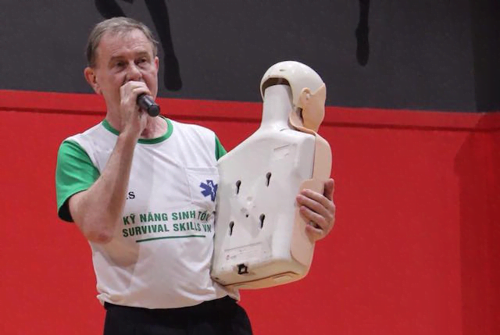
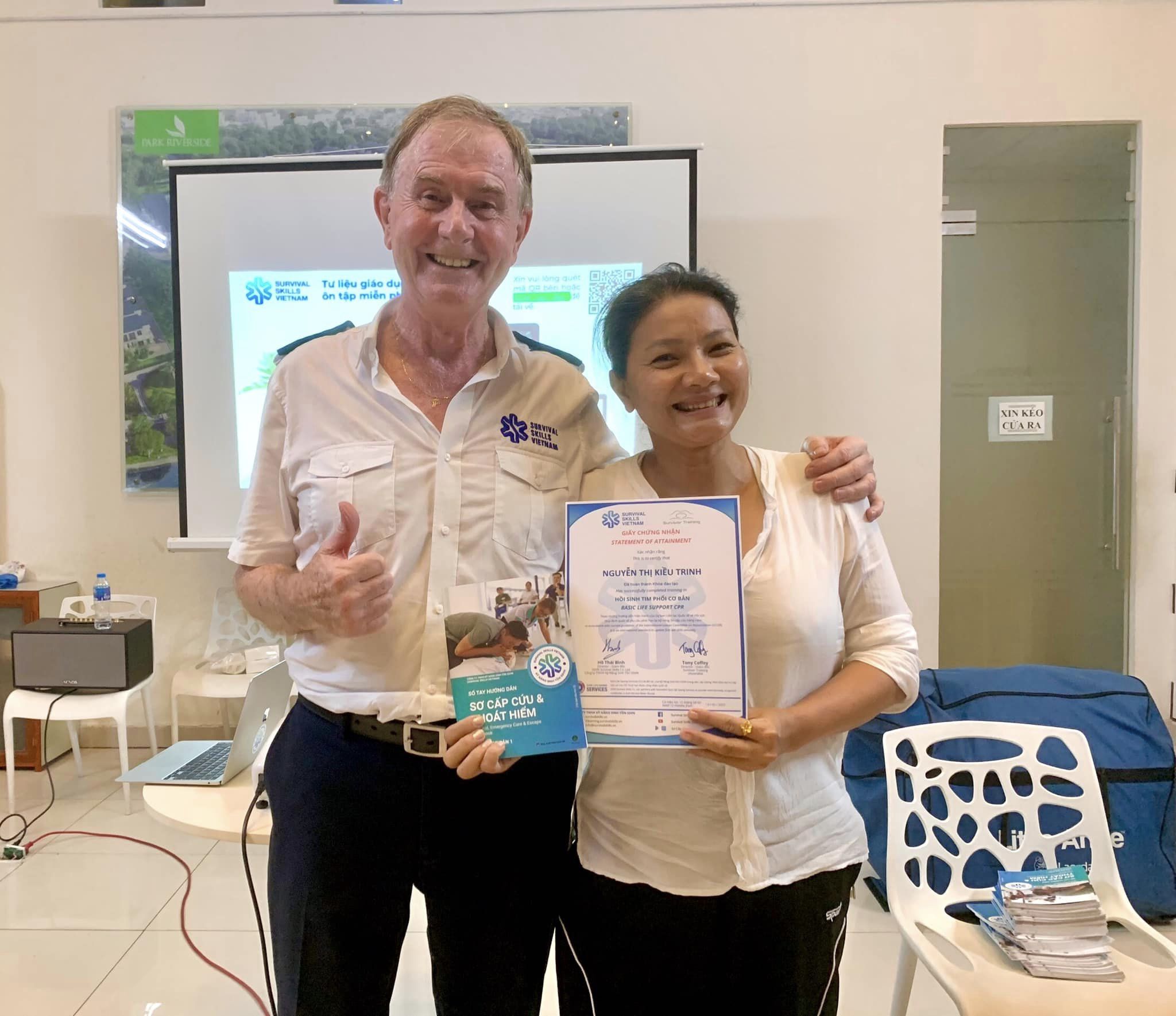
Mr. Tony Coffey with first aid class students
Mr. Tony came to Vietnam to organize first aid training sessions
After the incident of his daughter, Tony Coffey had changed his mind. He noticed many cases like this happening every day with children, but parents hardly know how to handle them. Tony quyết định học khóa cấp cứu để bảo vệ bản thân và gia đình. He has worked for the Sydney Lifeguard Association and the New South Wales State Rescue Academy, specializing in emergency care and volunteer rescue training for Australian organizations and businesses for more than 20 years.
But why is he in Vietnam? That was the story of 2014 when he went to Vietnam to travel. Accidentally, he knew that a baby had suddenly died due to airway obstruction but did not receive first aid in time. When the accident happened, the child care center staff called the family to come to the baby's emergency, but just a few minutes late, the baby's life could not be saved. Tony Coffey cried when he heard that story, he decided to bring his rescue experience to help the Vietnamese.
Mr. Tony Coffey used his own pocket money to come to Vietnam to teach first aid, from 2014 to the present.
Until now, there are still many people who still keep the wrong first aid habits and can make the victim's condition worse, not save the victim's life, the victim may even die on the way. If we take our studies seriously, we will realize the great benefits of giving first aid on the spot, and the best thing about first aid is that you don't have to deal with all the situations, but only to deal with the most serious situation.
Watch Life's Moment, broadcast at 22:45 every day on HTV9.
TGVN. Vietnamese classes in Switzerland are still quite modest compared to many other places in the world and Ms. Trang Jena Nguyen's (Nguyen Thi Thuy Trang) dream is also very simple: her students will soon have a proper class and stable location.
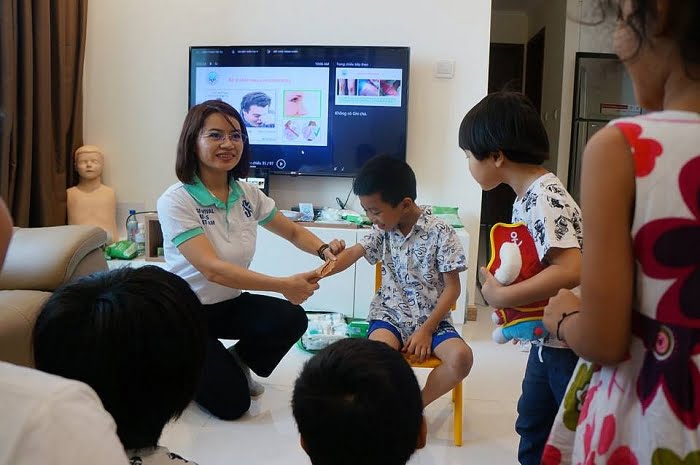
Trang Jena Nguyen teaches first aid to Vietnamese students. (Photo: SSVN)
Those who are interested in first aid and escape skills know Ms. Trang Jena because she is the co-founder of the non-profit program Survival Skills Vietnam (SSVN) in Vietnam, together with, Australia's leading expert in first aid and rapid response, Tony Coffey. Besides this community activity, now, she also finds another meaningful job, sowing Vietnamese in foreign lands.
From "survival" classes
Lucky to participate in the First Aid course organized by the Australian Consulate for a group of Australian alumni in 2014, Ms. Trang Jena Nguyen quickly realized that this is an extremely important group of knowledge and life skills, but not yet popular in Vietnam. She wanted to bring these courses back to her country and realized that each individual needs to learn survival skills to save themselves and people around.
Therefore, right after the end of the course, she met with expert Tony Coffey to share the general situation that most Vietnamese people are not yet aware of the importance of first aid skills and have not been trained to do so. As a community activist, she earnestly asked the expert to arrange a return to Vietnam to share these skills with her in the community.
With that starting point, the SSVN program was co-founded by her and Mr. Tony Coffey and launched in Da Nang. In 2016, SSVN moved to Ho Chi Minh City. Ho Chi Minh City and operates under the auspices of the Center for Community Health Research & Support (CCHS).
From 2014 until now, SSVN has equipped knowledge and trained thousands of Vietnamese people through community programs at schools, shelters, skill classes for children, pupils, students, adults, and corporate customers.
Despite being a bride to Switzerland, over the years, Trang Jena Nguyen has often returned to Vietnam with training activities, teaching knowledge, first-aid, and escape skills to many people.
At many schools, she and expert Tony Coffey practiced skills to effectively handle injuries common to schoolchildren such as fractures, sprains, dislocations, and drowning. There, the children were also enthusiastically instructed how to help others handle common emergencies such as stopping bleeding, stroke, unconsciousness cases, cardiac arrest, electricity.
Sowing Vietnamese in foreign lands.
Passionate about community activities, Ms. Trang Jena Nguyen's coming to teaching Vietnamese is also purely coincidental. As a non-specialist teacher, at first, she faced many challenges such as class shortages, incorrect teaching methods...
Returning to attend a training course on teaching Vietnamese for overseas teachers recently organized by the State Committee for Overseas Vietnamese (Ministry of Foreign Affairs), Ms. Trang Jena Nguyen loves her mother tongue even more. After participating in the training course and being equipped with valuable knowledge, the connection with her homeland deepened and she clearly saw the new task of maintaining and developing the Vietnamese language in the foreign country.
Now, that amateur teacher feels much more confident in spreading Vietnamese as a foreign language in Switzerland. Not only teaching in Zurich, she still maintains learning German to be able to integrate well into life here. In addition, she also teaches Vietnamese culture to some foreigners who intend to come to Vietnam to live and work.
Trang Jena Nguyen also devotes a lot of effort to support Binh Minh School - a place to teach Vietnamese children living in Switzerland and German communication classes for Vietnamese parents. This school was founded by Ms. Dung Moser a few years ago, so many things are still new and lacking, but there are always enthusiastic and completely voluntary teaching of some Vietnamese teachers.
“Previously, classes in Zurich could only be held if the venue was borrowed for a few hours at a restaurant. Currently, my husband has decided to sponsor a number of classrooms to make teaching more convenient. The good news is that the number of students learning Vietnamese has been increasing. If in the past, teachers had to go to encourage their children to participate in Vietnamese learning, now, parents are looking forward to Saturday to bring their children to class," shared Ms. Trang Jena Nguyen.
Talking about her current aspirations, Trang Jena Nguyen said that her students need an official and stable place to study compared to today. She also hopes that Vietnamese will become a foreign language taught in schools in Switzerland in the future like some other countries. For her, “where there's Vietnamese, there is a homeland. The more I understand and stick with the Vietnamese teaching profession, the more I love this volunteer work and realize more clearly that my noble mission to my mother tongue comes from my breath."
Recently, nearly 800 teachers, staff and students of North American International School - SNA (under Nguyen Hoang Group) participated in a first aid and escape training session led by first aid expert Tony Coffey from Australia.
Mr. Tony Coffey and Ms. Trang Jena Nguyen practice first aid for victims of food choking. (Photo: Ngoc Trang)
At the training session, Tony Coffey - Australia's leading first aid expert - pointed out some common mistakes people make and gave first aid instructions to students and teachers of North American International School. - SNA (Him Lam Area - South Saigon, Ho Chi Minh City). Specifically, the first 4 minutes after an accident is a "golden" time to minimize the danger of the injury. However, many people still keep the wrong first aid habits and can make things worse. Accordingly, SNA students have been practicing skills to effectively deal with common injuries that students often encounter such as fractures; Sprain, dislocation, drowning. At the same time, they learn how to help others, how to handle common emergencies such as hemostasis, stroke recognition, unconsciousness, cardiac arrest, electric shocks... In addition, SNA students also learn escape skills when there is a fire or gas leak. The training session of expert Tony Coffey attracts students by relating to real-life situations such as choking on food, cutting the neck, preserving severed body parts... In which, first aid steps are meticulously guided through models and students volunteer to model.
Ton Nu Cam Quynh, Class 10V2, shared: “The training session was quite interesting, helping me learn a lot of practical skills. After this class, I realized that I had misunderstood some basic first aid methods before. Specifically, the most useful skill for me is dealing with drowning because I love swimming and have met many friends who get drowning." Statistics in a hospital in Vietnam show that up to 50% of people receive unfortunate consequences because they do not receive first aid or give first aid incorrectly when having an accident. In the process of development, Nguyen Hoang Group always focuses on cooperating with prestigious educational institutions and international partners to continuously develop training programs of life skills - life values for students and teachers; towards training a generation of comprehensive people rich in human values. The training of first aid and escape for students at SNA has also demonstrated the profound Human value of the Nguyen Hoang Group. It is not only teaching students to equip themselves with survival skills, but also teaching them to be responsible for themselves and society through saving themselves and saving people around them. In the coming time, Nguyen Hoang Group will deploy these first aid and escape training sessions to other member schools such as Saigon Academy International Kindergarten (SGA); iSchool International Integration School System (iSchool); The system of International Bilingual Schools British Academy (UKA), Hong Bang International University (HIU) and Ba Ria-Vung Tau University (BVU).
Learning first aid is very important for yourself, your family and the community. However, it does not substitute for practice training under guidance of experts to make sure you handle real emergency with confidence and correct practices.