There are many questions sent to SSVN on how to handle the wound bleeding, particularly whether to use an antiseptic (alcohol, peroxide) or not?
So this post SSVN provides detailed instructions on how to give first aid (not care or treatment) for each type of bleeding wound.
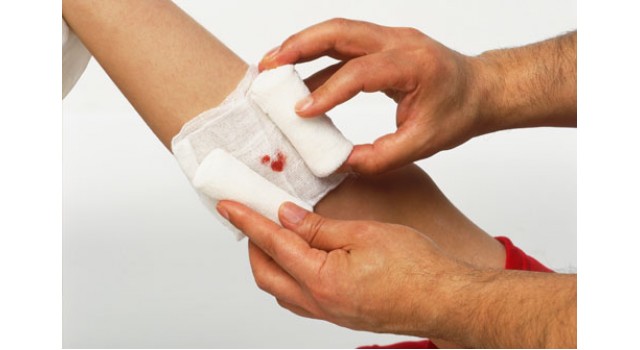
1. With a large wound causing massive bleeding, the most important priority in first aid is to stop the bleeding to keep the victim's life. After hemostasis, the victim should be taken to the hospital for treatment, then the doctors will continue to handle the next progression such as infection, stitching wounds, artery, blood transfusineeded.
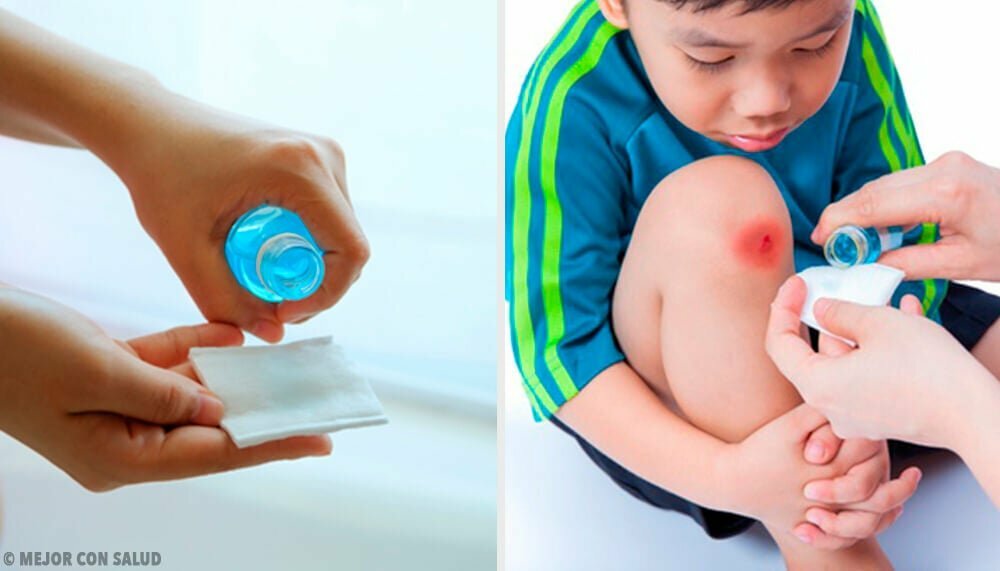
Therefore, for first aid, our job is to stop the bleeding. If the wound is not too dirty, just give priority to applying pressure to stop the bleeding. Do not apply alcohol or hydrogen peroxide to the wound because alcohol will kill the white blood cells the body produces to fight viruses and bacteria and destroy tissues, making the wound more likely to become infected or take longer to heal.
Trong trường hợp vết thương lớn bị bẩn đất cát nhiều, và xung quanh có nước sạch sẵn thì bạn dùng nước xối nhanh để rửa trôi bụi bẩn rồi tiến hành cầm máu ngay, vẫn ưu tiên cầm máu hơn bạn nhé.
When an accident occurs, physiological saline is rarely available, so you should use clean water to rinse it. Tuy nhiên việc cầm máu là ưu tiên nên các bạn nên luôn luôn trang bị các túi sơ cứu cá nhân, gia đình, văn phòng gồm nhiều loại băng thun, gạc không dính để có sẵn sàng cho việc sơ cấp cứu các sự cố này.
2. For both minor abrasions that don't bleed a lot and minor injuries that aren't life-threatening, you have more time to deal with them. At this time, if the wound is soiled with dirt, you should use water or physiological saline to wash the wound. Then using non-stick, sterile gauze in first aid bags to cover the wound and finally paste it with medical tape. Or use medical patches depending on the area of the scratch to limit infection. This is the end of the first first aid part.
If you are concerned, you can use an antiseptic solution that is hydrogen peroxide, used to dot around the outside of the wound (do not pour directly into the wound).
If you are concerned about tetanus bacillus infection as the accident area has a lot of dirt, human or animal feces, or poor sanitation, you should consult a doctor to let you know what to do after the first aid
If you live or travel to a polluted area, especially with activities that have a risk of falling, it is best to get vaccinated against tetanus before and after having an incident. You should still see a doctor for consultation and further treatment.
Note: There is a lot of confusions between first aid, which is what needs to be done immediately when an accident occurs, and treatment handled by doctors.
SSVN only provides first aid instructions to save lives and eliminate danger to the victim's life when an accident has just occurred, according to the latest updated recommendations of reputable medical organizations in the world.
After that, you need to take the victim to a medical facility to be treated by a doctor on a case-by-case basis.
Support knowledge – skills for people in the community about health to help them know how to give first aid, be safer in emergency situations, access medical services, do not do wrong to have sex aggravating the situation to help relieve the burden on medical colleagues in the emergency departments of hospitals is one of the missions that CHIR aims at.n.
This is also the mission of any medical staff, or any medical service organization, or the entire health industry!? I believe it is true
CHIR's Smart Health Community Project, born in September 2019 with the desire to impact the community, is also having initial results and is receiving the attention of many organizations and resources in society.
Today, I am very pleased to announce to you, CHIR has connected with SSVN Vietnam, a Social Enterprise like CHIR, which is implementing many activities to spread first aid knowledge to Vietnamese people. Nam with more than 42,000 visits to First Aid knowledge through many different channels.
SSVN and CHIR signed a cooperation agreement, accompanying each other in specific activities:
CHIR advises and accompanies SSVN to implement activities to improve first aid skills for Vietnamese medical staff to improve treatment quality and patient safety at medical service providers. economic. CHIR advises and accompanies SSVN to spread first aid skills into the community through the Smart Medical community project . SSVN advises and supports CHIR in implementing online training activities for Vietnamese medical staff, helping to strengthen skills in improving quality of medical services, health management, risk management, and human safety. disease etc.. Being connected and accompanied by a unit with the same core values and community-oriented as SSVN is a success of CHIR.
In the morning of June 18, the UEF Community Connection Center continued to organize the second seminar in the online series LEARN.SHARE.GROW around the topic “Social Impact Business” with experts from Social Enterpises SSVN.
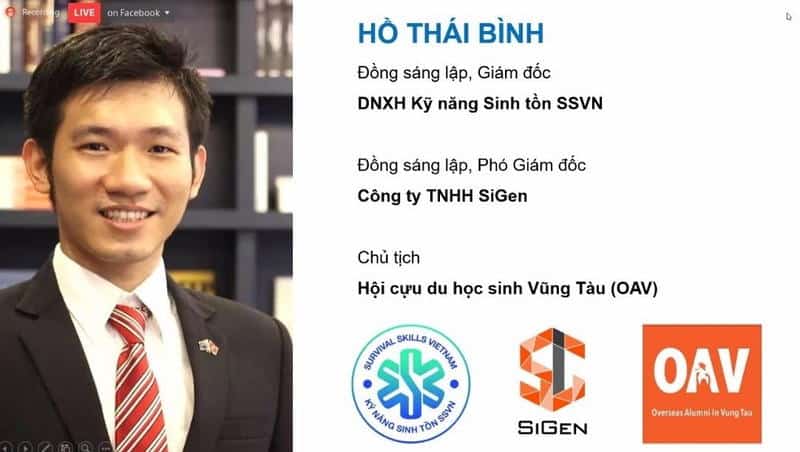
The speaker of the program is Mr. Ho Thai Binh - Co-Founder, Director of the Social Enterprise of Survival Skills - SSVN, Deputy Director of SiGen Co., Ltd. With experience working in many prestigious organizations as well as a great interest in social issues, Mr. Binh has been to many countries around the world to learn about the social enterprise model in order to find a sustainable direction for the society. this type of activity.
Mr. Ho Thai Binh is the speaker of the program
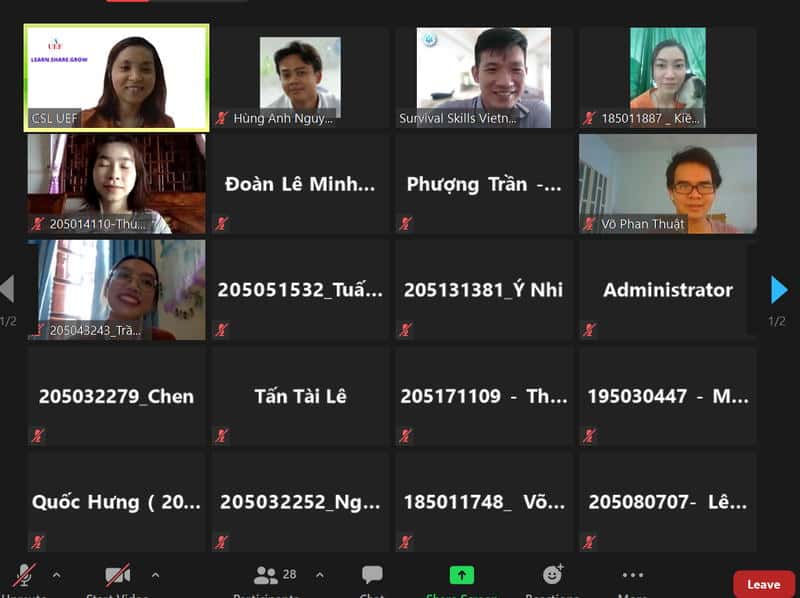
The program is held online, has attracted the interactive participation of more than 300 students and over 3000 video views. This shows that UEFers are always active in community activities. The real-life stories of the speakers themselves have attracted the attention of young people. At the same time, the activity also provides students with knowledge about first aid and business models that create social impact through lively transmissions.
The main content of the sharing session revolved around two main topics including the story of the establishment and development of SSVN and the peculiarities of building a social enterprise model. According to Mr. Binh, SSVN was born partly from personal experience, as he has been saved many times by people with these skills, so he is very aware of the importance of First Aid Skills.
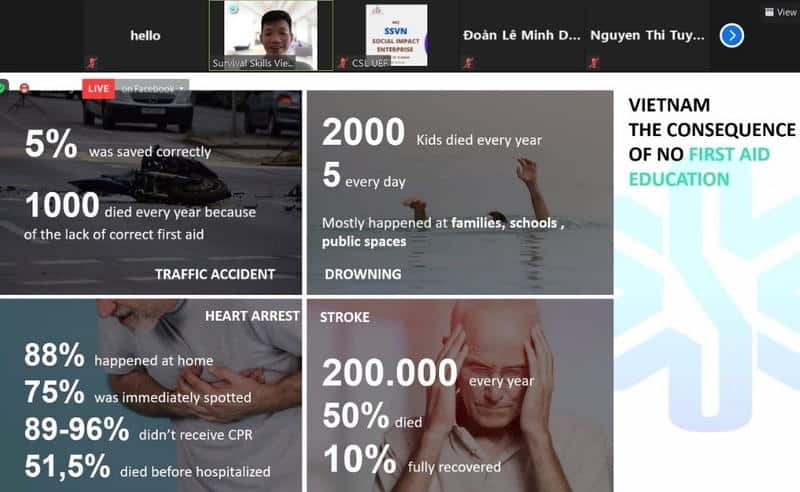
In developed countries, First Aid Skills are one of the skills that are required and are taught in schools from a very early age (primary level). Currently in Vietnam, First Aid skills are also gradually receiving a lot of attention from many organizations/enterprises. With specific examples and impressive statistics, Mr Binh showed UEF students that the right First Aid method is a great contributor to reducing the consequences of accidents and saving lives.
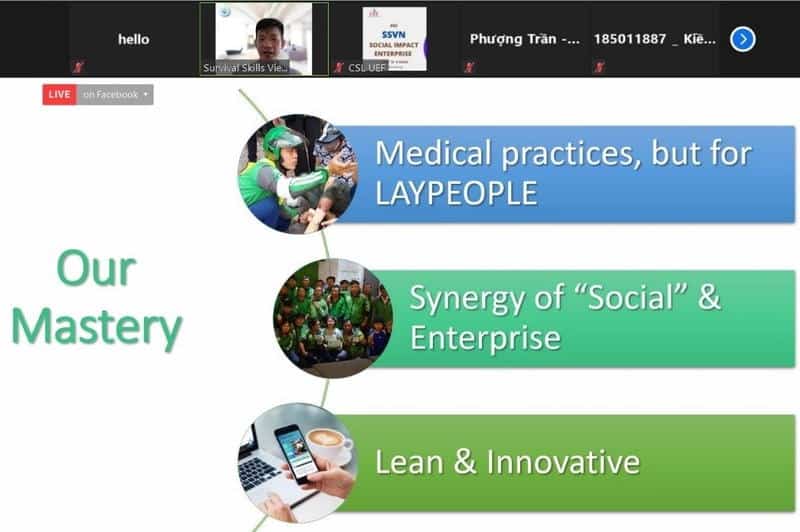
From the actual needs as well as the usefulness of First Aid skills, SSVN was born as a solution that is both financially sustainable and contributes many good values to society. With the philosophy that doing business has to create social influence,SSVN Social Enterprise operates with the goal: Bringing medical knowledge that is easily understood to everyone in order to reduce the fatality rate from accidents. Operating a social enterprise like SSVN also has many unique differences compared to non-profit organizations.
Mr. Binh said: for Social Enterprises, profit is not the ultimate goal of business activities, but plays a significant role in decisions as well as organizational orientation. In addition, when working for a social enterprise, his dedication makes every work day enjoyable. This creates many different perspectives for students, especially those with a major in economics, about a new type of business.
During the sharing session, the students' interest was shown through many questions around the topic of First Aid. More than 100 questions from the beginning to the end of the program showed many creative perspectives of the students with the topic and by interactive activities, many questions were answered. And with the upcoming activities when combined with SSVN, the UEF Community Connection Center hopes to be able to meet more of the interests of UEFers.
Questions related to first aid are given to update students' knowledge as well as change the atmosphere of the program.
It is known that in June and early July, the UEF Community Connection Center will continue to have new activities to equip more knowledge, skills and strengthen connections for UEF students with activities. community, especially the online talkshow series LEARN.SHARE.GROW.
"I came to this course in a passive position. Like anyone else out there, I am the same. For sure, I know this is useful knowledge that can save myself or anyone else when we are in accident, unfortunately. But, of course, "No, I'm lazy", "Yeah, that's important, but never mind", "Worry later", "It's not my turn to worry"... that sort of thing. But what will be, will be, willy-nilly. I had a feeling of some girl kids who cried a lot, cried them a river. In spite of that, they still performed without missing any action in many clips recently. This is the way I began with the course :Online First Aid
Because I came to the course passively, I did not figure out or know anything about this organization ( where is it? , who are they?,...) I began to learning first lesson with that state of mind. Looking at the theme of the knowledge that would be shared in the course, I had still not believed
until,
I began to switch the button for playing video. Like "Wow, unbelievable, I can understand all of them that there were many terminologys which is too difficult to learn when I learned Biology during high school (hicc). Because the information and knowledge is conveyed in the ordinary words, not for those in the industry, it is extremely easy to understand. The most basic knowledge of first aid is systematic from comprehensive to detailed for each case, and still based on 1 general formula. The repetition of that general formula and the specific application to each situation helps me to be impressed and remember more deeply. The course not only reinforces the 'facts' that everyone has heard but did not understand, but also confirms many misconceptions that are still believed to be true.
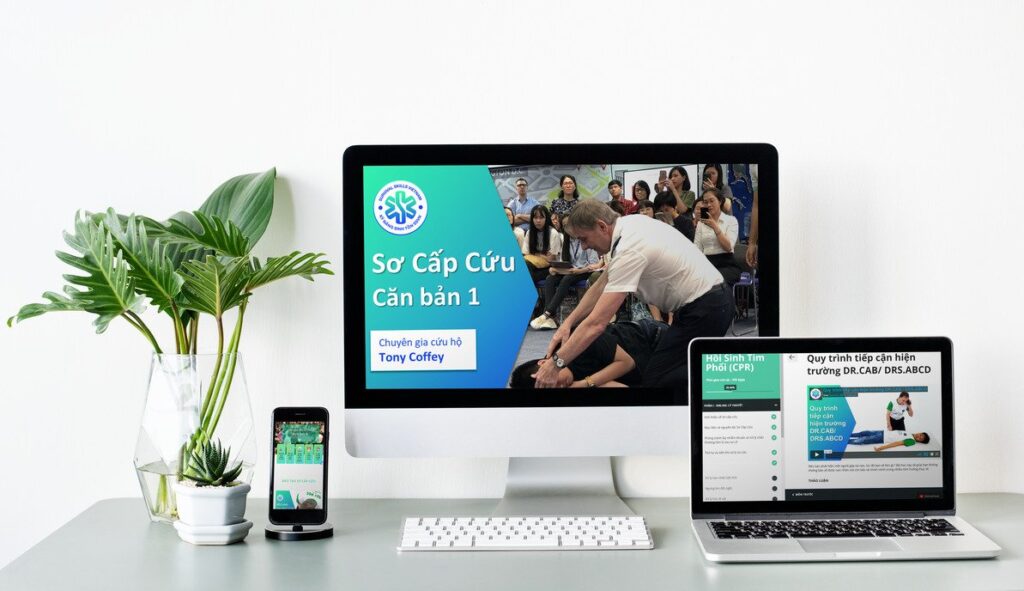
After that, I also found out the instructor for each lesson and this organization, then I knew the background, the level of excellence of the course that I was studying. All lessons in this Course are taught by First Aid Expert: Tony Coffey (roughly 28 years of experience in rescue and teaching in Sydney, Australia and 6 years in Vietnam).
This article is not intended to entice anyone to come and register and participate in SSVN courses. I hope you will start to equip yourself with knowledge related to first aid through courses, workshops or reading reliable documents online. At some point, it will be necessary If you are suffocated with many information or are still struggling to find a reliable courseSurvival Skills Vietnam-SSVN is a high recommend
Thank everyone who help me approach this course. I hope Survival Skills Vietnam-SSVN can quickly and conveniently bring these useful things to as many people.
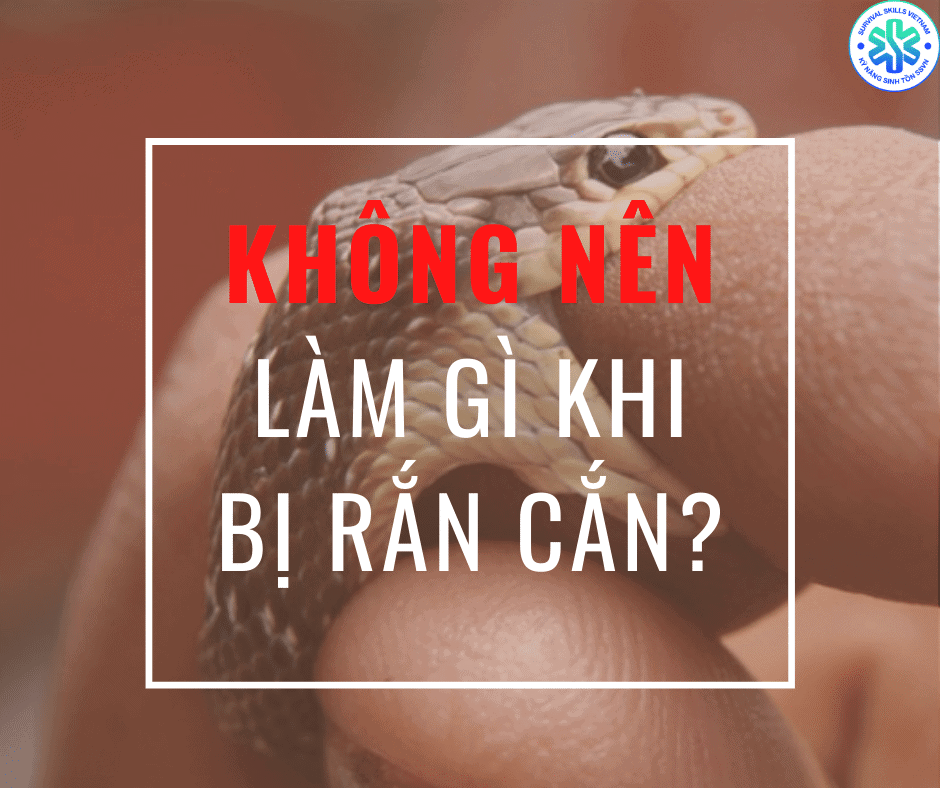
There have been many patients who were bitten by snakes but were late to the hospital because they struggled to apply folk experiences for first aid. When there are symptoms of respiratory failure (cyanosis, shortness of breath, etc.), they are taken to the hospital, at this time the treatment is very difficult. There are many first-aid cases that many people suffer from blood-borne gangrene, septicemia, and even death.
When bitten by a snake, people SHOULD NOT do by following:
Tie by tourniquet: A tourniquet is a measure that completely block an artery. Don't think that the tourniquet will stop the poison going deep. It is painful, dangerous and does not last for more than 40 minutes. Tying tourniquet will prevent the blood from reaching the tied location, making it easier to necrosis. When the doctor removes the bandage, the poison will simultaneously rush to the heart, causing the patient to go into shock, life-threatening.
Sting, slit, suck blood at the bitten site : These measures have no benefit, causing additional harm to the victim such as damage to blood vessels, nerves, bleeding that is difficult to stop, and more serious infection.
Appying a cold compress :Proven to cause damage to injury.
Using leaves to cover according to folk remedies: Must use the right medicine, type of leaves for first aid. Tuy nhiên những điều này chưa được nghiên cứu rõ ràng về công dụng. If the wrong type of plaster is used on the bite injury, it can cause further infection, and when ingested, it can be harmful to the victim. Therefore, it is best to take the victim to the hospital for proper treatment.
Try to catch the snake and bring it to the hospital: The reason why a snake bites a person first time is that it needs to escape and defend itself. After being bitten, the more you chase and try to catch the snake, the more violent the attack will be. Many people think that they should bring the bitten snake to the hospital so that the doctor knows what kind of snake for easy handling. In fact, snake venom needs to go through many stages to give medicine, consider the extent of the effect of venom in the body to diagnose. So there is NO NEED and SHOULD NOT bring the snake to the hospital, alive snakes will be very dangerous in crowded areas. You just need to describe the snake (striations, color, head shape...) if you had observation in time, had a phone to take a picture and let the doctor know. Or the doctor can identify the type of snake by the bite on the skin himself.
Learning first aid is very important for yourself, your family and the community. However, it does not substitute for practice training under guidance of experts to make sure you handle real emergency with confidence and correct practices.