Burns is a very common accident in daily life, stemming from many causes such as boiling water burns, motorcycle pot burns, electric burns, etc. Especially, children are often careless while playing, so they can create unfortunate situations. Currently, the number of burn cases in children account for more than 60% of burns in the country The problem becomes urgent because up to 80% of parents do not know how to properly give first aid to their children.
Image: Survival Skills Vietnam gives 5 steps treating burn in children
General statistics from Children Hospital I Ho Chi Minh City shows that up to 80% of parents give first aid to children with burns in the wrong way. Notably, the number of children which hospitalized with burns is on the rise with an average of 5 cases per day. Among them, there are many cases of severe burns in the 2nd and 3rd level, mainly due to the negligence of the adults. However, most parents are still subjective and careless when treating burns for children. Instead of giving the correct and timely first aid methods, many parents use the wrong measures such as applying for male medicine, applying toothpaste, applying egg yolk, using python fat or oilcá,…
1. The Dangers of Taking Care of a Burned Child the Wrong Way
Because children's bodies are different from adults', burns in children progress faster. Specifically, just being burned at 5% level, the child can also be shocked and seriously infected. If not doing first aid for burns properly and timely, can affect the survival of children in some critical cases such as circulatory arrest, respiratory failure, etc. In severe cases when the burn is necrotic, the child has to be cut off the part of the body where the burn was. Besides, the consequences of improper burn treatment are that the burn condition is more severe and there is a high risk of infection. Burns can have serious consequences on a child's life, health, aesthetic or mental health.
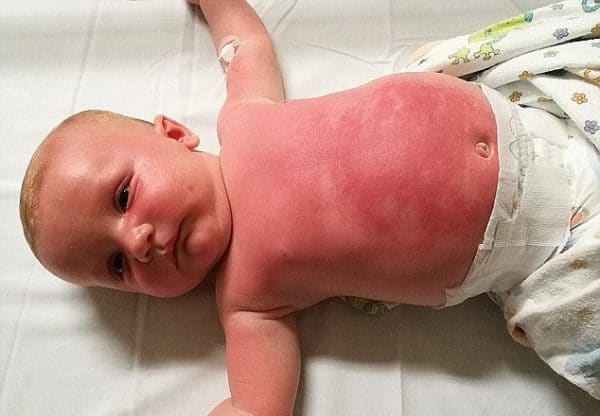
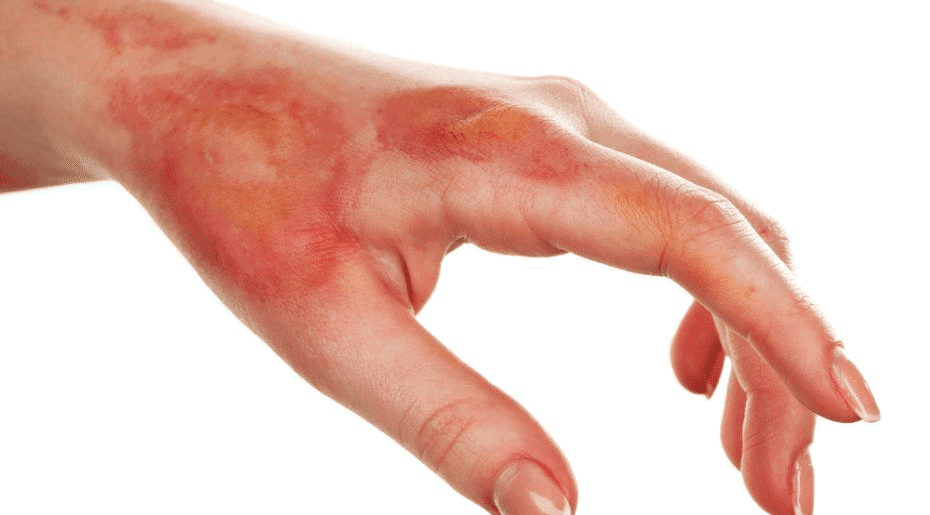
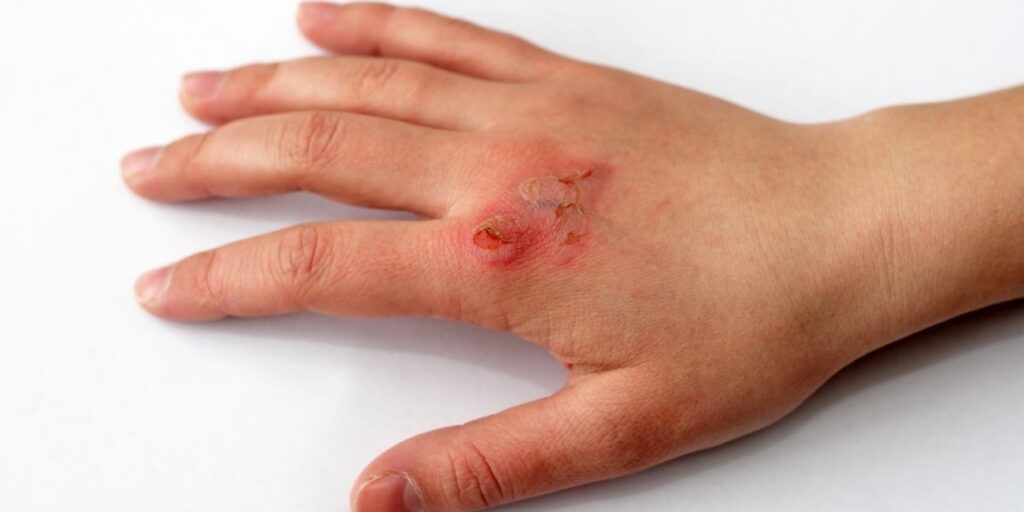
ILLUSTRATION: BUNRNS CAN CREATE HARD-TO-HEAL BRUISES
First aid when a child is burned is considered an extremely important step to prevent the injuri from getting deep inside and getting infected.
2. 5 Steps of First Aid When a Child Gets Burned
Children's skin is very thin, poorly heat-resistant, can be deeply damaged to parts of the body. If the burn is severe, parents must pay close attention. To avoid encountering unfortunate cases due to improper burn treatment. SSVN has compiled 5 basic first aid steps for children with heat burns for mothers.
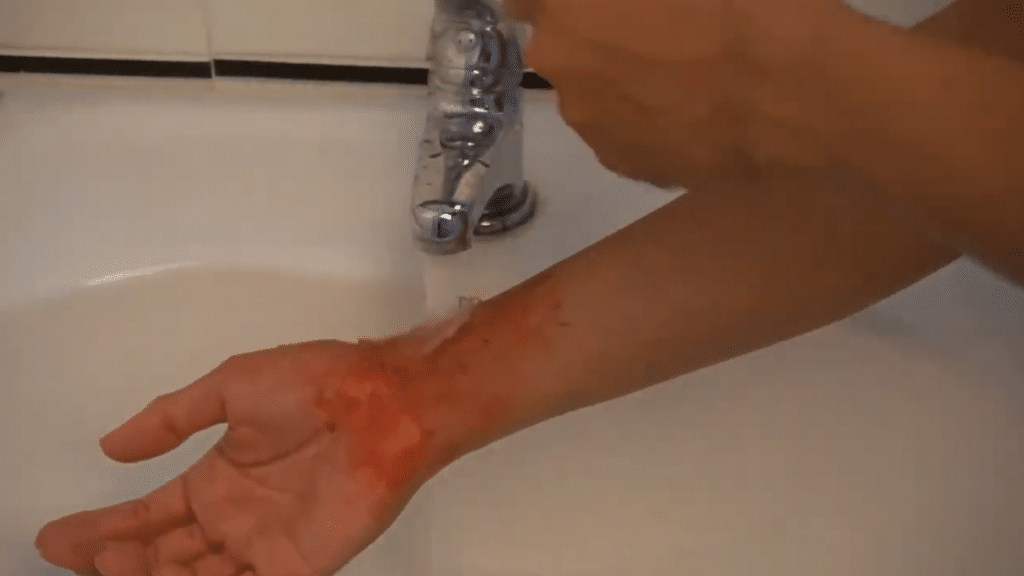
Step 1: Cool the burn with clean water
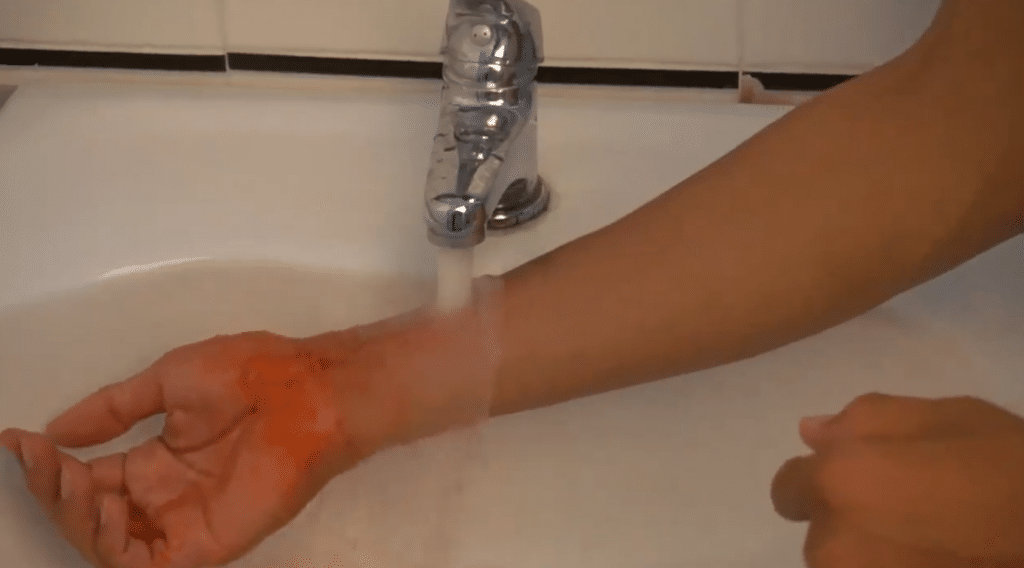
When the child is burned, the mother should immediately put the burned skin of the child in clean water to cool it, on average 15-20 minutes. It is best for mothers to use tap water, open it slightly and spray it on the skin.
PHOTO: SUPPLEMENTED SKIN INTO CLEAN WATER FOR 15 TO 20 MINUTES
Step 2: Clear the burn
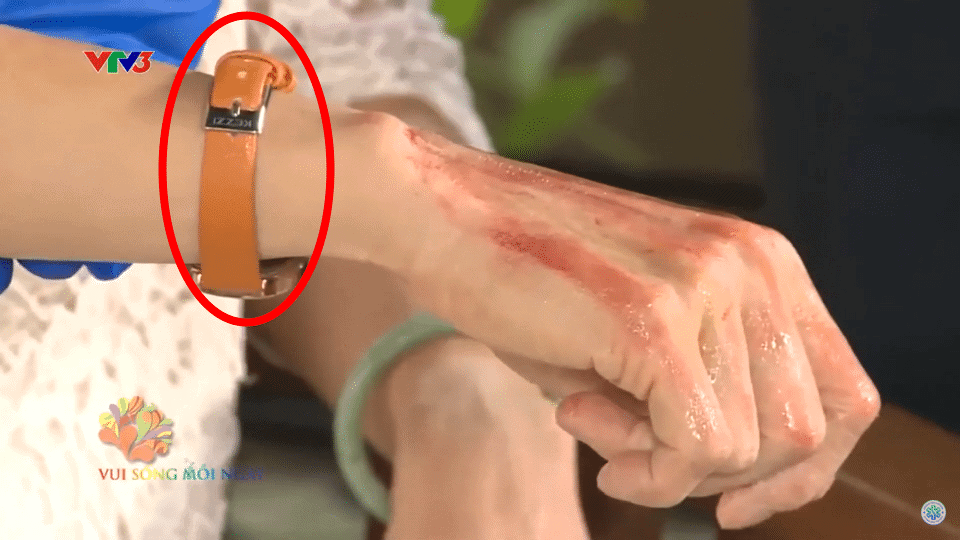
Quickly remove children's jewelry (bracelets, anklets, etc.) if any and clothes when they are not firmly attached to the burn.
PHOTO: REMOVING THE JEWELRY AROUND THE BURNS
Step 3: Clear the injury
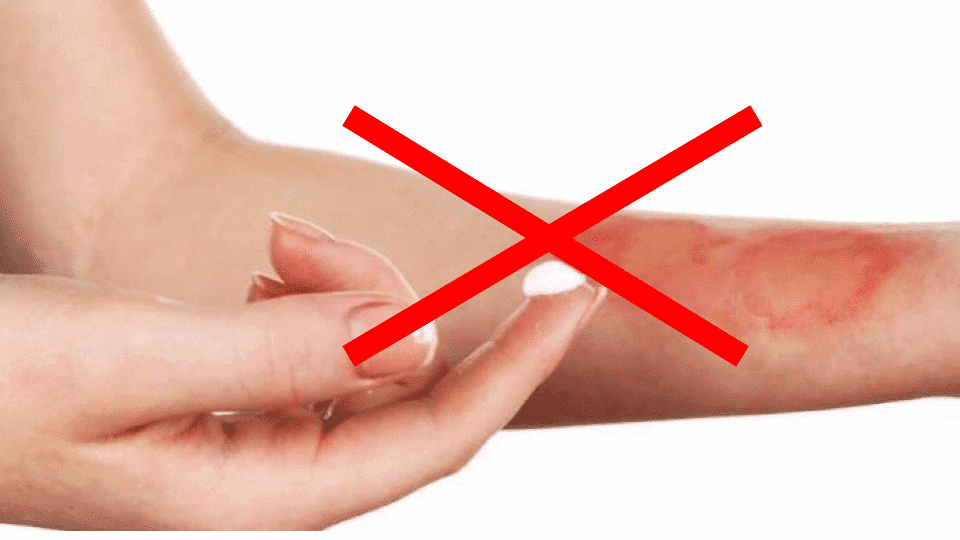
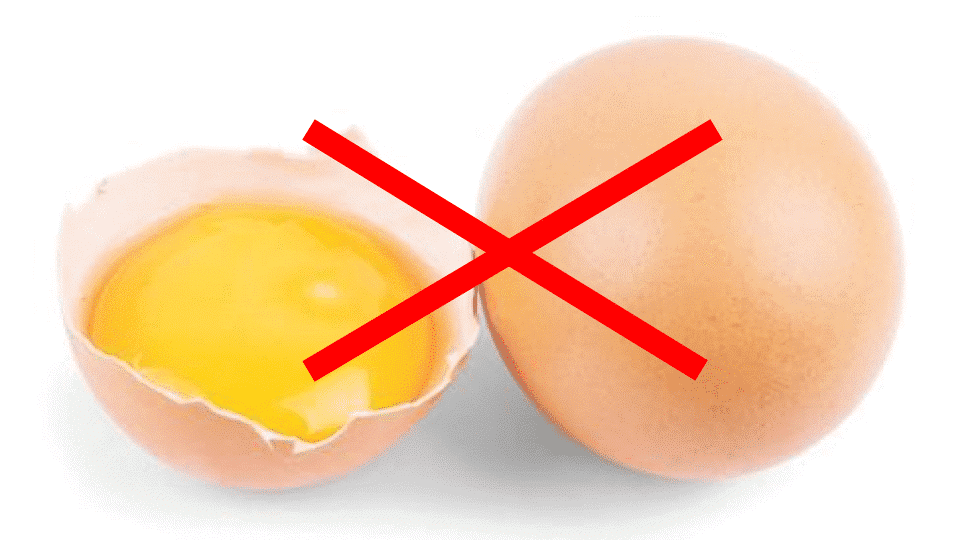
Absolutely do not apply creams, fish sauce, egg whites, etc. before the skin there returns to normal temperature. Always keep the burn clean
ILLUSTRATION: DO NOT USE CREAM, SALVE, EGG WHITES ON THE BURNT SKIN
Step 4: For children with mild burns
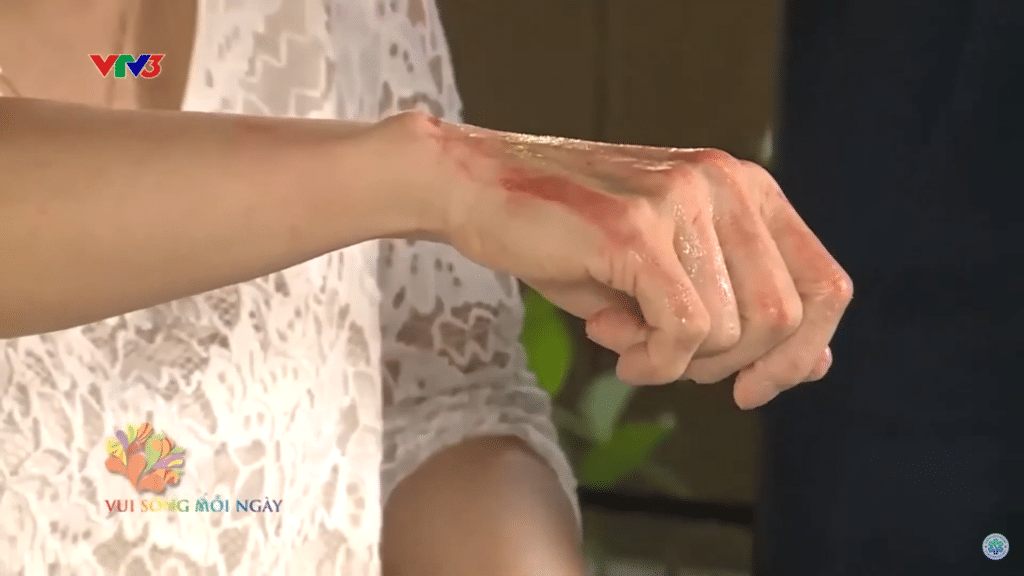
After the mother gives first aid with water to the child, you can leave the baby at home to let the skin recover and monitor the child's signs of infection..
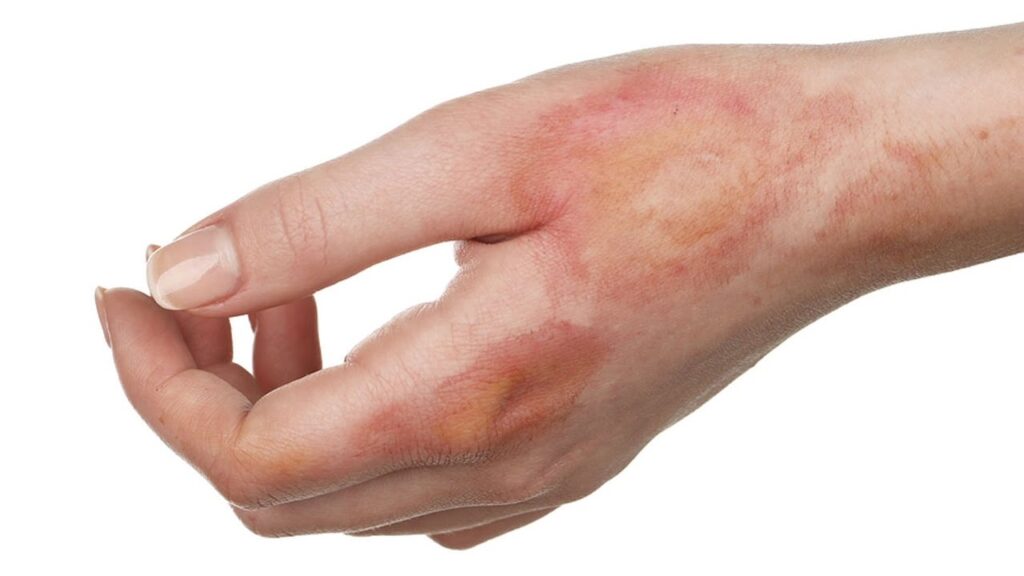
ILLUSTRATION: FOR SMALL BURNS THAT YOU CAN TAKE CARE OF THE CHILD AT HOME
Step 5: For children with severe burns (level 2,3)
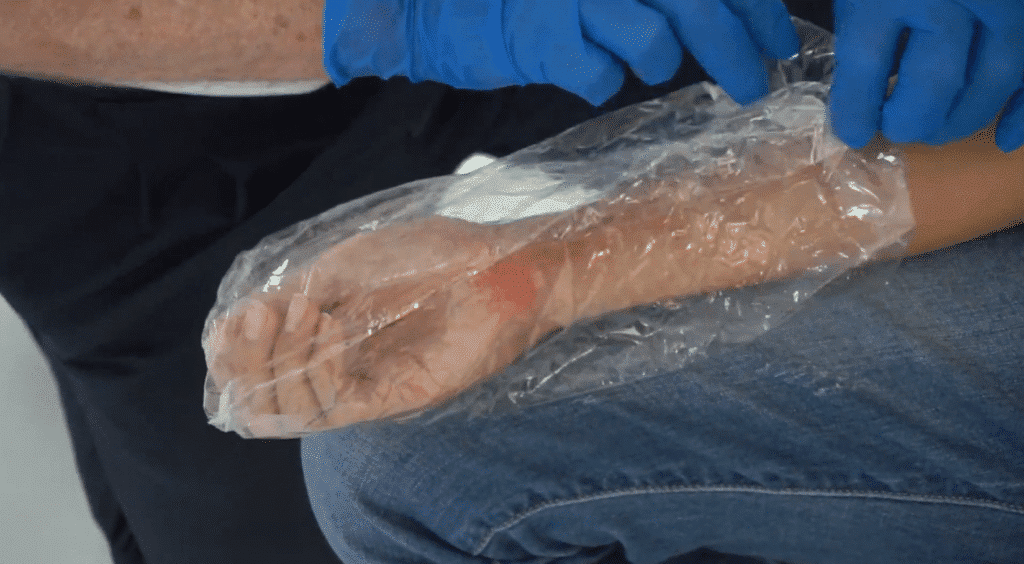
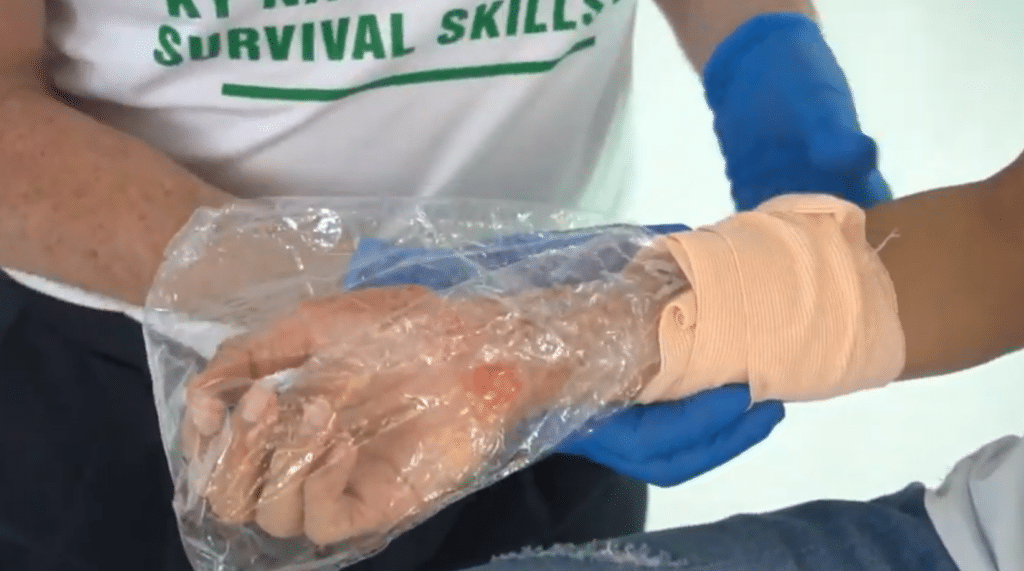
If the child's burn loses the skin, after the mother has given first aid to the child with water, it is necessary to take the child to the hospital. Cover the burn with clean nylon bag to limit infection. The reason to choose nylon is because it is a non-stick material. Cotton towels and ordinary gauze are easy to absorb secretions from the burn and stick to the wound.
PHOTO: USE CLEAN NILON TO COVER THE BURNS
Things to Keep in Mind When Giving First Aid to Burned Children
In the process of first aid for children with burns, mothers should note the following points to avoid making the burn worse. ❌You should only remove tight clothing and jewelry for children when they have not yet adhered to the burned skin. ❌DO NOT cover the burn with toothpaste, other creams, egg whites… when the skin there returns to normal temperature. ❌DO NOT use ice or very cold water directly on the burn. ❌DO NOT puncture or deflate blisters.
To learn more about the steps of treating burns, watch the video First aid instructions for burns from Survival Skills Vietnam's expert Tony Coffey. Learn more First Aid Knowledge at Survival Skills Vietnam.
Our general mentality when going out is that no one wants to use a first aid kit ? but in case of need, it will help you get through bad situations.
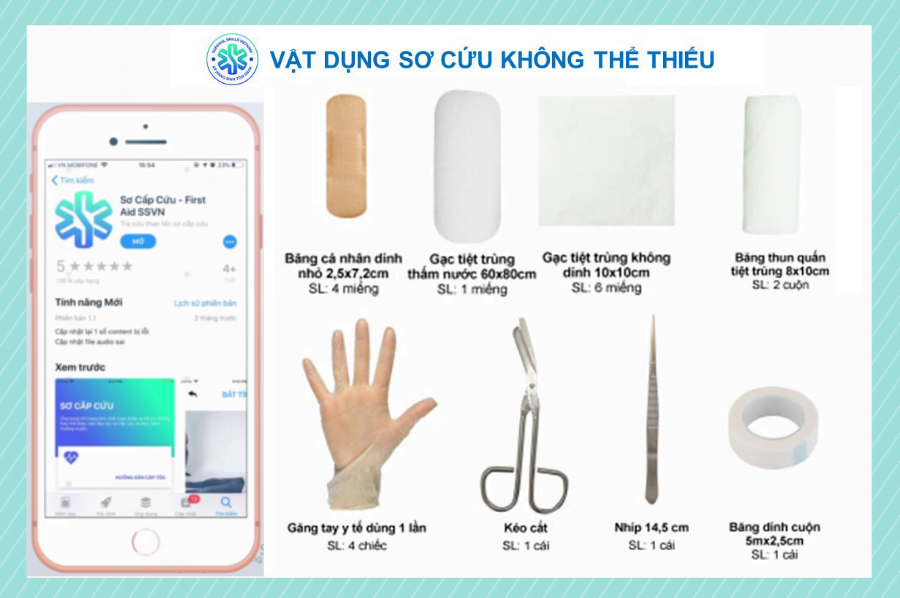
If you are wondering what first aid supplies to bring, then check out the list of SSVN recommendations below:
Sterilized gauze - small pack of 6 pieces
You can always use gauze to absorb blood or secretions without having to carry a cotton bag. After cleaning the wound, apply gauze to the wound.
Bandages - 10 pieces
Should prepare both sizes large and small
Sterilized elastic bandage 2-3 rolls
Triangle tape: 1 piece size 136cmx96cmx96cm
Used to fix the wound on the hand, avoid moving the injured area by putting a bandage from the neck to the victim's hand. In the event of an emergency that doesn't have triangle tape on the side, you can use a scarf or crop top instead. Scissors Very useful if you need to cut gauze or elastic bandages
Medical gloves - 2 pairs
When performing first aid you also need to protect yourself by wearing gloves. Plus, a pair of sterile hands will prevent further bacteria from entering the wound.
Tweezers
An extremely necessary item, especially if you love outdoor activities or mountain climbing. Using clean tweezers to remove splinters or debris lodged in the skin is the safest way. Before and after each use, you should wash and disinfect the tweezers thoroughly.
1 roll of adhesive tape
Do I need to bring alcohol/hydrogen peroxide / Povidone-iodine?
According to the recommendations of the American Red Cross, when conducting first aid for wounds, it is not mandatory to use antiseptic drugs, just wash the wound with clean drinking water. When taking the victim to a medical facility, the doctor will continue to handle the infection and treat it. The application of hydrogen peroxide and alcohol to open wounds causes both pain and damage to white blood cells (which are responsible for killing bacteria) and affects the healing process. In addition, the plastic bottles put in the backpack are likely to break when they are pinched in the bag.
General treatment for bleeding wounds: wash the wound with clean water, bandage the bleeding. Then you should go to a medical facility for further treatment. In the case of only a slight scratch and you are worried about infection, wash around the wound with hydrogen peroxide, do not use alcohol or povidone. You should see your doctor for advice on treatment, especially whether or not to have a tetanus shot. ?Download the First Aid App before you go. If you encounter a problem, you will be quite confused, now just open the app and click on the case you are facing and there will be instructions immediately. App used even when no wifi.
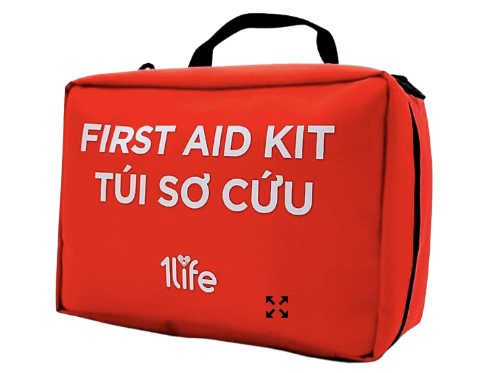
If you find it difficult to choose first aid tools, SSVN has a first aid bag imported from Germany with all the above items available (including emergency insulation blankets). The bag is only bigger than the hand and has 31 items.
You can't continue walking when you see people in an accident, but if you want to help them, how should you help? The following article will guide you.
Take some steps when meeting someone in a traffic accident
Performing first aid can be life-changing.
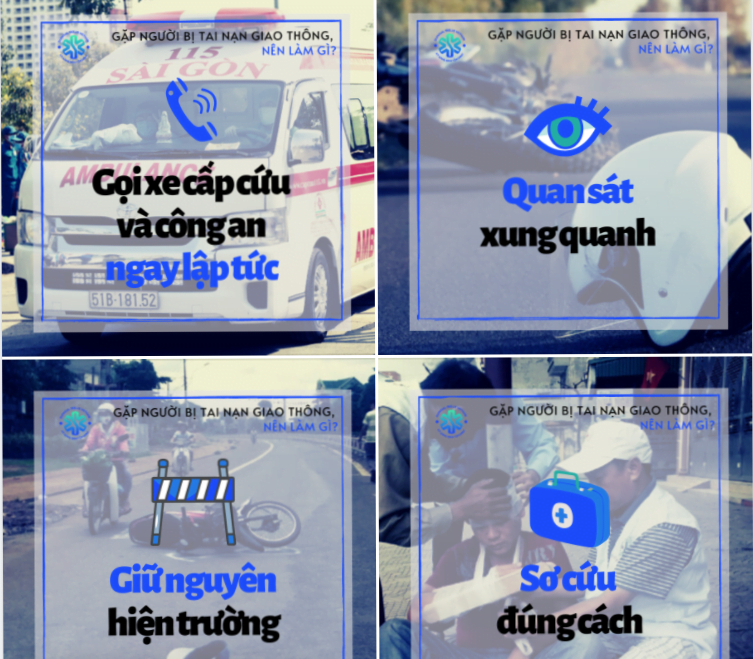
In order for you to "dare" to save lives, you need to understand and know exactly what to do. DON'T just wait for the ambulance to arrive, DO follow the instructions below and keep it in mind
Call an ambulance and the police immediately. It's the first thing you need to do when you have an accident on the road. Don't try to look who called or not? Calling is better than not do it. Always remember the emergency number is 115 and can ask people or look online the local police phone number Now to make support easier, when people can call emergency numbers without area code. Please try to keep calm when calling and provide accurate information to emergency and police.
Look around. After calling and waiting for an ambulance and police, you should look around to avoid potential dangers. It may be the situation of leaking gasoline, the engine is still working, the vehicle is on fire... It should be handled quickly so that no problem occurs.
Preserve the scene. This is the basic rule when encountering a traffic accident. Firstly, it will help the investigation of the scene and find the cause of the accident unaffected. Secondly, it is to preserve the victim's life because if they are injured in some area, the wrong move will make things worse. If movement is required, the victim should be examined for suspected spinal cord injury. If so, make sure to move the victim in the correct manner.
Proper First Aid. If you already have basic first aid knowledge, give first aid to the victim. This is very important to ensure lives.
Do not rush to pick up the victim, check if they have a spinal impact. If so, holding the victim will result in spinal cord injury that can result in death or paralysis.
An important operation in first aid for traffic accident victims is cardiac arrest. At this point you need to do CPR until the heart is beating again. When CPR during the emergency has not arrived, it is best to have another one alter to avoid fatigue and maintain the best time and pressure. To do CPR for the victim really effectively, you need to learn at least 1 international standard CPR class.
For the case where the victim does not appear to be in cardiac arrest, or when CPR, the victim's heart is beating again, breathing normally but still unconscious, it is necessary to roll the victim on his side and carry out the next first aid operations. .
Fractures of limbs are common situations when affected by external forces. It could be through accidents such as car falls and falls.
Fractures of the limb will include broken, fractured or fractured bones. In particular, when a piece of bone fails, the bundles of muscles, tendons, ligaments, nerves and blood vessels are all affected.
When encountering such situations, especially when traveling long distances, backpacking in difficult terrain, it will be difficult to immediately move the victim to the hospital. Therefore, we need to learn words now, for proper first aid to relieve pain and how to move the victim to the nearest medical center afterwards.
Signs and symptoms of a broken bone
Have a sereve pain Swelling bruises deformation Don't use that limb as usual
Instructions for first aid when the victim has a broken arm
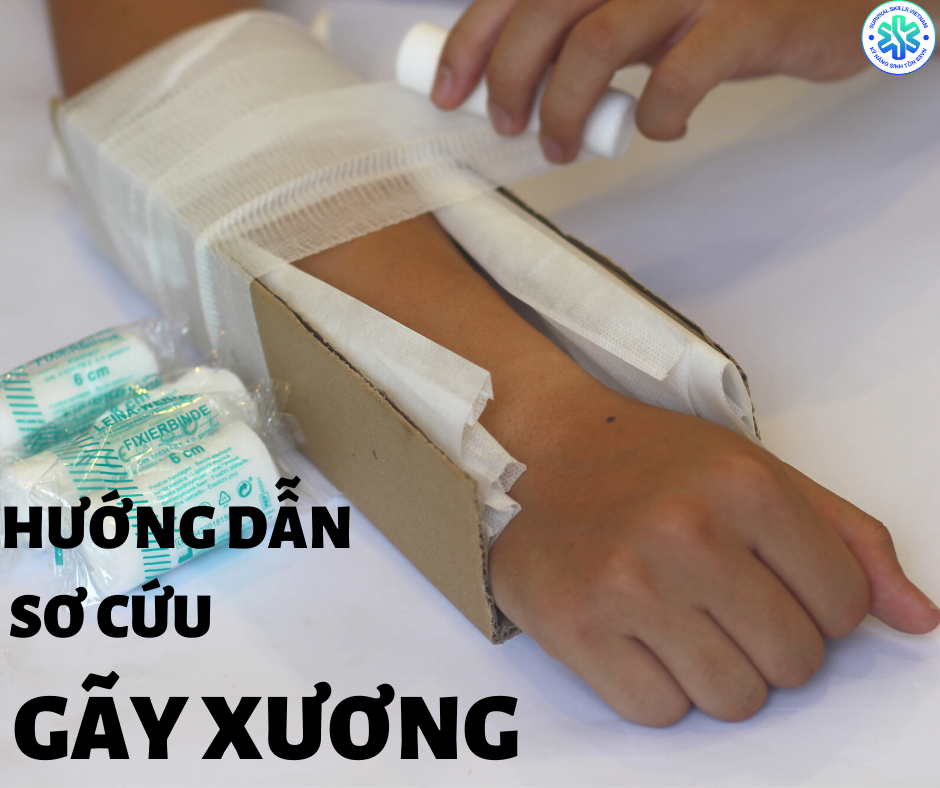
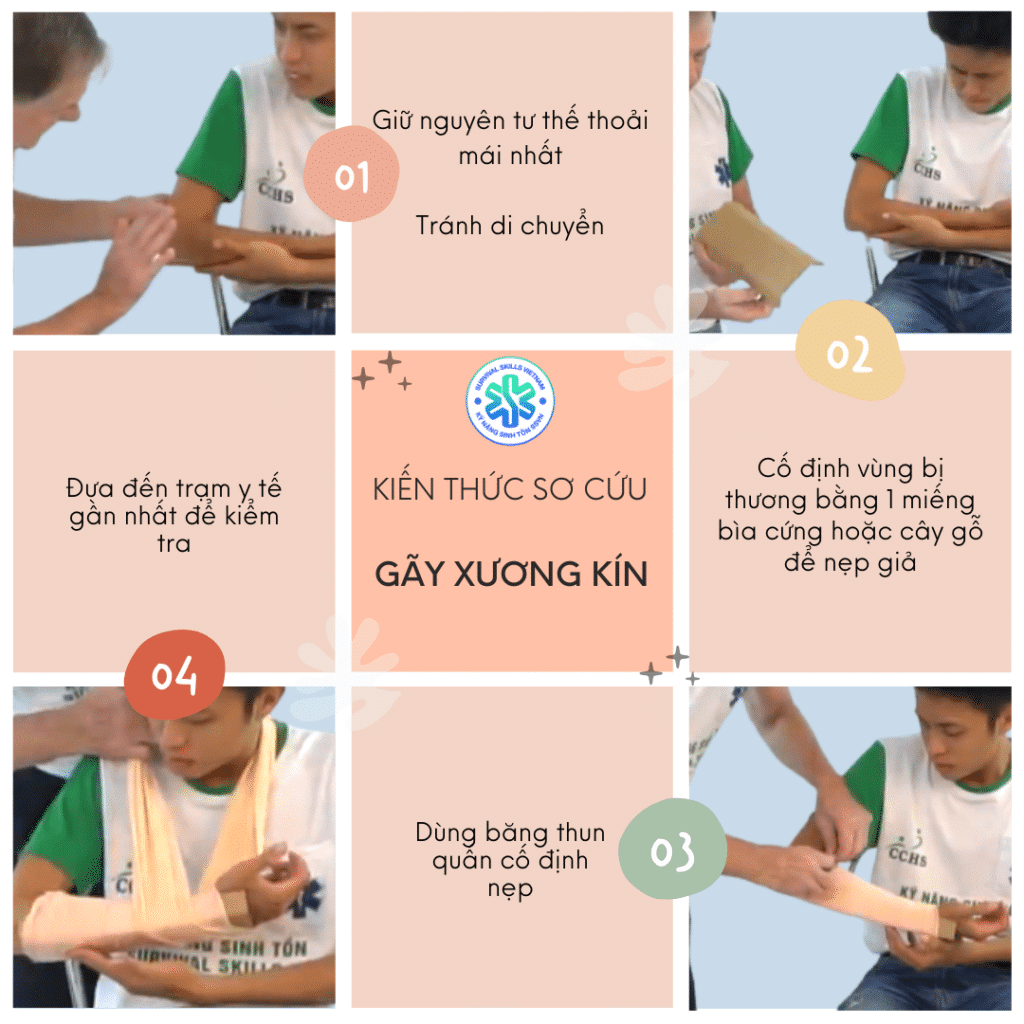
Step 1: Let the victim return to the position they are most comfortable in. Avoid moving the broken part.
Step 2: Find a piece of cardboard or a piece of wood for the fake brace. (Same length as the broken bone.)
Step 3: Place towels, pants, clothes, and soft cloths under the fracture to make the victim more comfortable when splinting.
Step 4: Use an elastic bandage to secure the brace. (Wrap just tight enough to fix the fracture.)
Step 5: If there is ice, a dry ice pack should be applied to the victim to relieve pain.
Summary of first aid instructions for closed fractures
Notes:
If the victim is bleeding, try to stop the bleeding first. To know how to stop bleeding accurately on each site, SSVN encourages everyone to learn first aid for specific instructions.
When the broken part is not fixed, do not move the victim around or take to hospital. SSVN hopes everyone to bring along first aid bag when travelling , and equipped with knowledge to handle accidents in time!
How to give first aid correctly in critical incidents, especially when the victim is his or her family ?The answer is in how well prepared you are. If you only glance at first aid knowledge, if an accident happens, plus the panic, it will be difficult for you to make an informed decision in a short time. "Talent is no match for practice", when you practice first aid movements, your memory will be engraved many times, along with a solid understanding of techniques such as: is the heart compression strong enough, the tape is tight enough to stop bleeding, .. .
You will be able to practice all these skills until you master the first aid skills class. Course details: https://elearning.new.survivalskills.vn/ - Time: 8:00 - 17:00 Sunday 10/01/2021 - Address : 503, 39 Tran Quoc Thao Street , Ward 6, District 3 , HCM City
How to register: click on the message button for the fastest support. Or call hotline 077 305 1920 for free consultation
Learning first aid is very important for yourself, your family and the community. However, it does not substitute for practice training under guidance of experts to make sure you handle real emergency with confidence and correct practices.